Viral video shows leather shoes sprouting thick layer of mould

Homes are particularly vulnerable to mould development after a flood.
A popular video on Instagram (WARNING: Video contains strong language) is raising eyebrows about heat, humidity, and air flow.
The user, who goes by the name @templeofpaige, and is from Melbourne, Australia, posted a video of a pair of what she calls "expensive" Italian leather boots that she hadn't worn for a couple of months.
The platform and heel of the boot, which appear to be wooden, are covered in a thick layer of mould.
In the caption, she posted that something similar happened to her ballet slippers.
Insufficent air flow + humidity = mould?
Social media was quick to diagnose the problem.
"This happened to me with some of my handbags and a leather couch when I lived in Sydney," one commenter said.
"[The] house had no airflow, and water damage and mould just spread and clung to any porous surfaces."
It happened during the pandemic, too
We saw the same thing happen in March 2020 in Penang, Malaysia.
Images originally posted to Facebook and then shared on X by user Dragono Halim, were taken at a shopping mall in a suburb in Penang, Malaysia, according to the Jakarta Post.
(Editor's note: The X post states the mall is in Sabah, Malaysia).
The centre was forced to close for more than 50 days due to COVID-19 restrictions. When it reopened, employees returned to find mould growing on leather bags, shoes, and even the cushions customers sit on to try on footwear.
“During the two-month closure, there may be fluctuation[s] in the temperature of the air conditioning at the mall," a store employee named Saw told the Jakarta Post in 2020.
"The air may be more humid sometimes. And since it has been raining, the air may be moist."
Why leather and wood are so vulnerable
Organic materials like leather and wood are treated in the manufacturing process, but are still vulnerable to mould when relative humidity stays in the 60 - 70 per cent range, according to the Government of Canada.
In that scenario, mould spores that are already floating through the air can begin spreading.
See more:
Note: Video is from May 2020.
What is relative humidity?
"Think of relative humidity as how 'full' the air is with moisture," explains Weather Network video meteorologist Nicole Karkic.
"A relative humidity of 50 per cent means the air is about halfway full, while 90% means it’s almost maxed out. The closer we get to 100 per cent, the harder it is for moisture to evaporate."
This means anything organic -- including handbags, belts, clothing, furniture, books, and instruments -- can develop mould when exposed to damp, stagnant air.
Mould can't develop on metals and other inorganic materials, but it can develop on the dust, dirt, or other organic debris that settles on top of them.
The role air conditioning plays
A properly functioning air conditioner will help de-humidify the air during the cooling process.
When they are shut down in humid conditions for a prolonged period -- as was the case at the Malaysian shopping centre -- humidity can climb quickly.
Prevention tips
According to the Government of Canada, you can reduce the risk of mould developing by:
Keeping indoor humidity around 50-55 per cent
Allowing airflow around items in storage
Storing organic materials in breathable packaging (i.e., not plastic bags)
Using silica gel packets in storage containers
Using a dehumidifier for damp storage areas
Homes are particularly vulnerable to mould development after a flood, with the potential for it to begin developing in as little as 48 hours after an event.
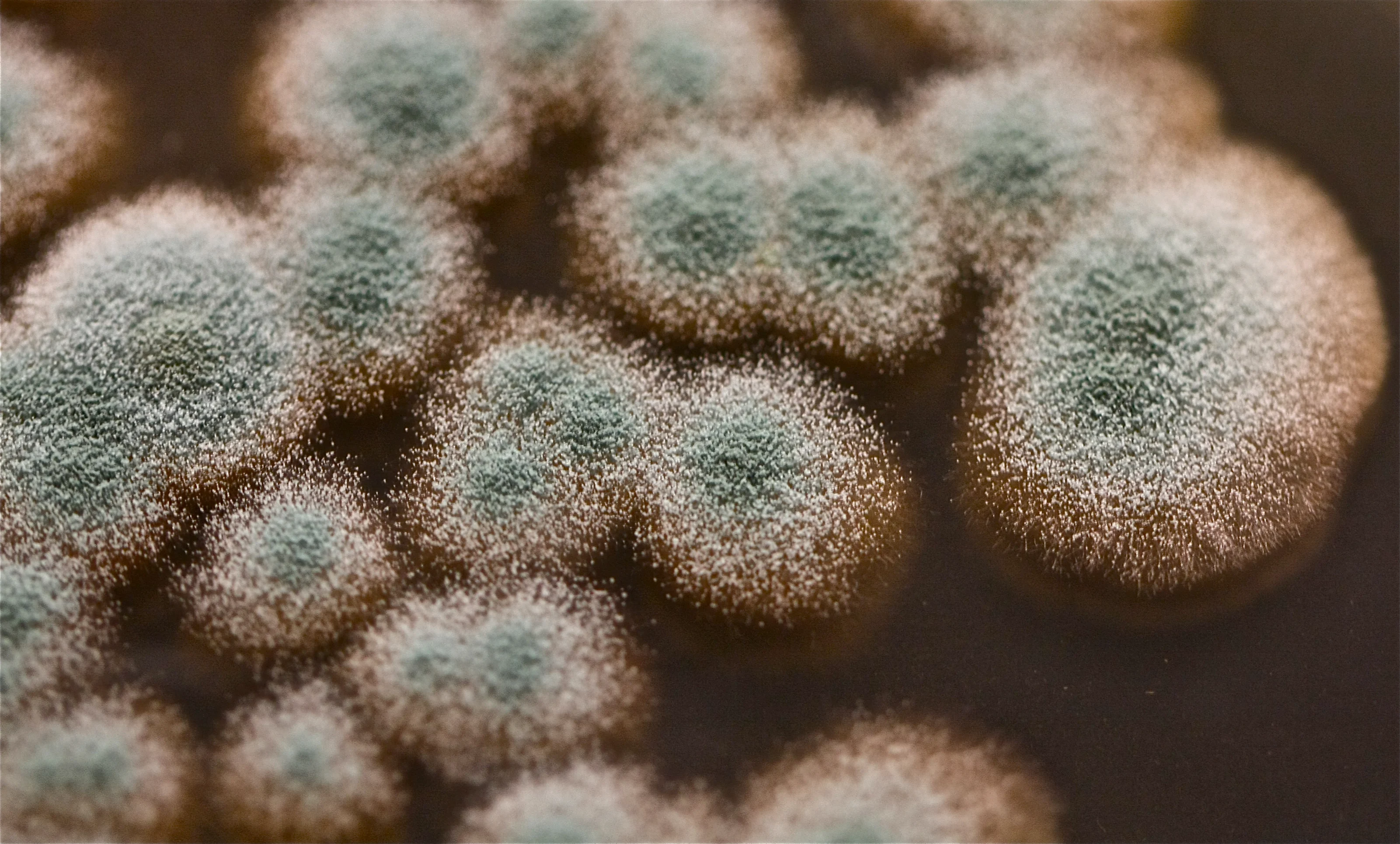
Header image: File photo of airborne mould contaminant. (Tastrum/Wikipedia CC BY-SA 4.0