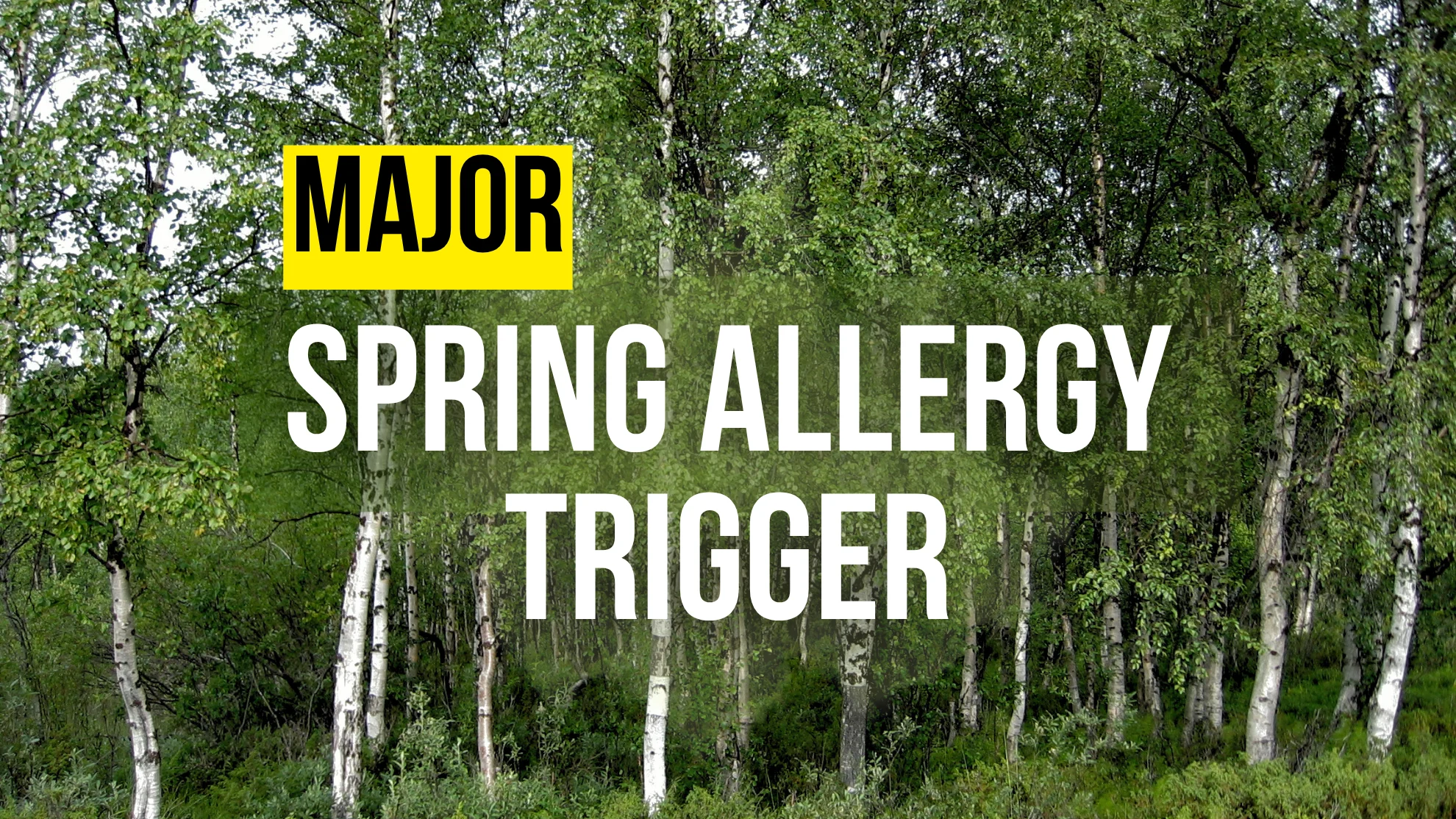
Get ready: One of Canada's worst seasonal allergens will be active soon

Sneezing and watery eyes. For some of us, it's just a sign of the times.
Spring is here, and for up to 9 million Canadians and 1 million dogs, that means allergy season has begun.
For some of us, watery eyes, scratchy throats, and sneezing sessions are just a sign of the times.
And while many Canadians are allergic to several types of pollen — from grass, to weeds, to trees — there is one species to keep an eye on, starting in late March and early April.
It's birch.

Paper birch trees. (InAweofGodsCreation/Wikipedia) CC BY 2.0
Canada is home to about 10 native species of birch and at least one invasive variation from Europe.
Canada’s birch species all look a little different. Some, like the paper birch, have bright white bark that peels. Others have yellowish bark, and some don’t peel at all. But they tend to have one thing in common:
They’re one of the worst types of trees in North America for triggering spring sneezes, due to the highly allergenic pollen they produce.
In Canada, birch season can begin as early as late March, but this year appears to be off to a slow start.
We're already heading into April, and our pollen report isn't picking up birch just yet. But that can change quickly with the weather. During an average year, birch pollen typically peaks in April and May and lasts until June.
Each spring, every birch tree releases up to 5 billion grains of pollen into the air, which can cross-react with other tree pollens, like alder and hazel — essentially supercharging their allergenic effects.
Birch pollen is a highly effective windsurfer. It’s light and powdery, and this evolutionary trait enables it to travel hundreds of kilometres, sometimes affecting people in places where birch trees aren’t even present.
Are your eyes watering yet?

A yellow birch tree in Thunder Bay, Ont. (Vidioman/Wikipedia) Public domain.
Seasonal food allergies?!
Bet v 1 is the primary allergen in birch pollen, and it looks similar to the proteins found in some fruits, vegetables, and tree nuts, including apples, pears, cherries, carrots, and peaches.
People sensitive to Bet v 1 may experience allergic symptoms, such as an itchy throat, when consuming these foods. The condition is known as Pollen Food Allergy Syndrome (PFAS), and symptoms may worsen during pollen season.
“For example, if someone is allergic to birch tree pollen and has symptoms in the springtime, they may also experience symptoms from eating fresh fruits like apples,” Food Allergy Canada writes.
Pollen avoidance strategies
Stay indoors on dry, windy days. Pollen counts are lowest after rain, which helps clear it from the air.
Skip the chores. Try to delegate lawn mowing, weed pulling, and other gardening chores that stir up pollen to people who don't have sensitivities.
Take a shower to rinse pollen from your skin and hair after spending time outside, and put on clean clothes.
Wear a face mask when doing outside chores on high pollen days.
Keep windows and doors closed on high pollen days.
Wraparound or oversized sunglasses can reduce pollen contact with the eyes and make you look chic. Win-win.
Keep the windows and sunroof closed when in your car.
Invest in a HEPA air purifier and regularly maintain it.
File photo of European birch, which is present in Canada as an invasive species. (Percita/Wikipedia CC BY-SA 2.0