Report: Canadian families of 4 can expect to pay $1000 more for food in 2026

A report on the Government of Canada's website called food insecurity, which can be linked to high grocery bills, a "serious population health problem."
Canadian families of four can expect to pay an additional $994 for groceries in 2026, and artificial intelligence (AI) is partly to thank.
That's just one of the findings from Canada’s Food Price Report 2026, published last week by Dalhousie University’s Agri-food analytics lab.

An increasing number of grocers are switching out traditional sticker price tags for digitized versions, allowing them to quickly change prices when stores are busy and demand is high. Speaking with The Weather Network’s Nathan Coleman, report author Dr Sylvain Charlebois says it may be worth it to visit grocery stores during off-hours or when the weather is bad — i.e., during a rain or snow storm, because there’s a chance prices could be lower when compared to peak times.
Drought contributing to higher prices
Overall, food is forecasted to increase in price by 4 to 6 per cent, and the average family of four is expected to spend $17,571.79 on food in 2026. That’s 27 per cent more than families were paying in 2020.

Meat is expected to rise the highest, with to 7 per cent price increases, due to low inventory.
Drought conditions on the Prairies have resulted in smaller cattle sizes, and precautions associated with avian bird flu have limited the availability of poultry.
Other issues — including U.S. tariffs, inflation, and widespread layoffs in the Canadian food sector have also contributed to the price hikes, the report says.
Alberta, New Brunswick, Nova Scotia, Ontario, and Quebec will be hit the hardest, according to the report. These provinces can expect food increases above the national average.

Food insecurity is a health issue in Canada
A report re-published on the Government of Canada’s website says food insecurity is a “serious population health problem” nationwide, affecting more than 25 per cent of people in the provinces and more than 37 per cent of people living in the territories.
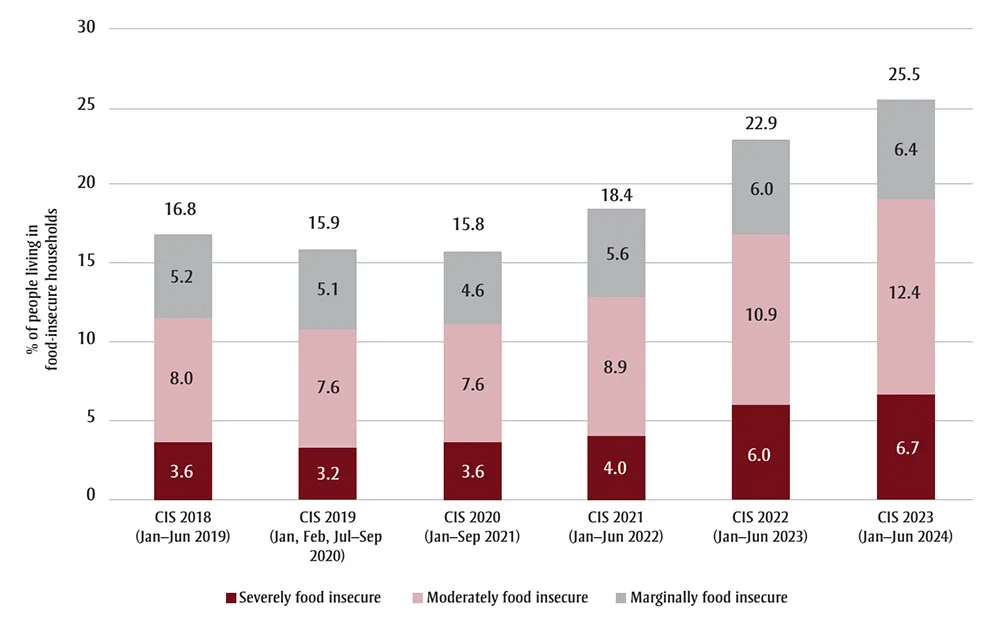
Percentage of people living in food-insecure households in Canada, excluding the territories, 2019–2024. (Tarasuk V et al. in the HPCDP Journal/Creative Commons)
The report links the inability to afford proper food with worsening mental health, increased risk of disease and injury, poorer disease management and premature mortality.
“The persistently high and now escalating prevalence of household food insecurity suggests an urgent need for effective, evidence-informed policy interventions,” the report reads.
RELATED: Food waste is costing Canadians thousands per year
Header image: File photo via Canva Pro.