
Relentless flu season: Hospitalizations up in Canada, winter vomiting bug surges

Does it feel like everyone around you is sick? This year's flu season has had a vicious start.
Flu season was off to an early — and vicious — start this year, with hospitalizations up across the country. CHEO, eastern Ontario's children's hospital in Ottawa, says it has seen “unprecedented” numbers of sick patients lately, with nearly 300 young adults visiting the emergency department in a single day, CHEO’s vice-president of acute care services, Karen Macauley, told CBC News.
Across all Ontario hospitals, ICU admissions jumped 127 per cent in a week, the Ontario Hospital Association said on December 17.
What does this have to do with the weather?
“Many viruses, including rhinovirus – the usual culprit for the common cold – influenza, and SARS-CoV-2, the virus that causes COVID-19, remain infectious longer and replicate faster in colder temperatures and at lower humidity levels,” public health nurse Libby Richards explained in 2024.
“This, coupled with the fact that people spend more time indoors and in close contact with others during cold weather, are common reasons that germs are more likely to spread.”
Richards says cold weather can change the outer membrane of the influenza virus, giving it a more solid and rubbery coating that makes person-to-person transmission easier.
“It’s not just cold winter air that causes a problem,” she says.
“Air that is dry in addition to cold has been linked to flu outbreaks. That’s because dry winter air further helps the influenza virus to remain infectious longer. Dry air, which is common in the winter, causes the water found in respiratory droplets to evaporate more quickly. This results in smaller particles, which are capable of lasting longer and traveling farther after you cough or sneeze.”
Winter vomiting bug rising in the U.S.
For now, surging cases of Norovirus, or winter vomiting bug seem to be concentrated in the U.S., with a recent waste water analysis by Stanford University suggesting a nationwide rise in cases.
In November, one Michigan middle school was forced to close due to an outbreak of the stomach bug.
Norovirus is highly contagious. It earned its nickname because it tends to spread more easily in winter.
Canada hasn’t been making headlines for a winter vomiting bug outbreak yet, but the disease is present here, and with an increasing number of cases stateside, there is a possibility that more stomach bug cases could pop up in Canada.
Perhaps we will get a reprieve this flu season: In January 2025, the Public Health Agency of Canada announced cases of the winter vomiting bug were at a five-year high, with Alberta, Ontario, and British Columbia among the hardest hit.
How to protect yourself this flu season
Health experts say the best way to defend against influenza is to get vaccinated. Practising proper hygiene, like washing your hands frequently, and avoiding touching your face, also helps, as well as staying home if you feel sick.
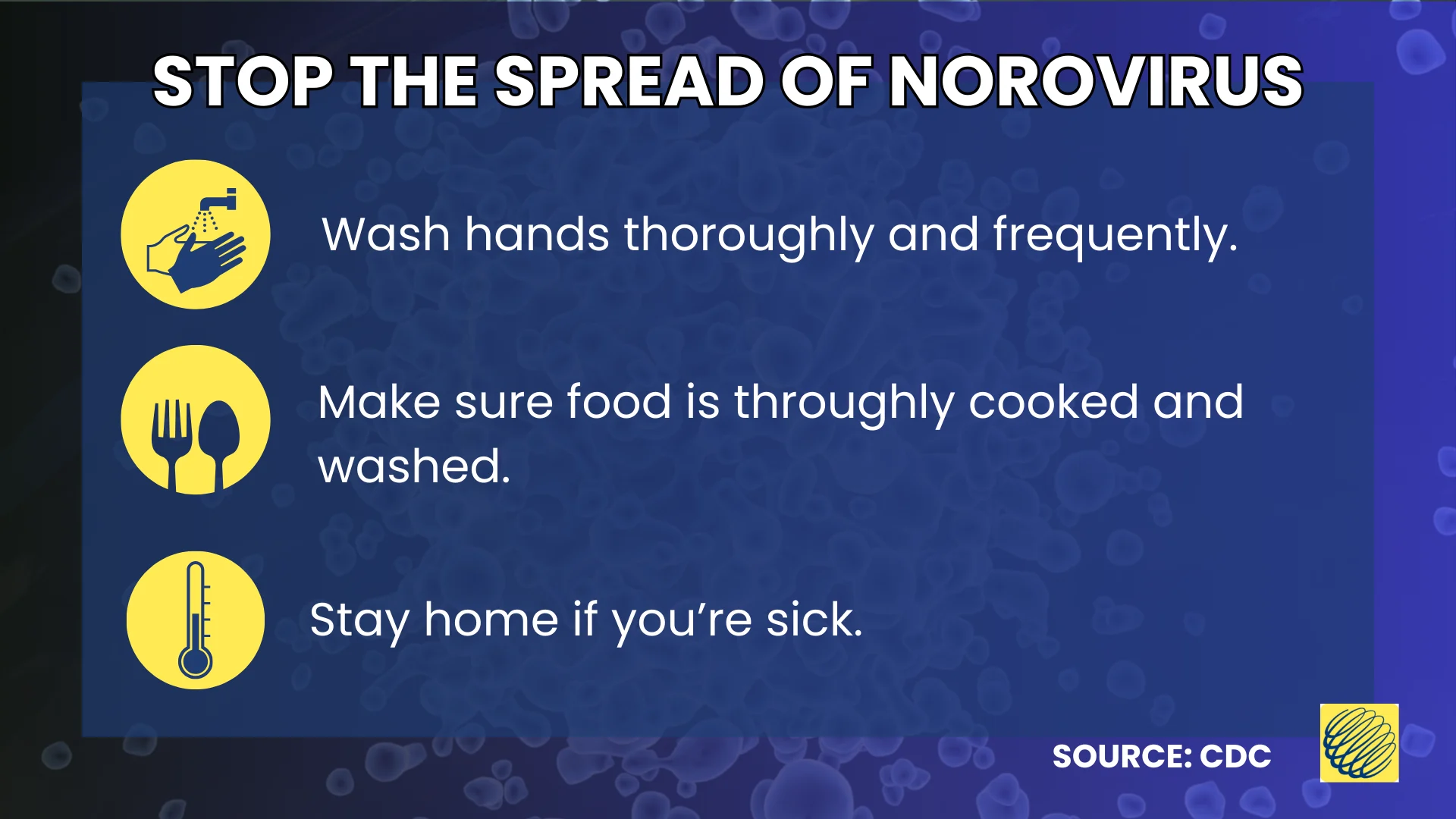
Tips to avoid getting sick.
Health Canada says you can try and prevent catching or spreading norovirus by:
Frequent hand washing.
Staying home if you are sick.
Handling food safely. Make sure shellfish is thoroughly cooked and fruits and vegetables are thoroughly washed.
Cleaning and disinfecting surfaces with a bleach solution that is effective against norovirus- Standard cleaners and disinfectants may not work.
Immediately laundering linens and clothes that may be contaminated. Dry laundry in a high-heat setting.
If you catch norovirus, experts say you can manage symptoms by staying hydrated, resting, avoiding others, and, when ready, eating bland foods as your stomach heals.
WATCH: How long you should really wash your hands
Header image: File photo via Canva Pro.