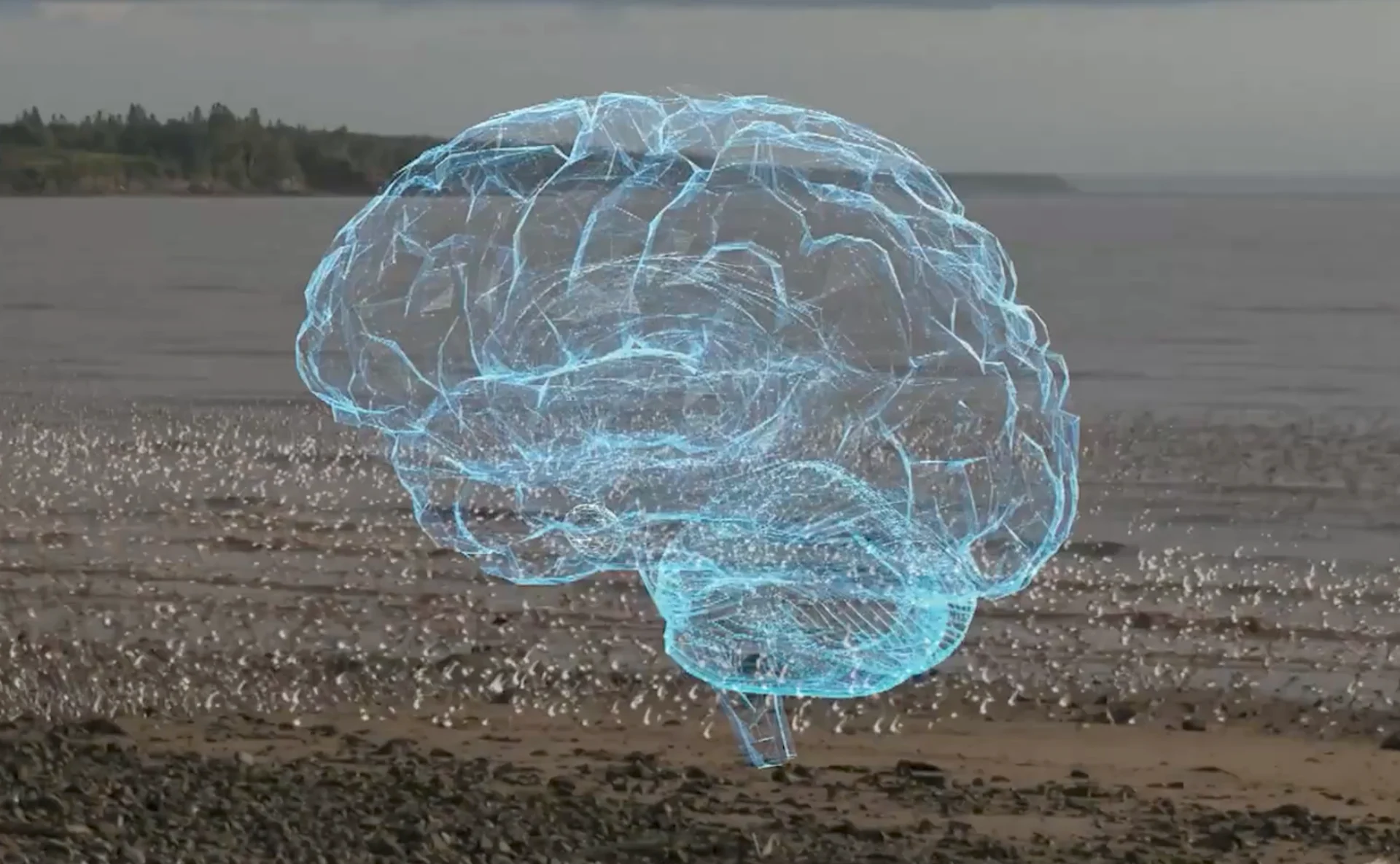
Indulging in the bird world can reshape your brain, new study finds

A new study suggests that avid birdwatching can lead to changes in brain structure and function
Avid birdwatching may seem like a relaxing pastime, but a new study published in the Journal of Neuroscience reveals how this hobby can also reshape a person's brain.
As participants identified birds and listened to their calls, their brains were scanned using an MRI to assess density, structure, function, and activity.
“And this was found in an MRI study where we put people into the MRI scanner and looked at a group of bird experts and then age- and education-matched bird novices,” explained Erik Wing, one of the research scientists involved in the study.
Wing added, “We find that in the experts, there is more densely organized brain structure in regions that are involved in perception, memory, and attention,” he said. “And we also see that these regions are showing more activity as the experts are identifying and differentiating bird species.”
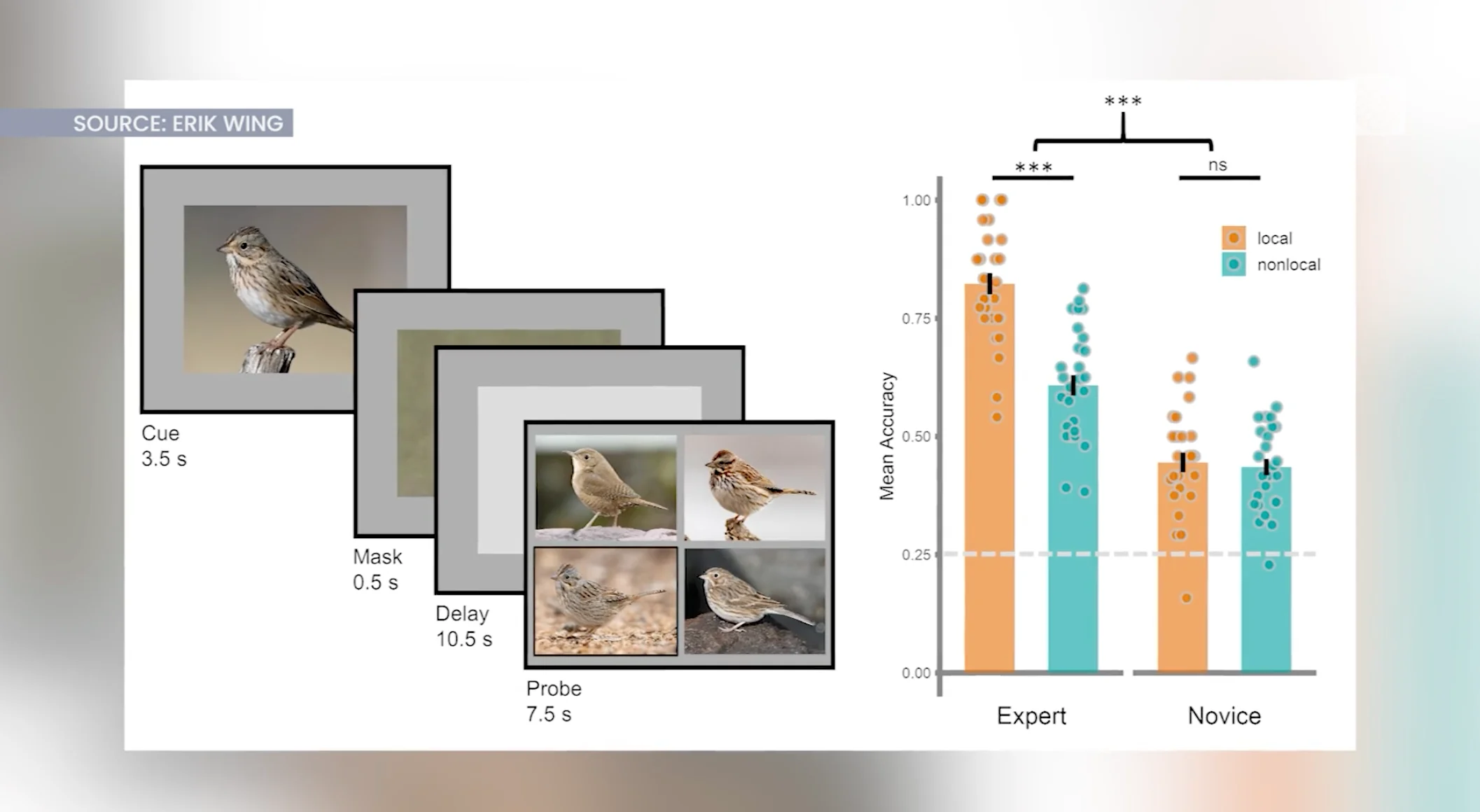
Schematic of sample trial in matching task showing cue stage with bird photograph (Lincoln's Sparrow) and probe phase containing a different photo of the cue species (highlighted to indicate participant correct selection), two intra-family distractors (other Sparrow species) and one extra-family (Wren) distractor (left panel). The matching task contained a set of birds selected to be familiar to expert but not novice participants (local condition) as well as a set of species selected to be unfamiliar to all participants (nonlocal condition). Matching task accuracy by group and condition (local vs nonlocal species; right). Error bars reflect SEM; chance-level performance is 25%.Photo Credits: p < 0.001. Bird photographs were obtained from the Cornell Lab of Ornithology, Macaulay Library (https://www.macaulaylibrary.org/). Figure image credits and asset IDs (left to right, top to bottom): Simon Kiacz (ML281006441), Heather Wolf (ML95259921), Matthew Bode (ML321243701), Mike Cameron (ML144941861), Terence Zahner (ML198595251).
SEE ALSO: Proposed bill puts Ontario's bird species at risk, here's how to help
MRI scans showed more brain activity in the expert bird-watching brains when they had to identify birds that were less familiar to them.
“When there's a bird or something you're really trying to figure out, you're kind of locked in and trying to just go through identification,” said Gavin McKinnon, a professional birding guide, author, and the founder of Meadowlark Birding Tours. “It's really just a large process of elimination—and when you get down into those fine details, you really need to focus. Small cues can make a big difference.”
While more research needs to be done to follow the longevity of the changes, this is an interesting connection and a reassurance that your time in nature could be reshaping your brain for the better.