Emergency preparedness can and should be inclusive for all: Here's how

"If an emergency plan only works for some people, then the plan is incomplete."
Disasters can strike at any time, often without any warning. That's why it's important to have an emergency plan prepared ahead of time that works for everyone in your household.
From power outages to evacuations, navigating emergencies can pose extra difficulties for seniors and people with disabilities.
For example, mobility restrictions may make using stairs difficult or flat-out impossible when elevators aren't an option, as is often the case in emergency situations. Therefore, plans need to be made that take into account the needs of each unique individual in your home or workplace.
“I think what's so important is having a plan and a kit designed for individuals with disabilities," Connect4Life President and CEO Melanie Taddeo told The Weather Network in an interview. "But it's not just about the individual themselves, but their network of individuals, whether a support person, a family member, or the first responders to understand the needs of individuals with disabilities.”
How to build your emergency kit
When it comes to actually building your emergency kit, the Canadian Red Cross provides a free template you can print off.
“It's a comprehensive plan that you build with your family and so that you don't have to panic. It's really an empowerment tool, so you don't have to panic when you have to get out of your house very quick, and look for everything,” Mindy Oiffer, a volunteer with the Canadian Red Cross, told The Weather Network.
Your kit should contain information regarding every member of your household, including your pets, such as health card numbers, passport information, medications, insurance policies, and vet records.
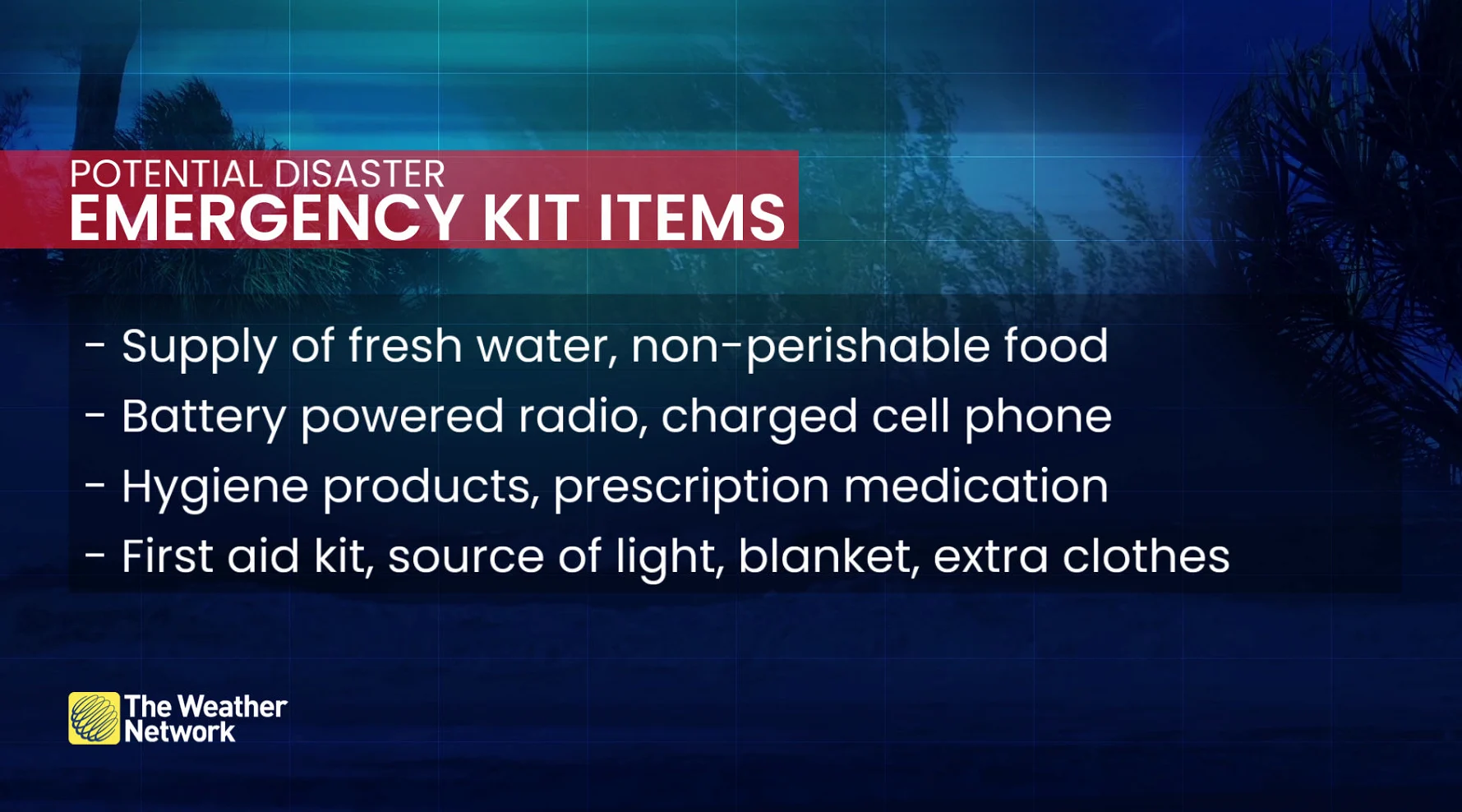
Oiffer also says your kit should contain enough food, water, and medication to last at least 72 hours. She also recommends a crank radio, which doesn't require batteries to function, and some even double as flashlights.
She also gave one final tip that may often be overlooked.
"You should also have cash, because sometimes when the power outage happens, you cannot use your cards. So we always say have some real, real cash."
The organization also recommends on their website that those using wheelchairs should include a tire repair kit in their emergency kit, as well as have an extra manual wheelchair on hand.
Emergency preparedness tips for people with disabilities
The Canadian Red Cross outlines several other steps you can take to prepare for an emergency as a person living with a disability or for caregivers of someone living with a disability:
Build a personal support network of multiple people who are familiar with your specific needs and can quickly reach you.
Create a list of all food and drug allergies, medical conditions or needs, and current medications.
Create a list of instructions on how to use any assistive devices, as well as teach your support network how to use them.
Store backup equipment or assistive devices at your workplace or school.
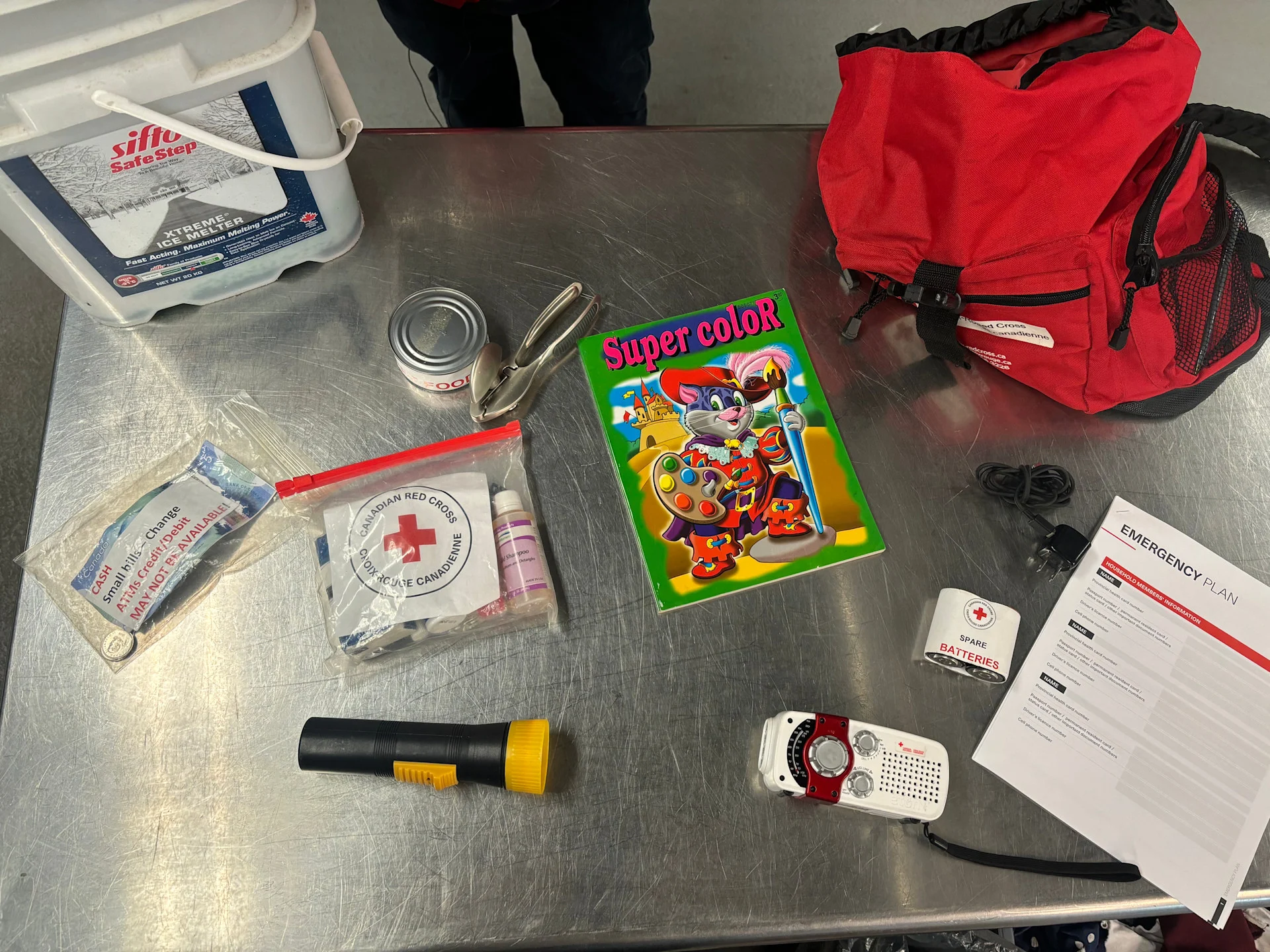
An example of an emergency kit (Nathan Coleman/TWN)
Additionally, the Government of Canada recommends having extra tools with you that could help you communicate if you are deaf or hard of hearing, such as a paper pad and pencil.
When helping someone with a disability during an emergency event, it's also incredibly important to always ask the person first if they would like your help and if so, how you can assist. Unless it is a truly life-threatening situation, never touch a person, service animal, or assistive device/equipment without explicit permission first.
For more information, or to find a full list of what to include in your emergency kit and the emergency plan template, check out redcross.ca\ready.
WATCH: Emergency planning event geared toward seniors and disabled people
Thumbnail image created using file photos via Canva Pro.
With files from Victoria Fenn Alvarado, a video journalist and content creator at The Weather Network.