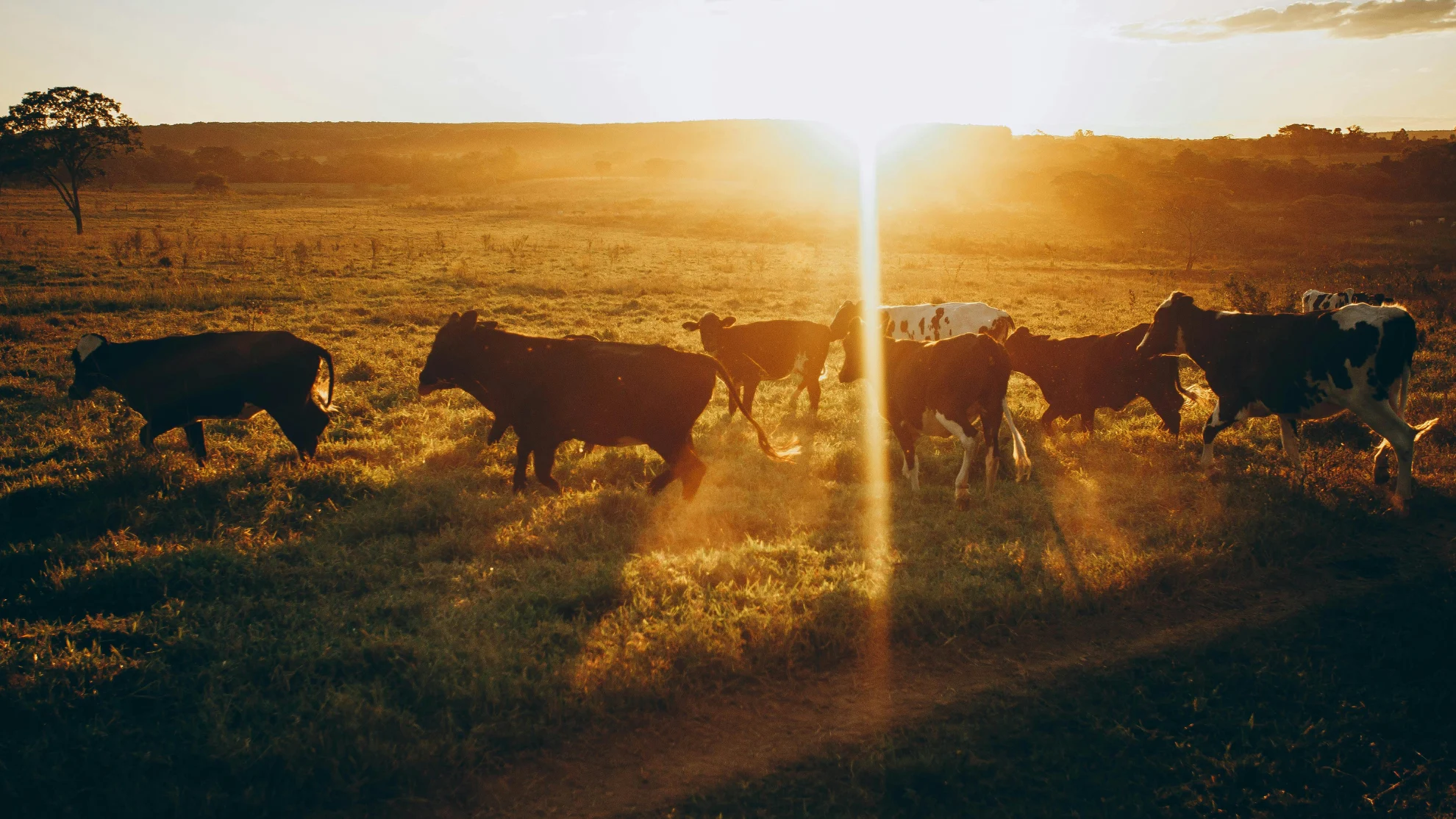
Canada temporarily bans Texas cattle over flesh-eating parasite concerns

This parasite is not currently found in Canada, but with travel-related cases increasing, Canadians heading south should be on alert.
The Canadian Food Inspection Agency (CFIA) announced Friday it is implementing temporary import restrictions on livestock, including horses, from entering Canada from parts of Texas after the U.S. Department of Agriculture (USDA) confirmed the presence of a flesh-eating parasite referred to as new world screwworm, or NWS.
The USDA confirmed NWS had crossed the border from Mexico into the U.S. last Thursday.
"Animals that originate from or were present in the State of Texas within 21 days prior to border crossing will not be accepted into Canada. Several U.S. states have also taken precautionary actions to mitigate the risk of spread," the CIFA says in a statement on its website.
"...The flesh-eating larvae of this parasitic fly threatens the lives of its host animals. While our colder climate is not hospitable for the long-term establishment of the fly in Canada, they can survive shorter periods of time in the summer months. Taking this action now is an appropriate risk mitigation measure to prevent its introduction and protect animal health."
USDA confirms additional cases of NWS
The first known case of NWS in Texas was found in a calf in Zavala County, Texas.
Since then, two additional cases have been found -- one in a calf in La Salle County, Texas, and one in a dog in Andrews County, Texas.
"Anyone who suspects a screwworm infestation should immediately contact their veterinarian, state animal health official, or USDA," the USDA says in a Monday announcement.
"USDA has established this contact page to ensure everyone can easily find the correct contact information for these groups."
In the statement, USDA acknowledged the "serious threat" NWS poses to livestock, pets, wildlife, "and in rare cases, people."
The agency says it has stepped up its already-aggressive plan to eradicate the pest, including quarantine zones, trapping, and surveillance.
Preventative measures taken in April
In April, Texas Department of Agriculture said it would step up its defences after a NWS detection about 140 km from the U.S./Mexico border.
Since then, the USDA has been preparing for a border breach.
What is the New World Screwworm (NWS)?
Despite what its name suggests, the New World screwworm is not a worm at all: It is a species of parasitic fly.
Female screwworm flies lay their eggs in open wounds, scrapes, or insect bites on people and animals. When the eggs hatch, the larvae burrow into the flesh, feeding on living tissue and potentially causing serious wounds, infections, and even death if left untreated.
Why is this parasite a concern?
Infections occur primarily in livestock, but people can and do get infected, including an 80-year-old Canadian male traveller who went to a Toronto hospital with an NWS infection (also called myiasis) after visiting Costa Rica.
Speaking with CP24 in April 2025, infectious diseases specialist Dr. Isaac Bogoch said NWS is a public health issue that can also impact food security.
“This infection can decimate wildlife and livestock,” he told the news outlet.
Health officials warn Canadians visiting Central America, Mexico
Experts have been monitoring the growing threat of NWS infections for some time.
In March 2025, Dr. Bogoch took to X to spread awareness and warn Canadians, especially those travelling to destinations like the Dominican Republic, Costa Rica, and Mexico.
"The 'barrier' preventing New world screwworm flies (Cochliomyia hominivorax) from spreading north of Panama has been breached," The Toronto-based doctor said on social media.
"We recently cared for a patient who contracted this infestation on a trip to Costa Rica."
Why is NWS becoming a problem?
NWS is commonly found in Cuba, Haiti, the Dominican Republic, and South American countries but the USDA Animal and Plant Health Inspection Service (APHIS) says cases are spreading to Costa Rica, Nicaragua, Honduras, Guatemala, Belize, El Salvador and Mexico, beyond a biological border that had previously contained the spread.
The agency says there has been an "explosion" in NWS detections in Panama. In 2023, cases went up from an average of 25 cases annually to more than 6,500 cases in one year.
Countries declare NWS outbreak after 'barrier' breached
APHIS and Panama co-managed the biological border that "successfully" contained the pest in South America for "decades," APHIS says on its website. The now-breached barrier resides in the eastern portion of Panama.
Outbreak declarations are in place in Mexico and several Central American countries.
As of June 3, 2026, more than 171,700 NWS cases have been reported in animals and more than 2,070 cases have been reported in people in Mexico and Central America, reads a statement on the U.S. Centers for Disease Control and Prevention website.
"Currently, Canada does not allow the importation of cattle, bison, sheep, goats, cervids and swine from Mexico and stringent import conditions are in place for import of horses from Mexico to prevent introduction of animal disease into Canada," the CFIA says on its website.
How do people get infected with NWS?
According to the U.S. Centers for Disease Control and Prevention, you can become infected if:
You travel to affected areas (like Costa Rica, Nicaragua, or Mexico);
You have open cuts, sores, or scratches;
You come into contact with livestock or wildlife carrying the parasite.
Preventing infection
Canadian travellers can protect themselves by:
Covering any cuts or scratches with clean, dry bandages;
Using insect repellent, especially on exposed skin;
Wearing long sleeves and pants in rural areas or places with plants and trees;
Avoiding close contact with stray animals or livestock;
Consulting a travel health clinic and a medical professional before travelling.
There are no vaccines or medications that prevent infection.
If you suspect infection:
Seek medical attention immediately.
Do not attempt to remove larvae yourself.
Treatment usually involves the extraction of the larvae and the prescription of antibiotics.
Content continues below
Is NWS in Canada?
As mentioned by the CFIA, the NWS parasite typically needs warm conditions to survive, and Canada's cooler climate acts as a natural barrier.
This parasite is not currently found in Canada, but with travel-related cases increasing and the barrier that once stopped its spread now breached, Canadians heading south should be on alert.
Always check travel health advisories and, when in doubt, speak to a medical professional before travelling.
RELATED: Florida sees 2023 rise in flesh-eating disease infections
Header image: File photo of new age screwworm larvae (CDC].