Parking ban in effect on Edmonton’s residential roads

As a seasonal parking ban comes into effect on Edmonton’s residential roads this week, one councillor is concerned about how the city’s failure to fund towing teams will play out on city streets.
On Monday, crews began working to clear slush and windrows off residential streets. Vehicles that are parked on the roadways will be ticketed — but won’t be towed.
And streets with too many parked, plowing may not be done at all, said Coun. Erin Rutherford, who represents Ward Anirniq.
“Some roads are going to look really messy because they're going to work around vehicles that don't move,” Rutherford told CBC.
“I think we're going to get a lot of feedback on that as a council and rightfully so. I think it was a misstep to not fund it.”
SEE ALSO: 'They are going to disappear': Western Canada glaciers face bleak future
While council has funded towing in previous years, it’s not a regular practice in Edmonton, unlike other major cities including Calgary, Fort McMurray, Winnipeg, Montreal, Ottawa and Halifax.
Rutherford said she had considered making a motion to fund towing and increased snow clearing around bus stops during budget deliberations in early December. But because there were so many other motions on the floor, she decided not to.
She said the consequences will be seen in the results of the snow clearing operation.
“A lot of vehicles could get really boxed in, which I think is very consequential and will also make the clearing less effective,” she said. “And if there's too many cars on any given residential road, they're actually just going to skip the road.”
A city report says one-time increased enforcement funding was not renewed, meaning teams went from 15 officers and two clerks, to five officers and one clerk.
“Towing services were also limited due to capacity and later discontinued because there was no allocated budget,” the report reads.
Fee reductions up for discussion
During last winter’s enforcement season, the city gave out 2,248 tickets. In the spring, it gave out more than double that, at 5,863.
But city data also shows that only 52 per cent of surveyed residents were aware of last January’s parking ban, while only a third are subscribed to receive notifications on parking bans.
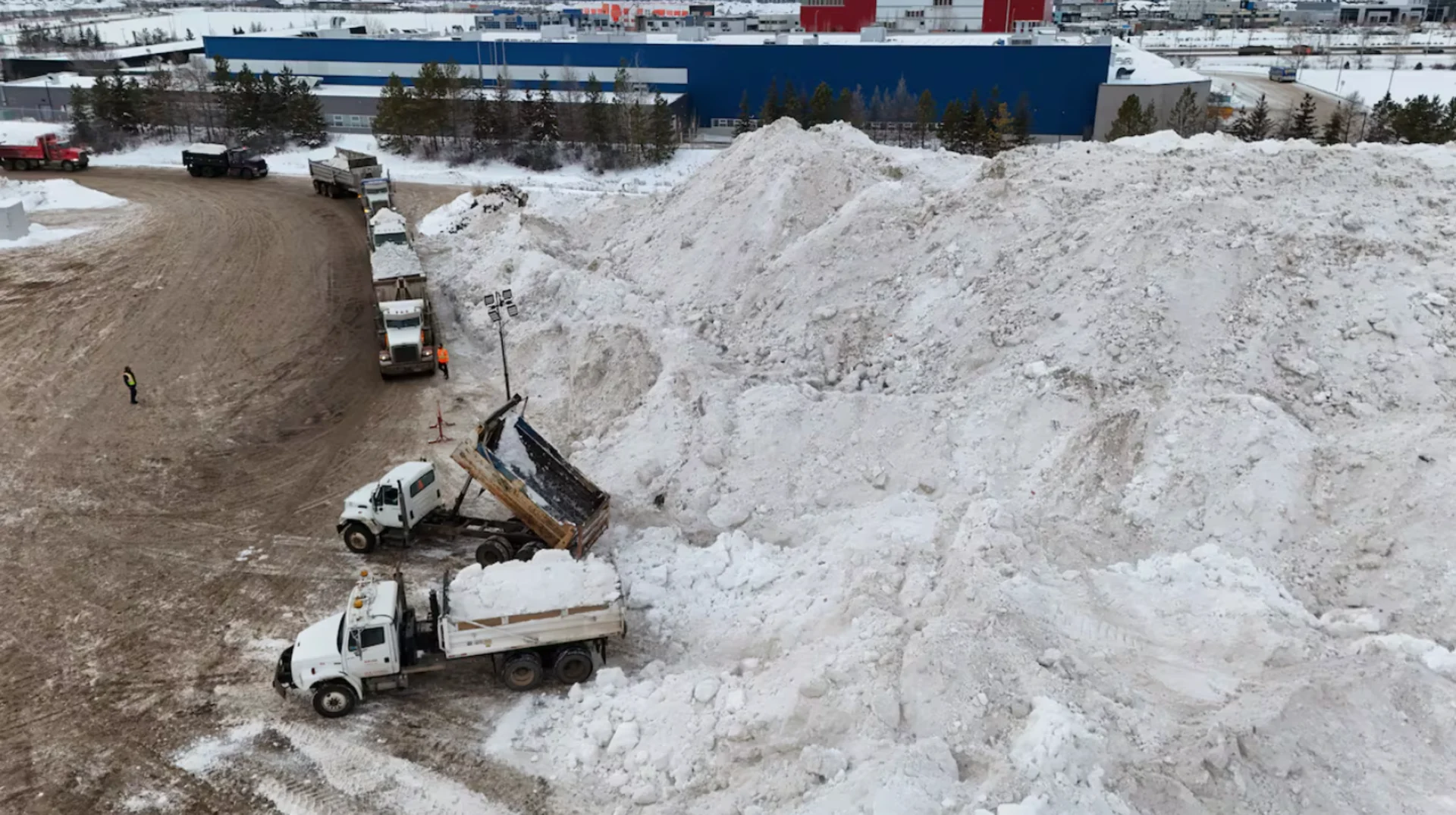
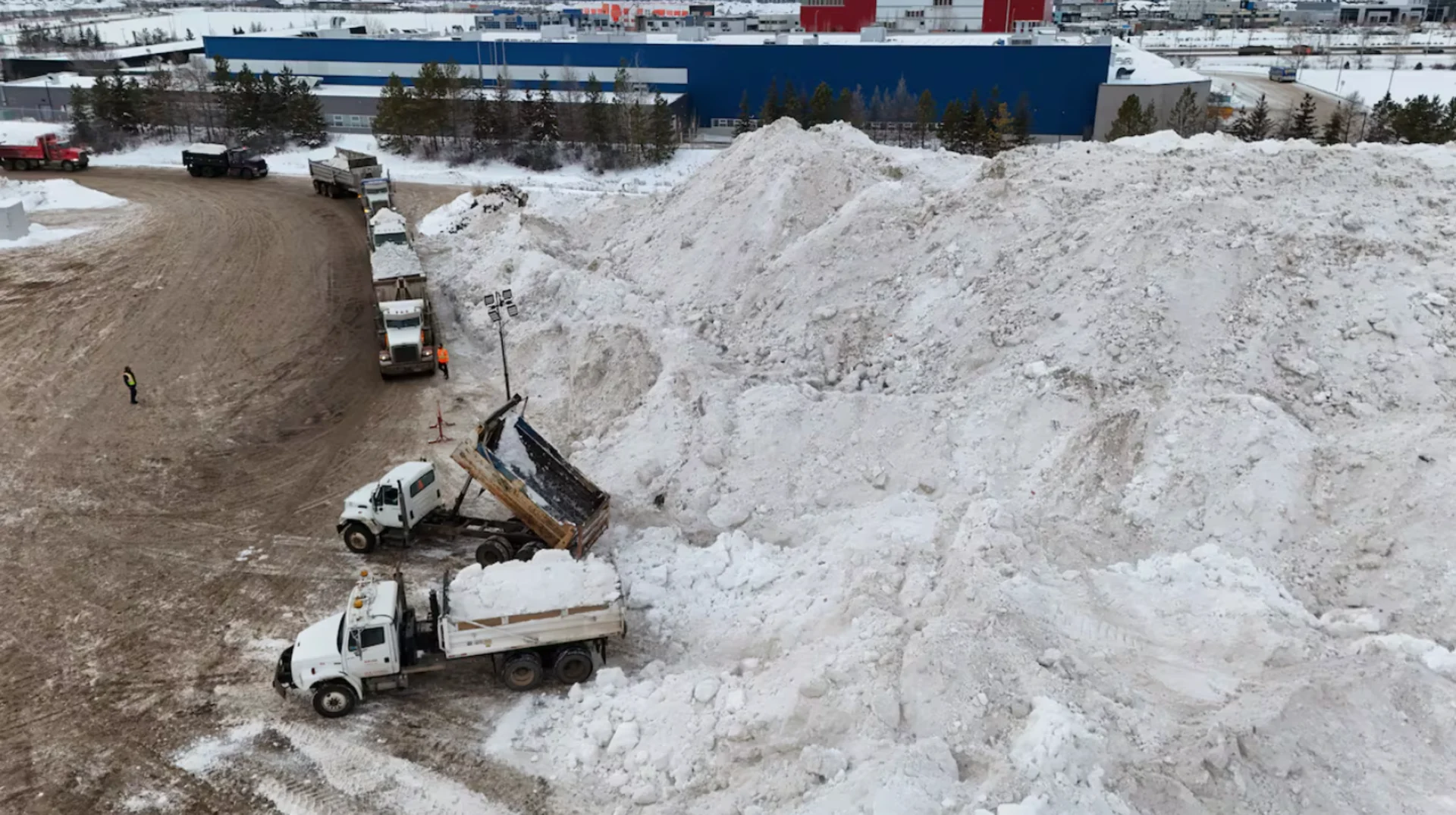
A city snowpile near Terwilliger fills up as crews work to clear major roadways. A residential parking ban started at 7 a.m. Monday, with plows being sent into neighbourhoods to clear slush and windrows off side streets. (Bob Grieve/CBC)
Council decided to hike the fine from $100 to $250 in 2022 as part of increased enforcement efforts. On Jan. 19, a council committee will look at rolling that back to $150.
The report said reduced enforcement resources has made it difficult to assess whether increased fines improve compliance.
Rutherford said fines of $250 seem overly punitive, noting seniors and newcomers living in her ward who were unaware of the spring parking ban and are now on the hook for hundreds of dollars in fines.
“It's about a lesson learned, not something that is going to cripple somebody.”
Rutherford also said with higher fees and the city handing out more tickets, more people are challenging the tickets in court, which ties up the system.
Rutherford also suggested a reduced fee of $100 for those who pay their fine early. But the administration said in its report that the current city software would need to be upgraded to process an early payment option. It estimates those upgrades could cost around $80,000.
WATCH BELOW: Be careful where you toss that snow, it could lead to a fine
This article, written by Emily Williams, was originally published for CBC News on Monday, Jan. 12.