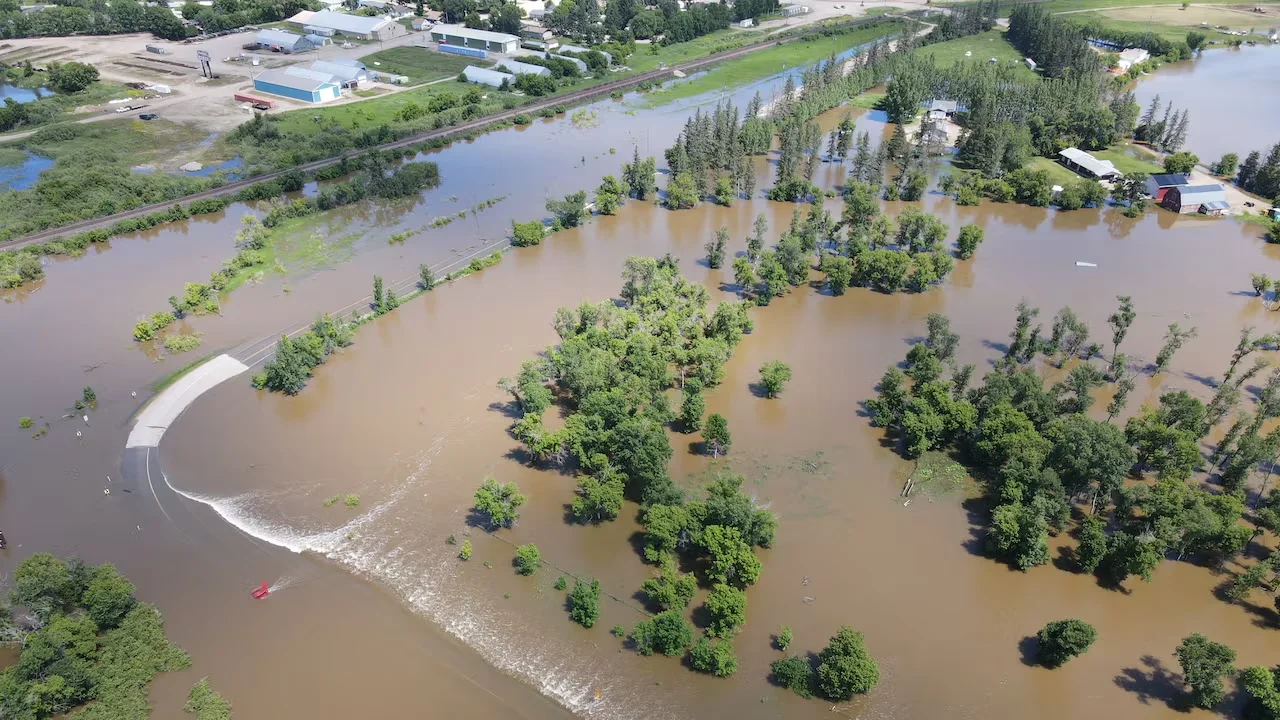
Manitoba flood aid includes recovery program, $500 cheques, charitable donations

A $500 cheque will be in the mail as soon as possible for flood-stricken Manitobans who've applied for disaster financial assistance, and a one-time grant program is in place for anyone in the hardest-hit communities, Manitoba officials said Friday.
The Manitoba flood recovery program — a one-time grant for homeowners and tenants — will support those who didn't have insurance or whose insurance coverage is insufficient, regardless of whether they qualify for disaster financial assistance, said Christine Stevens, director of Manitoba's Emergency Management Organization.
There is no set maximum, and payouts will be based on the situation, whether it's to cover cleanup costs or do structural repairs to damaged homes, she said at a flood briefing at the legislative building.
"The amount paid out is determined based on impact."
CHECK OUT: How the weather could be influencing your music taste
Premier Wab Kinew and Stevens held a media briefing Friday afternoon about widespread flooding in western Manitoba, particularly in the Parkland region.
The flood recovery program will mimic the disaster financial assistance program but help more people, Stevens said at the briefing.
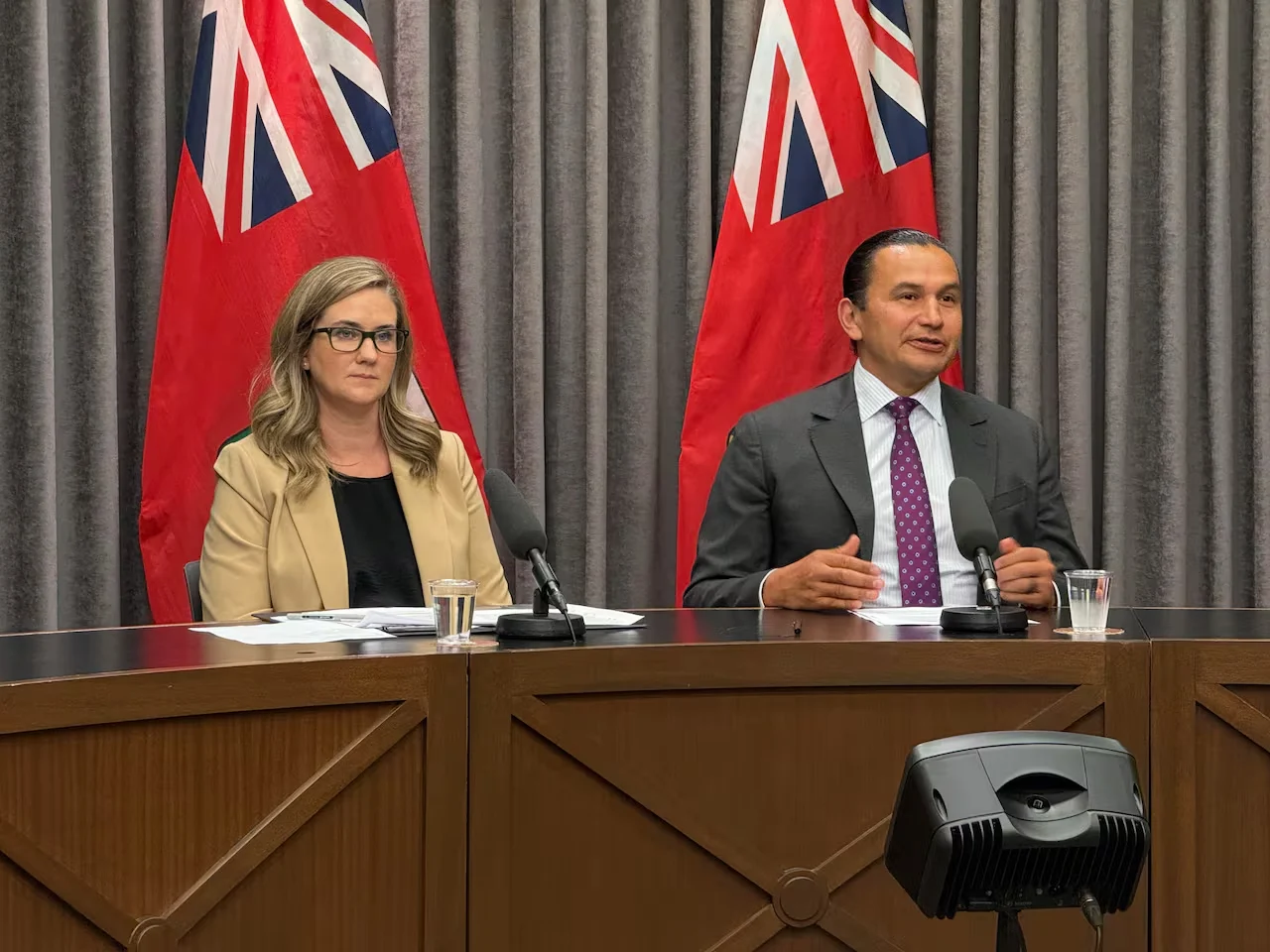
Premier Wab Kinew and Manitoba Emergency Management Organization director Christine Stevens speak to media on Friday. (Jaison Empson/CBC)
Meanwhile, the 1,800 people who have already started the application process for disaster financial assistance can expect a $500 advance payment, Kinew said at the flood briefing.
"What we're doing this year is rushing to ensure that help gets to you as soon as possible," he said.
"We have our finance department and EMO working through the weekend to put money into your hand."
People affected can start flood repairs, provided they document the process with photos and make sure they have what they need for their application, Kinew said.
"You can order building materials that might go into repairs. You can start talking to contractors and getting those home repairs done asap."
Kinew also announced the province is working with the Red Cross to allow charitable donations to help people affected by flooding, and the province is setting aside $15 million to match those donations.
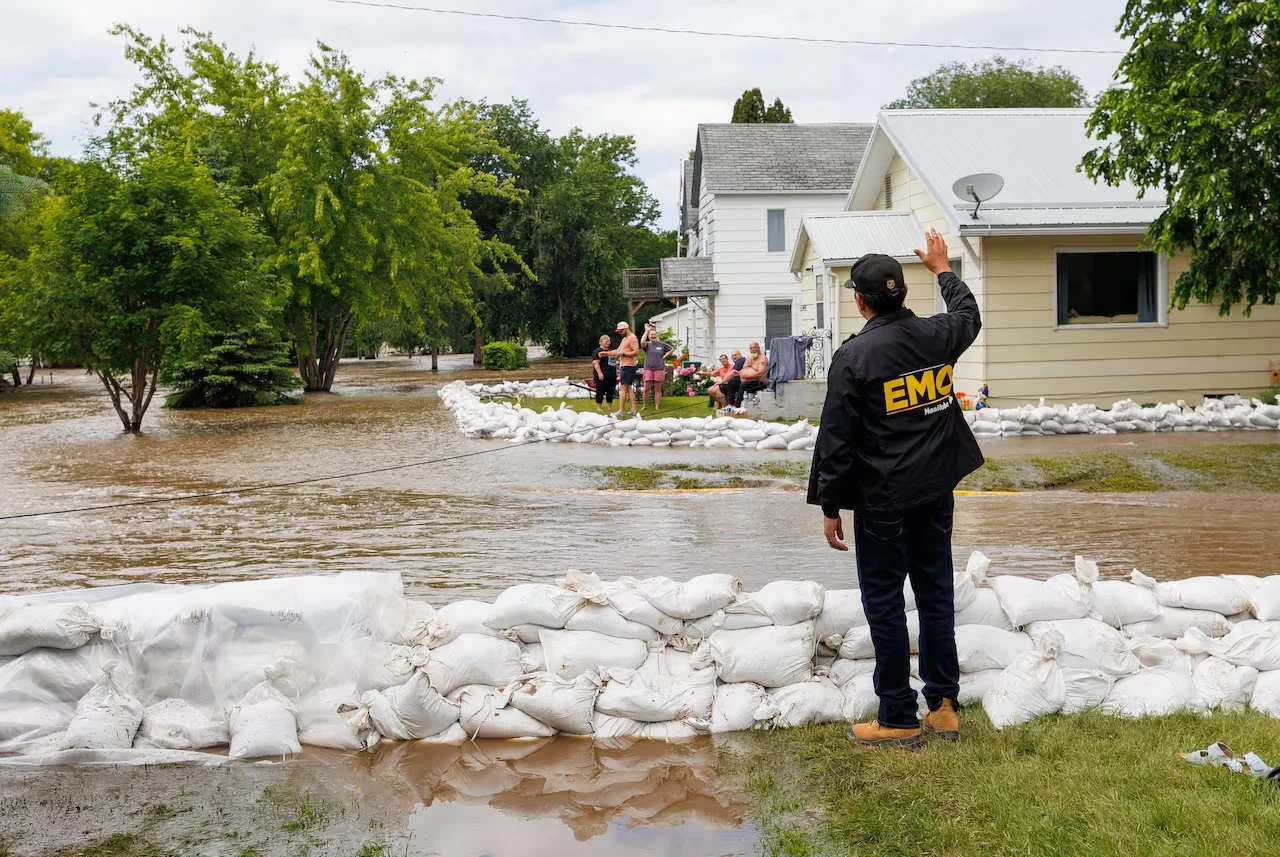
Manitoba Premier Wab Kinew waves at a family on the other side of a flooded Third Street N. in Swan River, Man., on Thursday, July 2, 2026, while sandbags protect nearby houses. (Mike Deal/Winnipeg Free Press/Pool)
"Help is here. More help is coming," Kinew promised.
The Canadian Red Cross will accept the donations and administer the program, the premier said.
SEE ALSO: Could a cow really get swept up by a tornado?
That program will also be open to people who don't qualify for disaster financial assistance, he said.
The Red Cross is sending staff in the Swan Valley region this week to provide help with personal recovery planning, Kinew said.
They will help people figure out how to manage their finances, repairs, accommodations and mental health needs, said Kinew, who urged people to take advantage of the program.
Team Rubicon, a military veteran-led humanitarian organization that responds to natural disasters, is also on the ground in the Swan Valley region and will be going door to door to see where there's need, Kinew said.
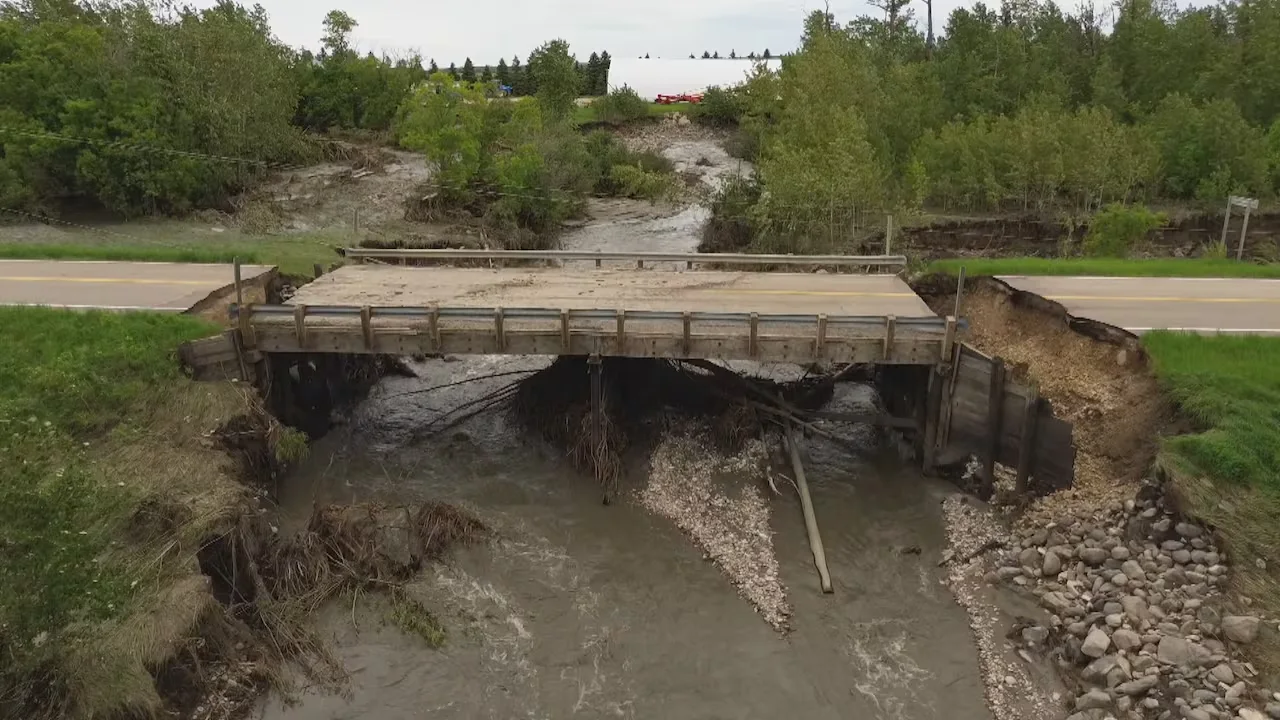
Highway 366, south of Minitonas in western Manitoba, was damaged by flooding in early June. (Jaison Empson/CBC)
There will be five teams of 25 people rotating through the region, the premier said, and they'll be working in the area until Aug. 19.
They already have 81 requests for help and expect that number to increase.
There were 48 local states of emergency in effect in Manitoba as of Friday morning, Stevens said.
Disaster financial assistance is being provided in three programs, for the June 6-8, June 9-10 and the June 28-July 1 storms and associated flooding and storm damage.
In addition to the $500 advance payments, there will be $7.8 million in advance funding sent to communities next week, Stevens said.
An initial $15 million has been allotted for recovery in addition to that amount, and that doesn't include the $15 million set aside to match charitable donations, she said.
"Approximately 80 provincial roads or highways were damaged, and about 50 per cent of those repairs have been completed to date," she said.
She had no estimate of the number of homes and businesses damaged or the number of people displaced.
The province is co-ordinating recovery efforts with local authorities, and getting help from the office of the fire commissioner, Manitoba Hydro and the armed forces and charitable organizations, in addition to the Emergency Management Organization, Red Cross and Team Rubicon, Stevens said.
Kinew said if bad wildfires and flooding events are going to continue, the way governments help will have to change.
"The way the DFA program was designed over the years was that the local community, meaning a municipality or a First Nation, is the first responder, if you will, and then the province, with a cost-sharing element from the federal government, comes in later — and we're talking months and months later — to make a municipality whole," he said.
DON'T MISS: Understanding tornadoes - 5 questions answered
Advancing money early is a change and he plans to broach it the next time he meets with other premiers and the prime minister, he said.
"When you have annual wildfires, annual flooding, what seems like an increasing amount of severe storms, I think Manitobans' expectations have rightfully changed to say that 'we expect assistance as soon as possible,'" said Kinew.
This article, originally published by CBC News on July 10, 2026, was written by Lara Schroeder.