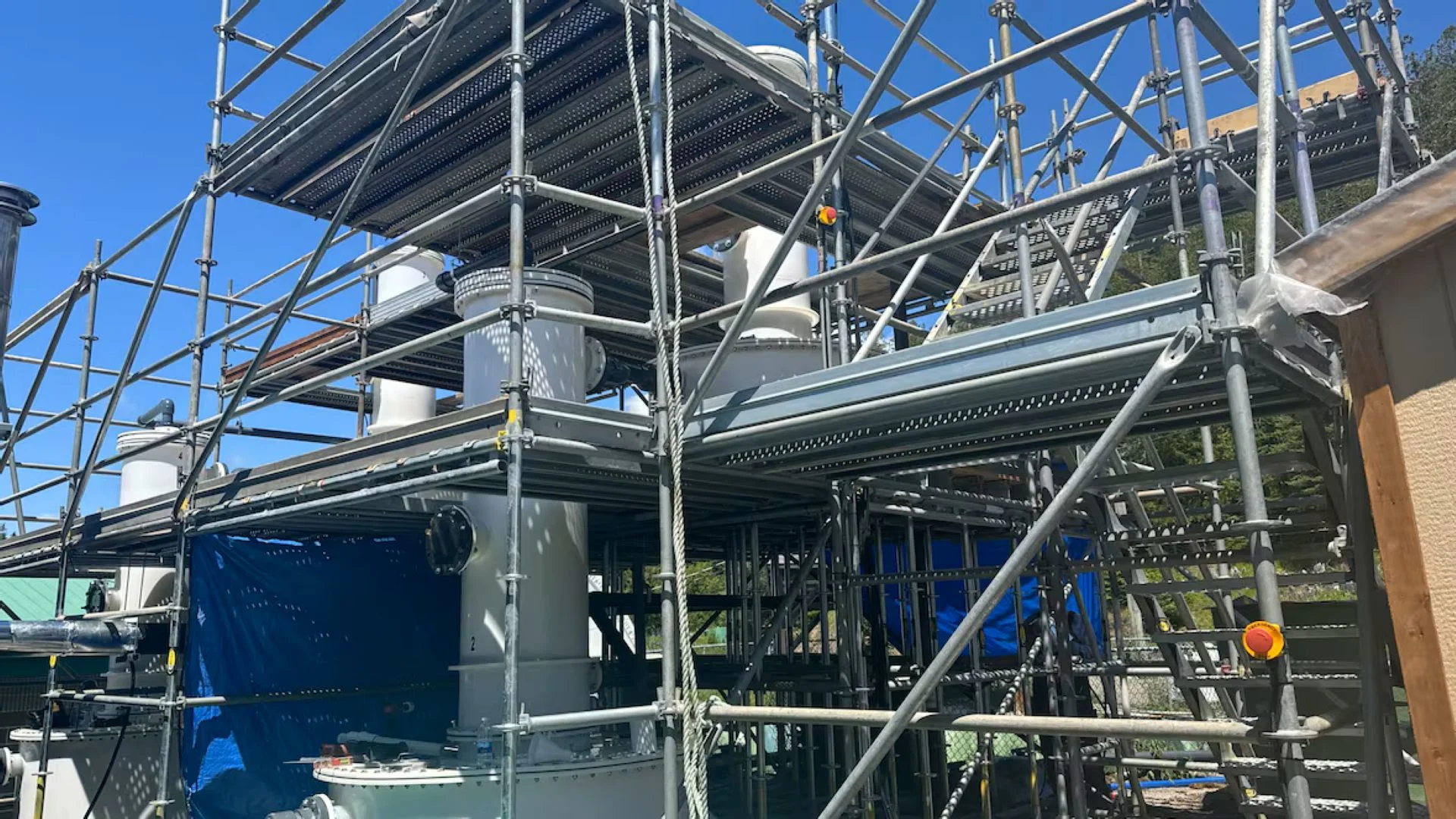
As climate heats up, a Nova Scotia startup is harnessing the ocean as solution

A Nova Scotia startup is testing a method to capture and store more carbon in the ocean, using a new pilot facility to prove the concept.
The ocean is already a major storehouse for excess carbon dioxide. Since the 1980s, it has absorbed about 30 per cent of all human-caused carbon emissions.
The company pHathom is attempting to coax even more emissions out of the atmosphere by capturing carbon dioxide and converting it into a form that can be safely stored in the ocean for millennia.
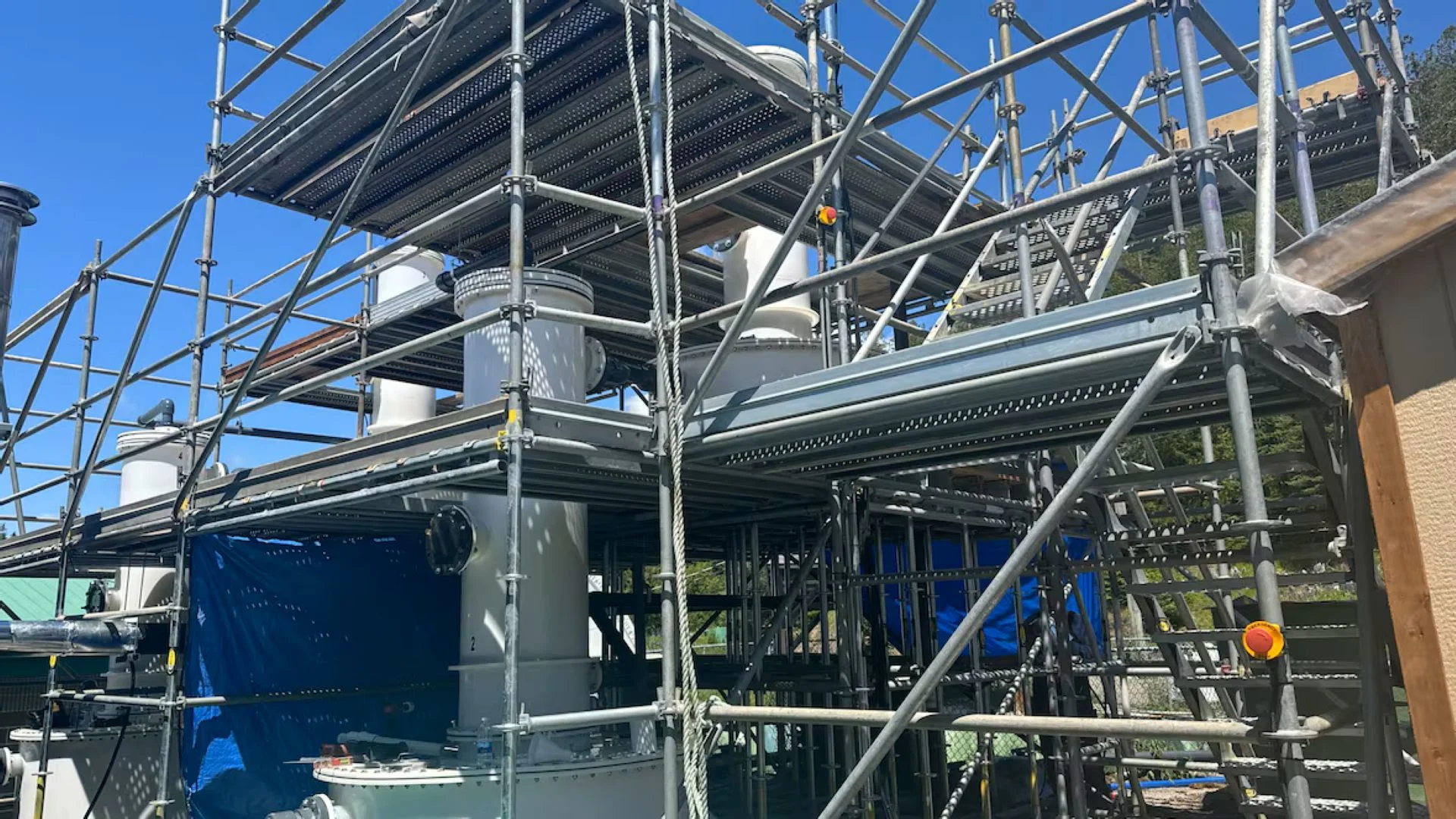
The Huntsman Marine Science Centre in St. Andrews, N.B., is home to pHathom’s pilot facility. The startup is one of several Nova Scotia companies investigating ways to remove carbon dioxide from the atmosphere using the ocean. (CBC)
It will test its approach at the Huntsman Marine Science Centre, a non-profit research and educational facility in St. Andrews, N.B.
Co-founder and CEO Kimberly Gilbert said the pilot is the first step in showing the approach is safe and effective.
“Climate change is a global problem, [but] putting something in somebody's local ocean is a local problem … so the local solution has to be demonstrated and proven as safe,” Gilbert said.
The company's method involves a natural process. As raindrops fall, they absorb carbon dioxide from the atmosphere, becoming slightly acidic.
When those raindrops fall on an alkaline rock like limestone, a tiny bit of that rock dissolves, reducing the water's acidity and converting the carbon dioxide into bicarbonate.
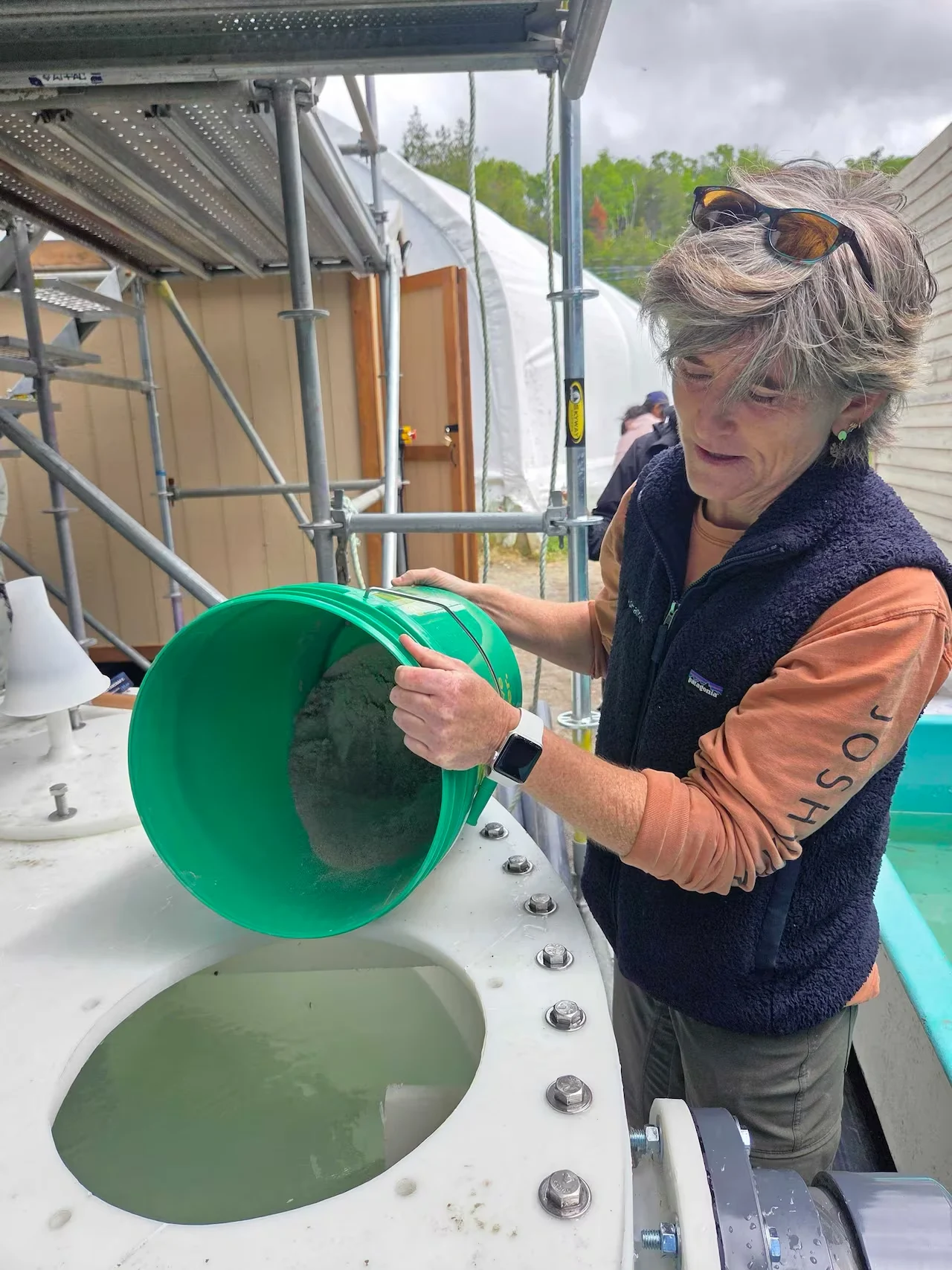
Kimberly Gilbert is the CEO of pHathom. She said the company’s approach is first to do no harm, then to try to do good. (CBC)
Eventually, those raindrops reach the ocean, where the bicarbonate can be stored for tens of thousands of years — keeping carbon dioxide out of the atmosphere.
“We mimic that process, but in a reactor,” said Gilbert.
The method involves taking in seawater and exposing it to the exhaust of a biomass power plant, making the water more acidic. That acidic water is mixed in a tank with tiny limestone particles, converting the carbon dioxide to bicarbonate, and is then sent back into the ocean with the same pH level as regular seawater.
Other companies in Nova Scotia are testing different versions of this approach to carbon removal, a field known as alkalinity enhancement.
This includes Planetary — which is running a project at Tufts Cove in Halifax to add alkaline rock to seawater to increase its pH and allow it to absorb more carbon dioxide. Another company, CarbonRun, is deploying a similar approach on rivers in Nova Scotia.
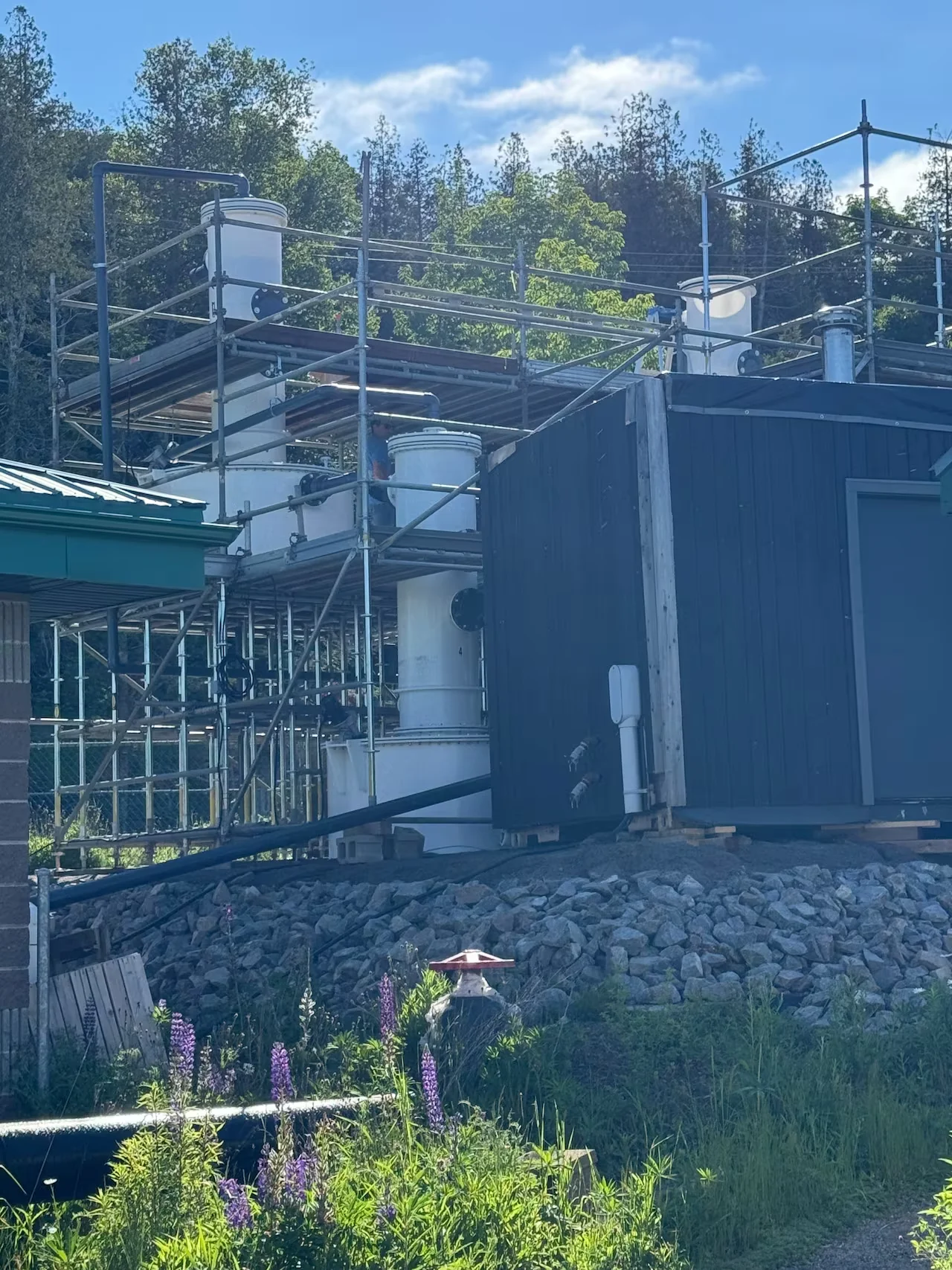
Tests will be run at the Huntsman Marine Science Centre. (CBC)
Gilbert said the benefit of pHathom’s method is that it uses highly concentrated carbon dioxide, making the process more efficient. Because the reaction takes place inside a contained reactor, the environmental impacts are directly measurable.
The pilot phase aims to capture 0.1 tonnes of carbon dioxide per day. To put that scale into perspective, the Belledune coal-fired power plant in northern New Brunswick produces about a million tonnes of emissions per year. The process produces treated water for testing tanks, where scientists observe the effects on a range of marine species over a three-month period.
Davide Asnicar, associate research scientist at the Huntsman Marine Science Centre, said because pHathom’s process is new, there are many questions.
“It's really cool to be at the beginning of this branch of science because it gives you so many opportunities to figure out what's the safety threshold,” he said.
If successful, pHathom plans to scale up with a second test site in Nova Scotia next year, integrating their reactor into an institutional building that is transitioning from a fossil-fuel boiler to a biomass system.
For any carbon removal technology, the ultimate hurdle is scale. Intergovernmental Panel on Climate Change (IPCC) modeling indicates that to limit global warming to 1.5 C, global carbon dioxide removal must scale to between 10 and 20 gigatonnes per year (one gigatonne equals one billion tonnes).
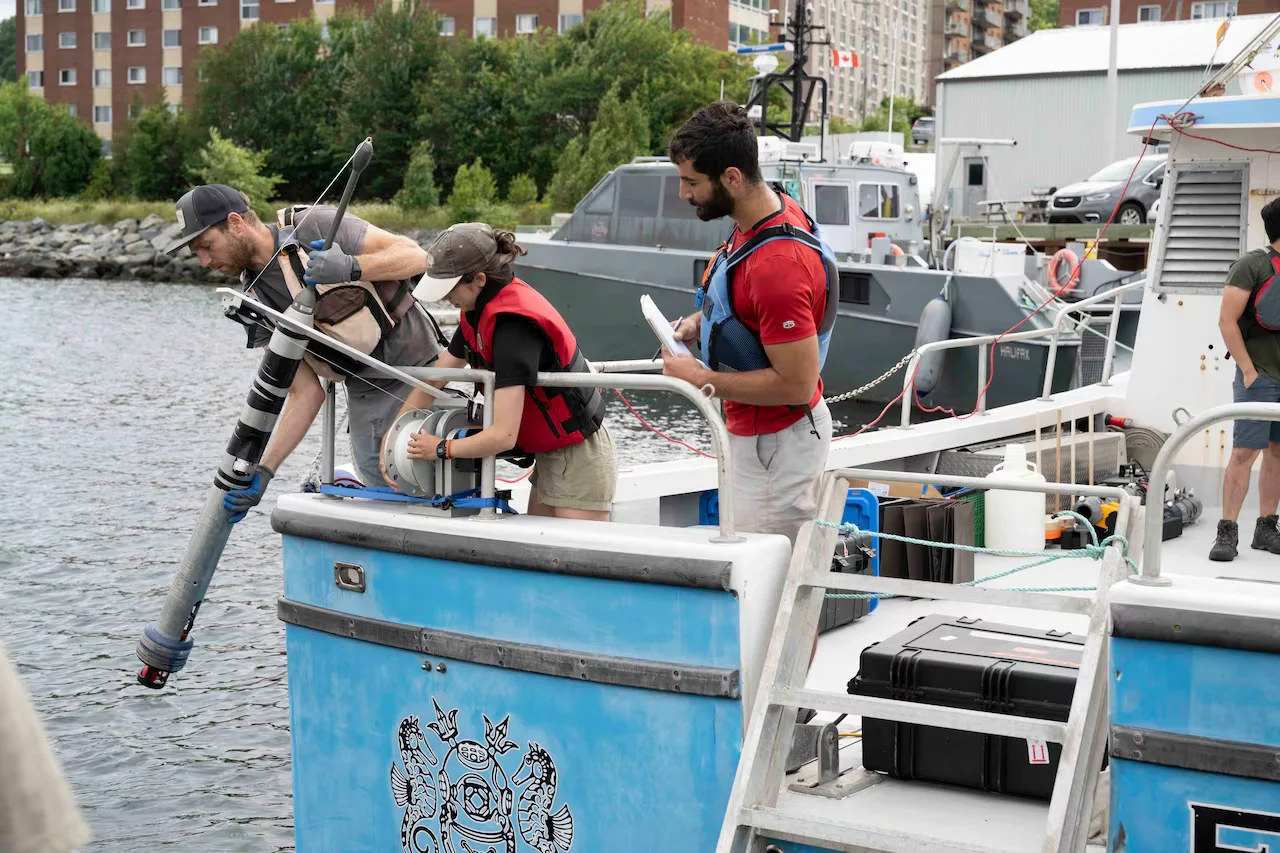
Researchers add tracking devices to Halifax harbour to monitor water movement. (Dalhousie University)
Katja Fennel, a Dalhousie University oceanography professor and lead investigator of the Ocean Alk-Align research consortium, warns that geochemical and regulatory roadblocks loom large.
“For [ocean alkalinity enhancement] to be taken seriously as a climate mitigation technology, we have to get confidence that it can be scaled up to one gigatonne of [carbon dioxide] removal per year,” Fennel said. “It's a daunting challenge, and it's not obvious whether this can be scaled up.”
Energy consumption is another major hurdle, as these extraction and processing methods require significant power to operate.
Nevertheless, Fennel argues that the severity of the climate crisis justifies investigating all promising removal tech—provided the work to transition away from fossil fuels continues.
WATCH: Wetlands could hold the key to carbon sequestration in our oceans
“We have to cut emissions, there is no question about it.”
A Canadian Senate report recently highlighted Canada as a global leader in ocean alkalinity enhancement research, urging the federal government to spearhead international implementation and regulatory frameworks.
However, domestic climate policies face economic headwinds. Recent federal modifications to the industrial carbon price have injected uncertainty into the market, putting the financial viability of several Canadian carbon capture and storage projects at risk.
Despite the policy shifts, Gilbert remains optimistic that economic and environmental realities will eventually force global action. When that pivot happens, she wants the technology to be proven and ready.
”When we start paying attention again and are ready to do something about it, we'll be there.”
Thumbnail courtesy of CBC.
The story was originally written by Moira Donovan and published for CBC News.
