
Toronto, you may get 3.5 more weeks of summer in 30 years: Study

Toronto's summers are getting longer and more intense. New data shows its summers have grown by 30 days since the 1960s, and they may continue to expand rapidly in the decades to come
If you've been feeling like we've been experiencing more days that felt like summer, even if they aren't within the actual season, technically, you're right.
That especially rings true when it comes to Toronto, Ont., which has seen its summer days expand by eight days a decade, according to a new study from the University of British Columbia (UBC). The Toronto data covered the years from 1961 to 2023.
DON'T MISS: Visit our complete guide to Summer 2026 for an in-depth look at the Summer Forecast, tips to plan for it and much more!
Ted Scott, lead author on the study and a PhD student in UBC’s department of geography, examined the major Toronto city and other global locales as part of the in-depth analysis.
What is interesting to note is that Toronto's eight additional days is more than the global average of coastal and inland communities, which is six every 10 years, he said.
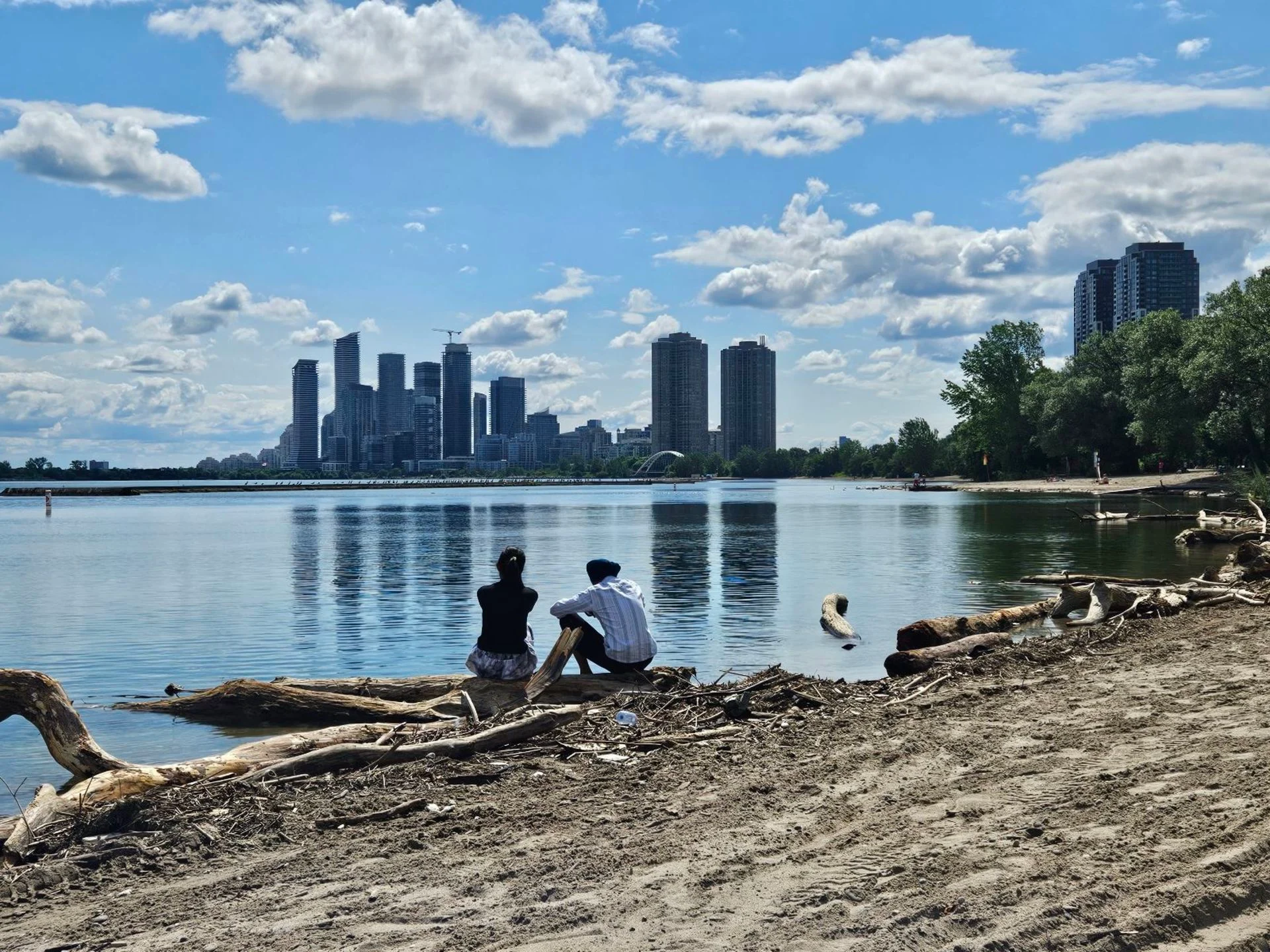
Toronto, Ont. (Michael Vann/The Weather Network)
And in 2023, Toronto experienced 113 days of summer weather as a result of warmer temperatures, nearly one-third of the year. Those summer days were documented from about May 30 until Sept. 20, according to Scott.
"In 30 years, a Toronto summer, according to that trend, becomes about three and a half weeks longer," said Scott, in a recent interview with The Weather Network.
Average summer length has taken a notable leap
While Scott used data spanning from 1961 to 2023 for Toronto, the full study incorporated climate information from 1961-1990. Their results arose from the period of days each year when temperatures rose above what was historically normal for a given location during the warmest part of the year, according to the study.
To reach that conclusion, researchers didn’t use the calendar definition of summer for the northern and southern hemispheres, but rather the weather that was documented.

(James Stamoulakatos/The Weather Network)
Another noteworthy notch on Toronto's climate belt is that from 1961 to 1970, the average summer length was about 80 days.
That median took quite a jump decades later.
In the most recent decade Scott analyzed, from 2014 to 2023, the average was a 110-day summer.
"So, in the period from the '60s to [the 2020s], Toronto summers are about a month longer than they used to be," said Scott.
Cities also seeing abrupt season changes
Researchers also found the change in seasons are becoming more abrupt, particularly from spring to summer and from summer to fall. So, cities are experiencing more sudden, warming temperatures, rather than a gradual warm-up.

(Pixabay/Free to use/Dr. Fuentes Hernandez)
"These have been defined for a really long time. But the stretch of time where we are in between seasons, that spring to summer or summer to fall, those definitely are getting more abrupt," said Scott.
He said the gap between seasons is "shrinking rapidly enough" to where we see the transition happen in a matter of days or weeks, rather than a longer, drawn-out process that can go back and forth before the changeover is finally complete.
Not only that, the consensus is that the transition from summer to fall is happening even more suddenly than spring to summer, a fact that came as a surprise to Scott, he said.
"I expected spring to summer to be the one that was maybe more abrupt, probably because of my own perception. But it turns out at the other end, we're kind of maintaining hot, hot, hot, and then it will cool off quite rapidly, and we would then call it autumn, right?"
Defined seasons still have 'usefulness' despite warming climate
Despite the findings, there is usefulness in the calendar still, and the alignment with the seasons and their definitions, Scott said.
Toronto, Ont. (Getty Images)
While the PhD student and study author admitted it would be a "real shock to human culture" to stop defining seasons by the calendar, we do need to get used to the new reality of a shift in the weather behaviour of our four seasons as a result of climate change.
"We need to rethink when things happen. I used to coach cross-country running. In September, it would often be too hot to really train hard. And yet, the cross-country season runs from September to November in the Northern Hemisphere, as a general rule. At least in the U.S., [anyway]," said Scott.
"So, if you're losing a month of the season, you probably need to consider shifting that season for the health of the athletes involved, and that's just one specific example."
WATCH: How Environment Canada links heat waves to a changing climate
Thumbnail courtesy of Getty Images/IVYPHOTOS/459279449-170667a.
