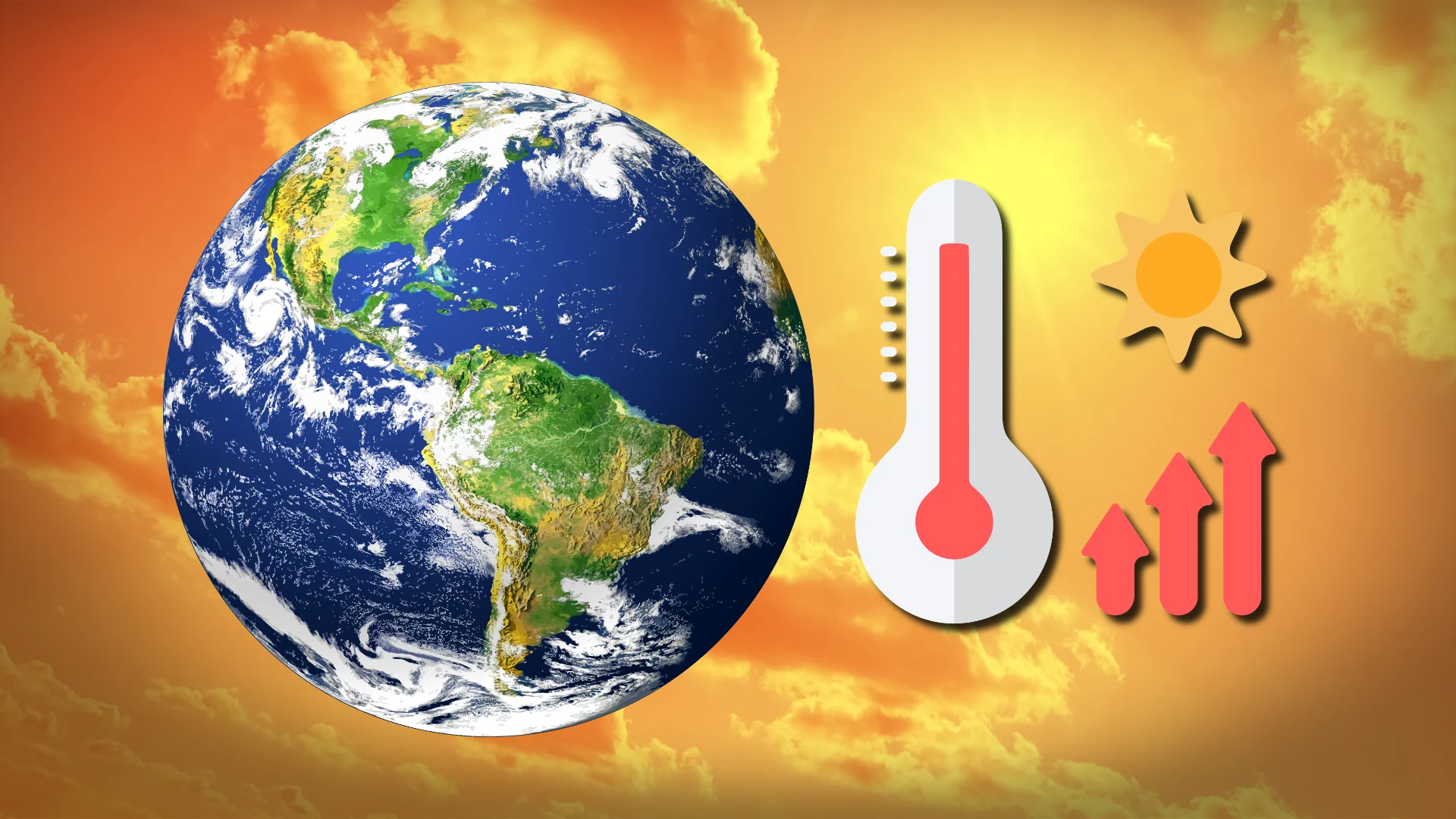
More global temperature records likely as planet continues to heat up

Until 2030, the global, average temperatures stand a good chance of staying on course at or near record levels, a new report says, with a 86 per cent chance that one of the years between 2026 and 2030 will surpass 2024 as the warmest ever
The next five years on the planet could break more temperature records globally as the world continues to warm from climate change.
That's according to a recent report from the World Meteorological Organization (WMO), an assessment produced by the U.K.’s Met Office. Worldwide, average temperatures are likely to continue at or near record levels in that time frame, with the Arctic maintaining a higher anomaly than anywhere else on Earth.
SEE ALSO: Arctic may see single occurrences of ice-free days sooner than predicted
The analysis says the annual, global mean of near-surface temperatures from 2026–2030 are predicted to range between 1.3 C and 1.9 C above the 1850-1900 average.

There is an 86 per cent chance that one year between 2026 and 2030 will surpass 2024 as the warmest year on record, according to the May 2026 update.
The examination also warned of a 91 per cent chance that the global average of near-surface temperatures will briefly surpass 1.5 C above the 1850-1900 median levels for at least one year in the 2026-2030 period.
The aforementioned level was also temporarily usurped in 2024 when the global, average surface temperature was about 1.55 C above the pre-industrial baseline.
Other report highlights
The WMO also singled out the following key findings in the report:
Arctic temperatures over the next five extended Northern Hemisphere winters (November-March) are predicted to be 2.8 C above average temperatures for 1991-2020--more than three and half times that of the global, mean temperature anomaly over the same period
Predictions of Arctic sea ice for March 2026-2035 suggest further reductions in sea ice concentration in the Barents Sea, Bering Sea, and Sea of Okhotsk.
(Getty Images. Credit: FotoDuets. Creative #: 979951132)
Precipitation projections favour wetter-than-average conditions at high latitudes in the Northern Hemisphere for the next five extended winter seasons (November to March). The pattern of increased precipitation in the tropics and high latitudes compared to 1991-2020, and reduced precipitation in the subtropics--particularly in the Southern Hemisphere--aligns with expectations of a warming climate.
Predicted precipitation patterns for May-September from 2026-2030 suggest that wet anomalies in the Sahel, northern Europe, Alaska and Siberia, and dry anomalies over the Amazon, are more likely in that time frame.
Confidence in forecasts is high
The WMO noted that there is a high confidence in the yearly projections of worldwide, average, near-surface temperatures since the hindcasts used to determine them show a "very high skill."
(Getty Images-617583632)
The organization was also quick to point out that single years with annual, global, mean temperatures surpassing the levels of the 1.5 C and 2.0 C threshold specified in the Paris Agreement does not mean the long-term goals set forth in the document are impossible to achieve.
"Temporary exceedances are expected to occur with increasing frequency as the underlying rise in global temperature approaches these levels," said WMO, in the news release.
The 1.5 C to 2.0 range dictated in the Paris Agreement is referring to long-term warming sustained over a prolonged period, normally examined over 20 years.
