
Ice lost on this continent more than 20 times the size of Toronto

Amidst the rapid melting of the planet's ice coverage due to climate change, one continent has lost an amount of grounded ice equivalent to more than 20 times the size of the city of Toronto over three decades
There is good and bad news regarding the ice in Antarctica.
With global warming accelerating the melting of sea and glacial ice globally, Antarctica is a highly uneven story, and is becoming increasingly unstable in key locations.
DON'T MISS: Arctic may see single occurrences of ice-free days sooner than predicted
A recent study, published in the Proceedings of the National Academy of Sciences, shows that 77 per cent of Antarctica’s coastline has experienced no grounding-line migration since 1996. However, it doesn't necessarily mean those glaciers are stable.
In fact, there is a focused ice retreat in West Antarctica, the Antarctic Peninsula and portions of the eastern side of the continent. The result has been a loss of 12,820 square kilometres of grounded ice.
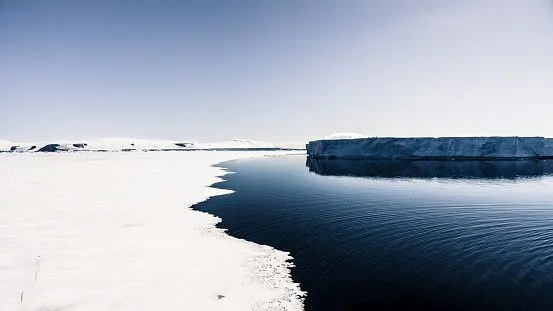
Antarctica. (Mlenny/Getty Images-1995022871-170667a)
For folks wanting to know a size comparison, the city of Toronto, Ont., encompasses a land mass of approximately 630 square kilometres. So, the amount of grounding ice loss in Antarctica is more than 20 times the size of Toronto.
“The grounding line is where continental ice meets the ocean, and measuring the movement of grounding lines with satellite-based synthetic aperture radar has been our gold standard for documenting ice sheet stability,” said Eric Rignot, lead author and University of California, Irvine (UC) distinguished professor and Donald Bren professor of Earth system science, in a news release.
“We’ve known it’s critically important for 30 years, but this is the first time we’ve mapped it comprehensively across all of Antarctica over such a long time span.”
Where the ice sheet is retracting most
According to the study, the average rate of the ice sheet withdrawal from the grounding line is 442 square kilometres a year.
Where the continent is seeing the biggest adjustments is in West Antarctica’s Amundsen Sea and Getz locales, where glaciers experienced a horizontal retreat between 10 kilometres and 40 kilometres.
Other documented retractions include 32 kilometres of the Pine Island Glacier, 26 kilometres of the Thwaites Glacier, and a whopping 42 kilometres of the Smith Glacier, the analysis revealed.
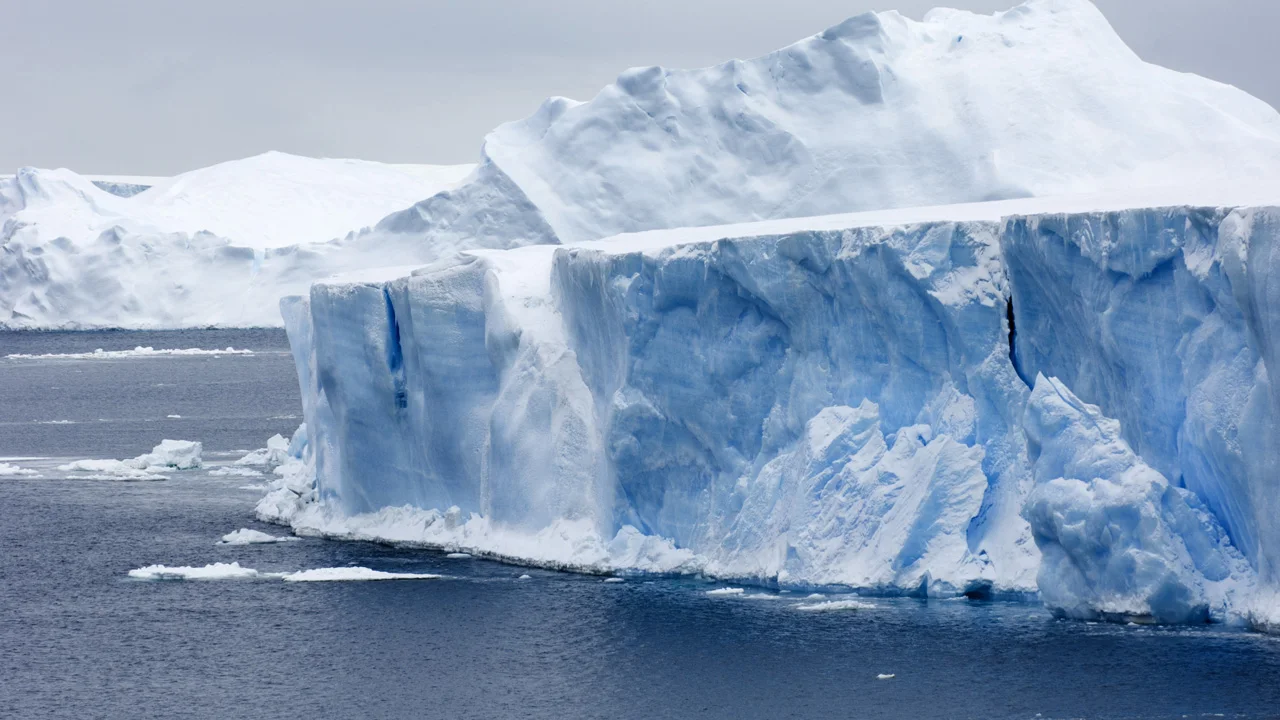
Iceberg. (David Tipling/Universal Images Group via Getty Images)
“Where warm ocean water is pushed by winds to reach glaciers, that’s where we see the big wounds in Antarctica,” said Rignot. “It’s like the balloon that’s not punctured everywhere, but where it is punctured, it’s punctured deep.”
The results were uncovered by UC Irvine and NASA Jet Propulsion Laboratory scientists who reviewed 30 years of satellite data to make measurements of the ice sheet retreats across Antarctica.
On the other hand, the study highlighted a more positive story on the continent. It found that more than 75 per cent of Antarctica’s coast-reaching glaciers are stable, with the remaining ice floes experiencing "aggressive melting."
WATCH: Scientists accidentally discover a new island revealed by melting ice in Antarctica
Some of the disappearance is 'puzzling'
Much of the ice withdrawal patterns can be pinpointed to the invasion of warm ocean water beneath ice sheets. But what scientists find "puzzling" is the reason for the major, grounding-line migration found adjacent to the northeastern Antarctic Peninsula, the UC Irvine media release said.
“A lot of these places have warm ocean water in proximity, but on the east coast of the peninsula, there’s substantial retreat, and we don’t have evidence for warm water,” said Rignot, also a senior research scientist at NASA’s Jet Propulsion Laboratory. “Something else is acting, [so] it’s still a question mark.”
Before the study was conducted, numerous ice shelves and glaciers had crumbled. Most notably, Edgeworth (16-kilometre loss), Boydell, Sjogren, Bombardier and Dinsmoor have all experienced a major retreat.
The Hektoria, Green and Evans glaciers shed 21 kilometres, 16 kilometres and nine kilometres, respectively, beyond their 1996 grounding-line positions, according to researchers.

(Bill Boswell/Submitted to The Weather Network)
The continental, grounding-line documentation is key to offering vital standards for the next-generation ice sheet models that are used to forecast future sea level rise.
“Models have to demonstrate they can match this 30-year record to claim credibility for their projections,” said Rignot. “That’s the real value of this observational record: Knowing that this grounding-line migration has happened. If a model can’t reproduce this record, the modelling team will need to go back to the drawing board and figure out what boundary conditions or physics are missing.”
As well, researchers said the results of the study give notable context for large balance evaluations.
The verification of the amount of ice that is stable in Antarctica, 77 per cent, is helpful in harmonizing the varying outcomes from different measurement tactics in East Antarctica. In addition, the scientists' work solidifies where significant grounding-line retreat is actively occurring in other parts of the continent.
WATCH: Exhibit shows shocking photos of penguins in a warming Antarctica
With files from Tyler Hamilton, a meteorologist at The Weather Network.
Thumbnail courtesy of Marc-Andre Le Tourneux/Getty Images-501027517-170667a.
