Gulf Stream goes Canadian: It’s happened before and it could again

In a rapidly changing climate, Atlantic Canada was once an oceanic hot spot. Now, scientists fear it may happen again in the near future.
Our oceans are changing—they are getting warmer, and water levels are rising. Now, scientists are finding growing evidence that the Atlantic Meridional Overturning Circulation (AMOC) system, which is responsible for circulating oceanic waters, temperatures, and marine nutrients across the Atlantic, is beginning to weaken.
SEE ALSO: New bill could triple NOAA's Hurricane Hunter fleet starting in 2027
As scientists around the world continue to research how exactly our rapidly changing climate will impact ocean currents, one team of paleoceanographers opted to look to the past instead. What they found was evidence supporting something that climate and oceanic models have long-theorized as a possibility.
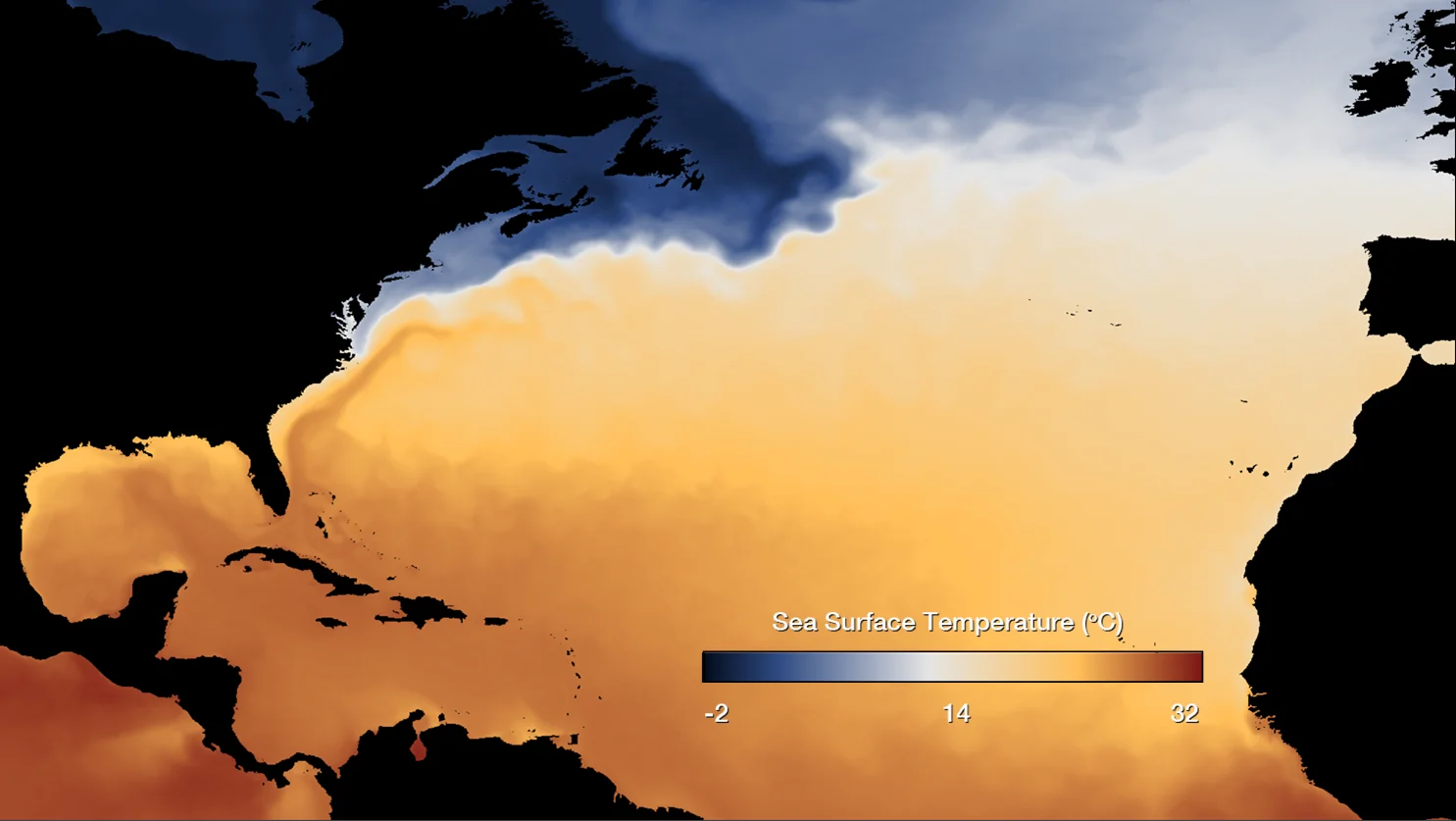
The warm Gulf Stream current along the East Coast of the United States transports heat northward towards the cooler high latitudes. The Labrador current keeps waters colder near the Canadian coast. (NOAA)
Looking back in time to the Younger Dryas
About 13,000 years ago, as Earth was just coming out of the last ice age and the climate was in a steady state of warming, an abrupt cold snap gripped the global climate, sending the planet into a mini ice age that lasted for about 1,300 years. This event was dubbed the Younger Dryas and it is the best-known example of abrupt climate change in Earth’s climate history.
RELATED: Key ocean current weaker than previously thought, could collapse in 30 years
The team of paleoceanographers, who published their findings in Nature Communications, wanted to understand how the ocean’s currents responded to the abrupt climate change that took place back then, in the hopes of catching a glimpse of what might await us in our future.
To do that, they analyzed ocean sediment and microscopic fossils found preserved on the ocean floor from three different locations, including off the coast of Nova Scotia. This allowed them to effectively see and recreate what the Atlantic Ocean was like in the time during and surrounding the Younger Dryas.
What they found was that while ocean temperatures were rapidly cooling elsewhere, water temperatures off of Atlantic Canada’s coast had actually increased by 4-5°C, making the region a hotspot in an otherwise cooling world.
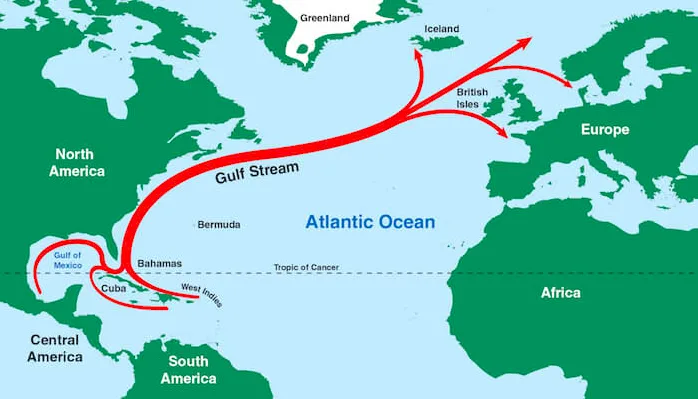
The Gulf Stream transports warm sub-tropical waters from the Gulf of Mexico up to western Europe. (NOAA/JPL-Caltech)
The cause? They believe the most likely explanation is that the Gulf Stream, which carries warm subtropical waters from the Gulf of Mexico northward across the Atlantic toward Europe, shifted north in response to the rapidly changing climate, bringing the subtropical waters closer to the Canadian coast.
The researchers do note, however, that they did not find evidence to support that the AMOC had collapsed during the Younger Dryas—only that the ocean currents restructured themselves over a short period.
While some models do predict we could see a similar situation unfold again, looking to the past isn’t a definitive way to predict the future—it merely provides a general idea of one possibility out of many.
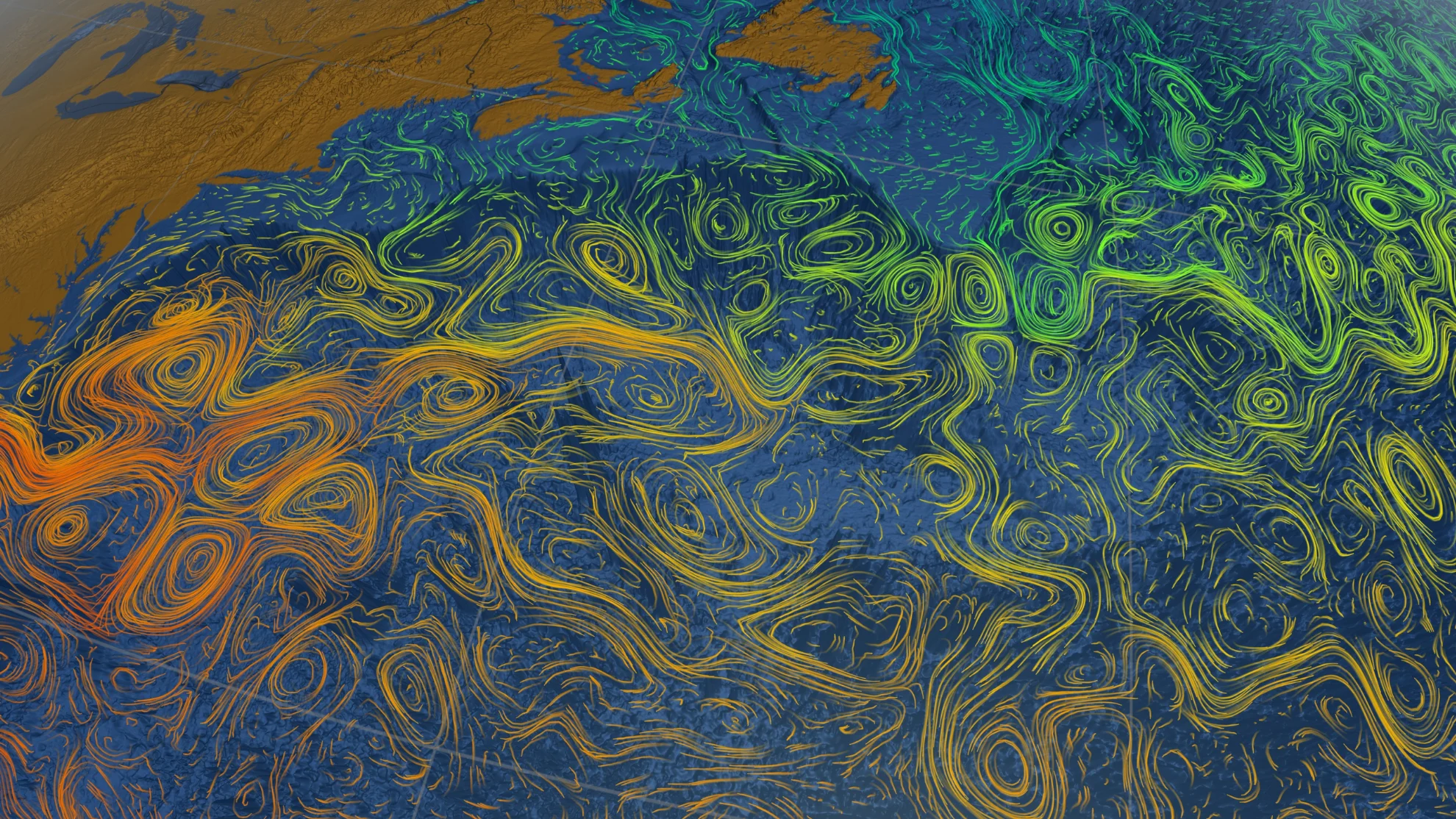
Thumbnail image credit: NASA/Goddard Space Flight Center Scientific Visualization Studio.
