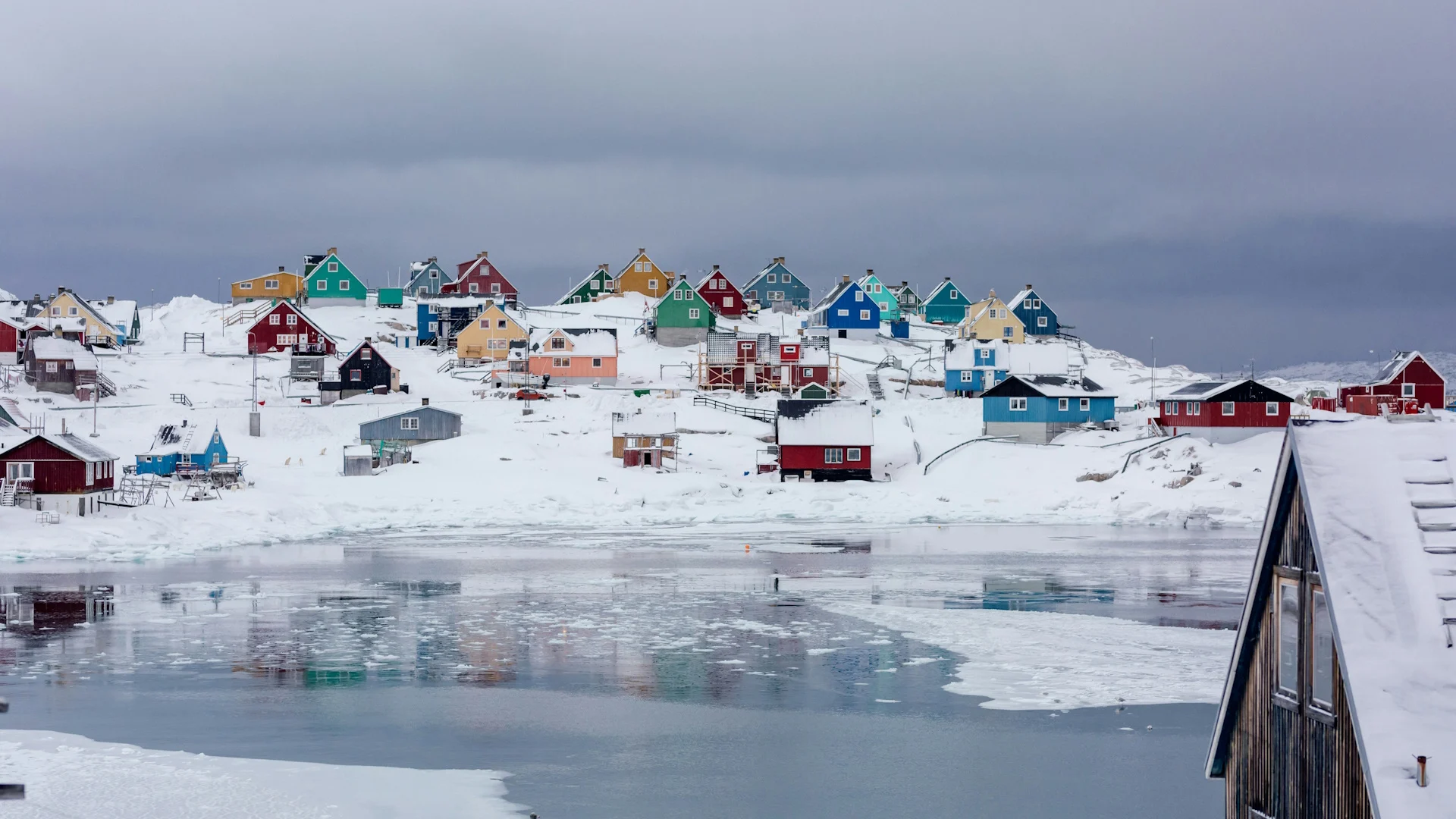
Greenland is a pristine gem of the Arctic. It’s warming fast

The world’s largest island is home to tens of thousands of people
Greenland is a hot topic for such a cold, remote corner of the globe.
The huge island next door to Canada is a pristine gem of the Arctic, an ice-covered habitat that’s largely untouched by exploration or industry.
But the region is among the first in line to feel the extreme effects of climate change.
DON'T MISS: Why the Arctic's accelerated warming is an alarm bell for the planet
Greenland is a territory of Denmark
Historians trace indigenous roots in Greenland dating back more than 4,500 years.
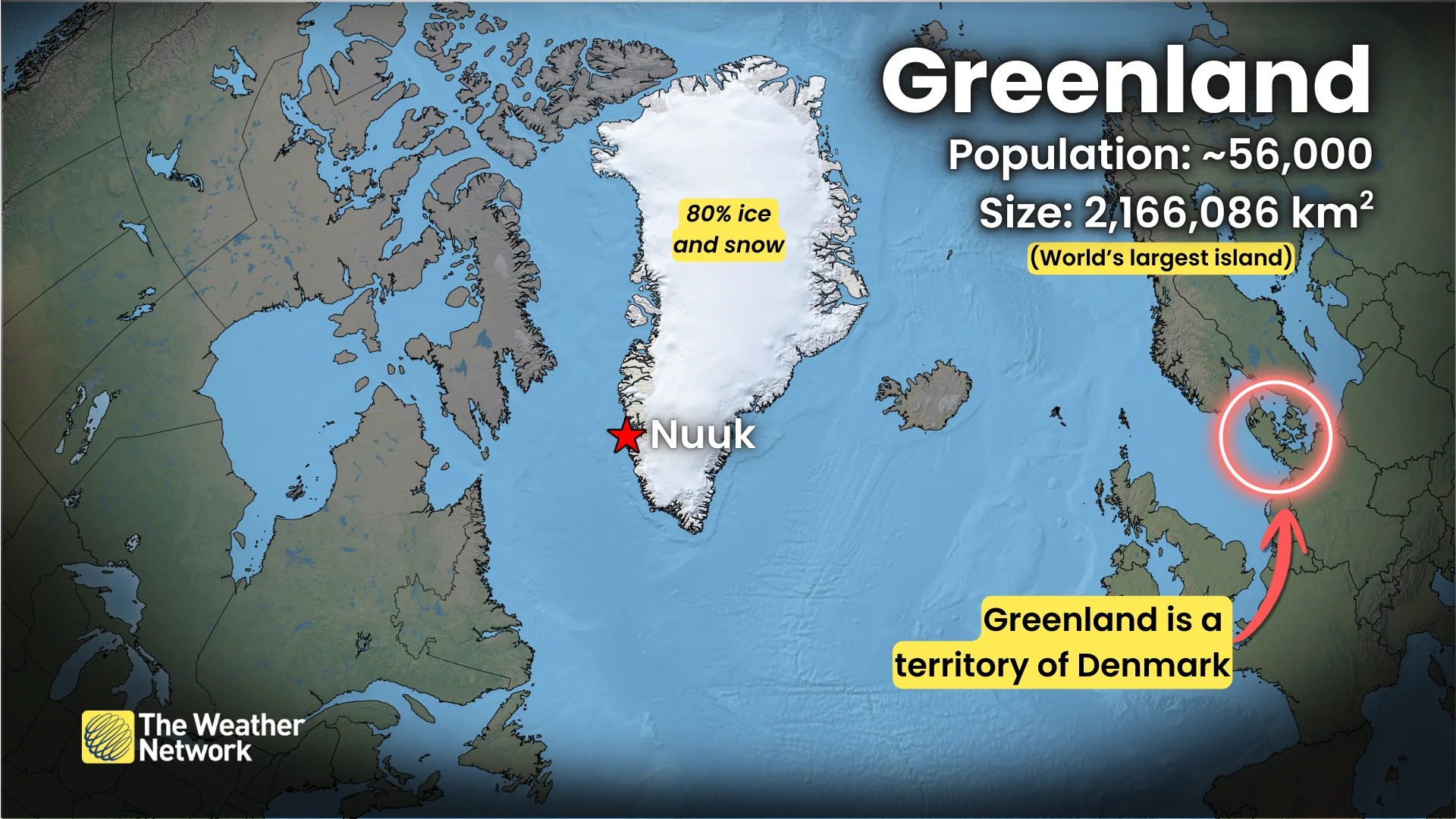
European explorers first established settlements on the island around 1,000 years ago, and a Norwegian expedition colonized the island in the 1720s.
Denmark took control of Greenland in 1814 under the Treaty of Kiel. Greenlanders achieved home rule in the mid-20th century, and voters adopted a referendum in 2008 that’s widely seen as the last step on the eventual road to full independence.
Greenland is 80 per cent ice and snow
It’s not hard to see how ships wound up landing on the region’s rocky shores. Greenland is the world’s largest island at 2,166,086 square kilometres.
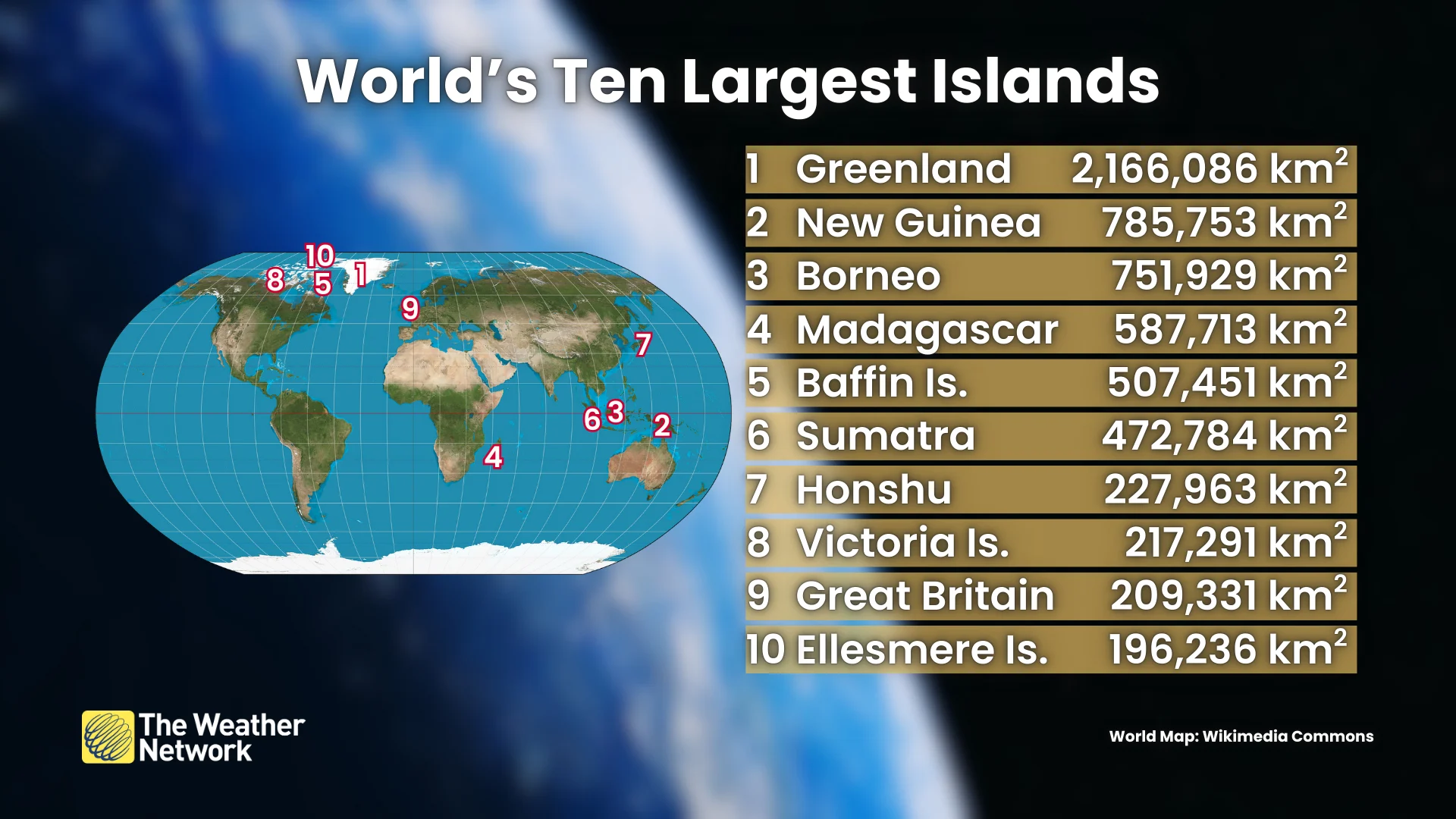
Greenland is so expansive that it’s more than four times larger than neighbouring Baffin Island, which itself is the fifth-largest island on Earth.
Despite its impressive size, 80 per cent of Greenland is covered by ice and snow, and almost all of the island’s 56,000 residents live in coastal communities on the relatively temperate southwestern shores.
Greenland saw one of the world’s coldest temperatures
That mammoth ice sheet is supported by some of the world’s lowest temperatures.

Greenland holds the record for the coldest reading ever observed in the northern hemisphere. The achievement was measured by an automated weather station near the centre of the island’s ice sheet on Dec. 22, 1991.
A weak ridge of high pressure over the region trapped exceptionally frigid air at the surface. Relatively calm winds helped temperatures cool down even further, pushing the temperature to a bone-chilling -69.6°C.
That’s several degrees colder than Canada’s low-temperature record of -63.0°C, but falls far short of the world record of -89.2°C measured in Antarctica back in July 1983.
Temperatures are warming fast across Greenland
A recent study found that temperatures across the Arctic warmed four times faster than anywhere else in the world between 1979 and 2022.
RELATED: Greenland glaciers melt five times faster than 20 years ago
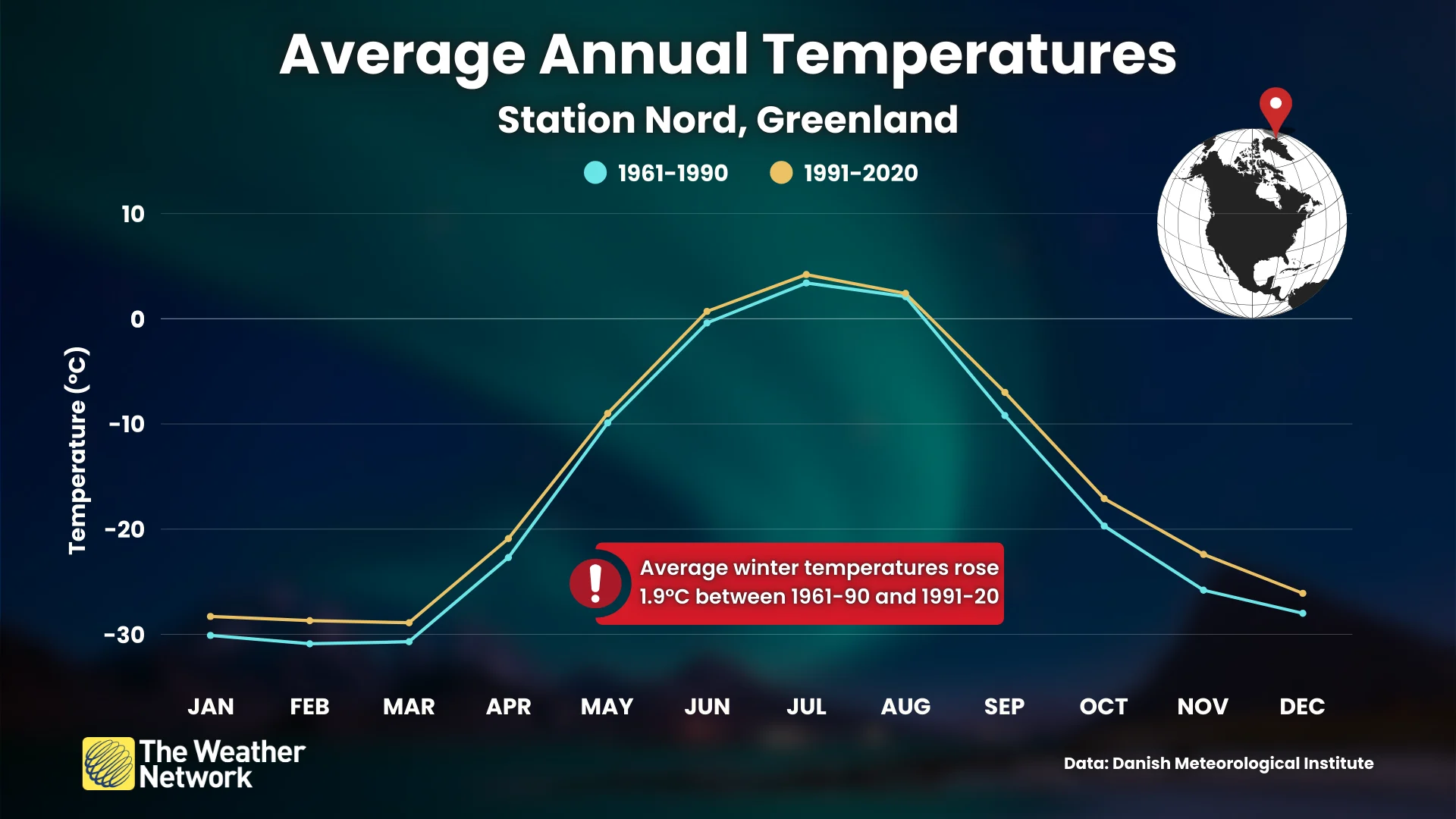
That warming is apparent in the region’s climate records. Station Nord, located in far northeastern Greenland, saw its average wintertime temperatures rise nearly 2°C between the climate periods of 1961-1990 and 1991-2020.
Rising temperatures are bad news for an island that’s mostly covered by ice and snow. Scientists use the rapid icemelt in Greenland as a benchmark for how quickly the atmosphere is warming.
Greenland lost nearly 5.8 trillion metric tonnes of ice between May 2002 and September 2025, according to data collected by NASA. Another study found that the island loses nearly 200 square kilometres of ice every year.
Meltwater running off the island directly contributes to global sea level rise. The immense loss of ice over the past quarter-century has contributed to the 64 millimetres of sea level rise observed over the same time period.
Sea level rise is a serious threat in Canada and around the world. A recent study found that millions of Canadians will be exposed to coastal flooding if seas rise as much as projected by the end of the century.
Header image courtesy of Unsplash
