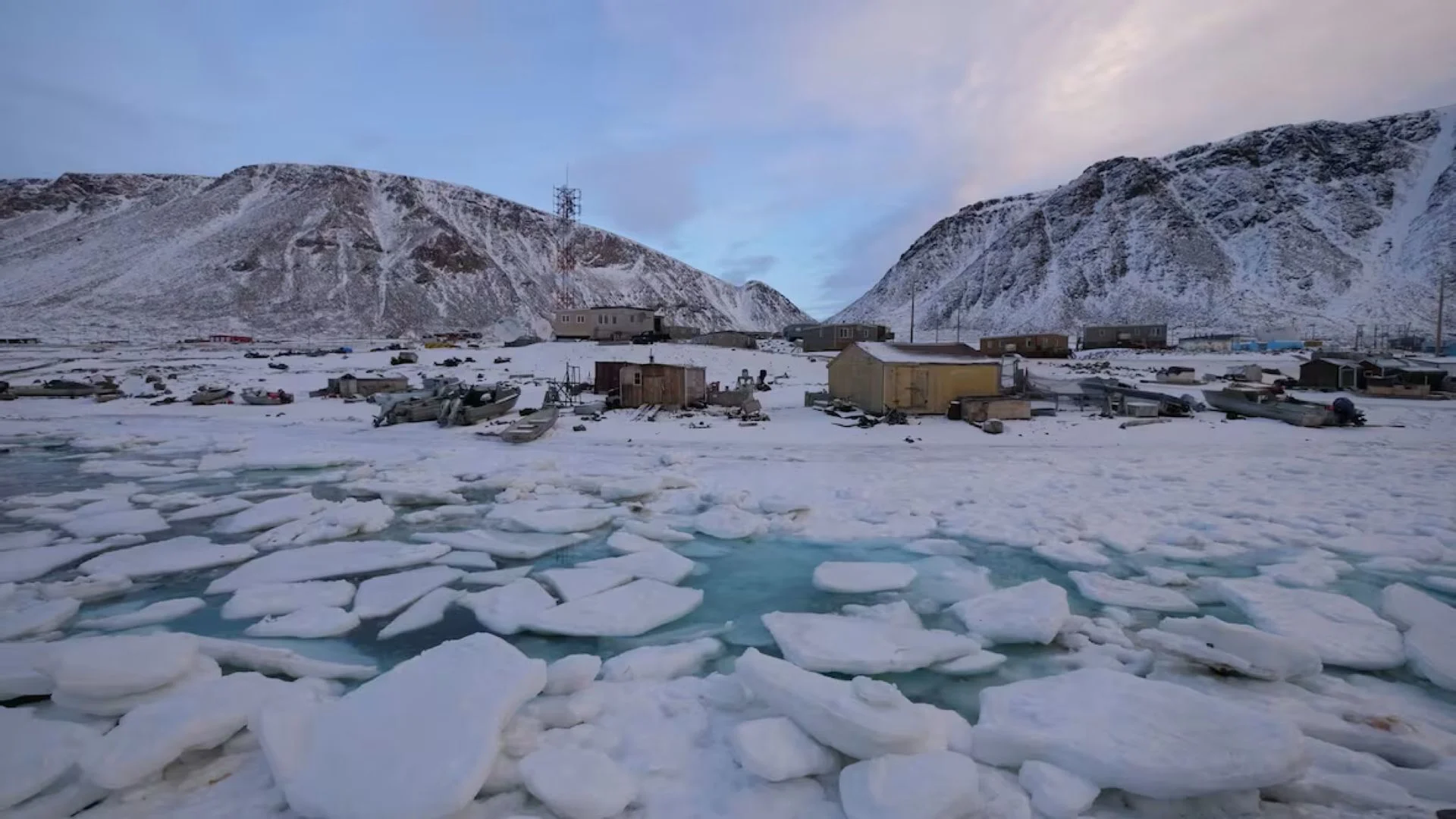
Declining sea ice means larger waves, less predictable seas in Grise Fiord, Nvt.

For community members in Grise Fiord, Nunavut, it wasn't long ago that Thanksgiving weekend meant heading out on the sea ice with snowmobiles, ready to hunt seals, recalls Marty Kuluguqtuq, secretary-treasurer for the community's hunters and trappers organization.
Recently, that annual tradition has changed, as warming sea temperatures mean the sea ice that is present in Jones Sound during the early fall isn't yet thick enough to travel on safely.
"It's either too risky to go on a snowmobile or too thick to go out by boat," Kuluguqtuq said. "So there's certainly some impacts and certainly some time changes that we are trying to get accustomed to."
According to a new study from the Université du Québec à Rimouski, declining sea ice in the area is resulting in larger waves, as winds can travel farther across open water. Those rougher seas then affect the water's ability to retain any sea ice at all.
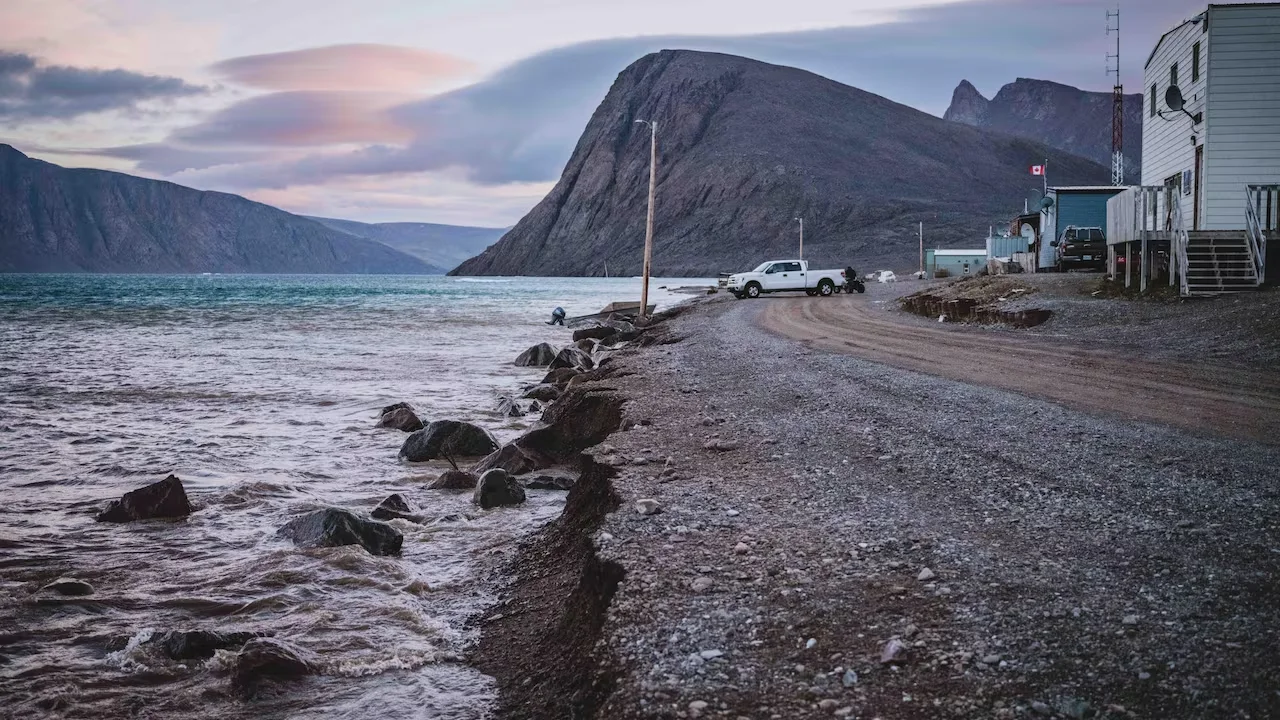
Declining sea ice in and around Grise Fiord has meant higher waves and rougher seas. The changing maritime environment is also partly responsible for the erosion of the community's coastline. (Submitted by David Didier)
For community members, this means heading out to sea can carry greater risks. Kuluguqtuq says many people are waiting later in the season to head out by snowmobile, while launching boats into the sea can be a gamble if the tides change unexpectedly.
"That's why it's not rare that we're going to see people hoping that the storm season will stop in the fall earlier so they can go boating again," said David Didier, an Arctic researcher at the Université du Québec à Rimouski and a co-author on the study. "Because those large waves coming to the shore, they are also not helping so much for food security. It's hard to put the boats in the water."
Extreme weather outcomes
Larger waves around Grise Fiord are directly responsible for 25 per cent of the extreme weather events that have happened in the community historically, according to the study.
Rougher seas are also resulting in 30 per cent of instances where the community reaches its highest water levels each year.
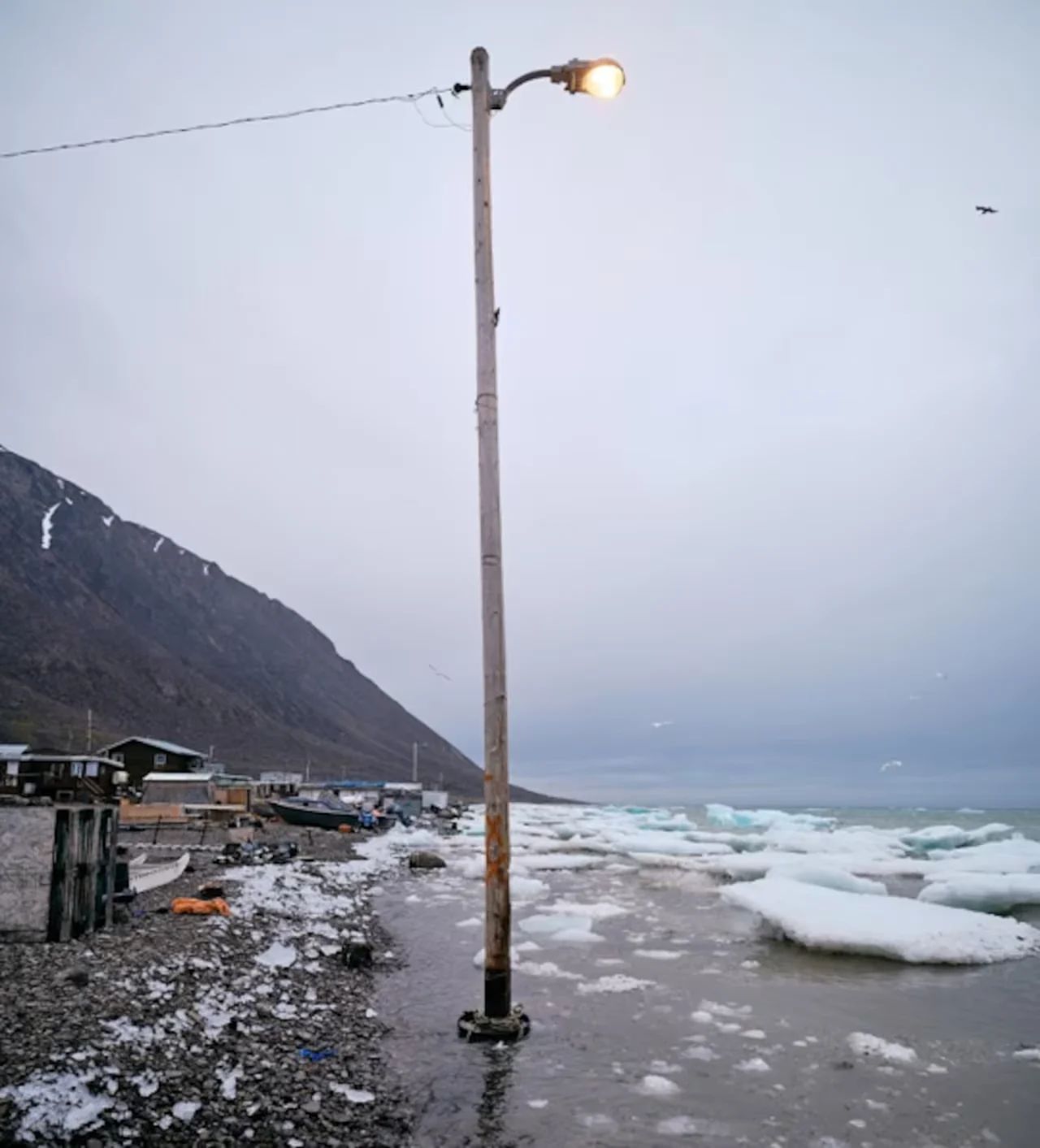
Flooding due to high waves in Grise Fiord. The decline in sea ice has also contributed to increased flooding in the community. (Submitted by David Didier)
Over the past few years, the community has experienced flooding, damaging local infrastructure, and eroding the coastal shoreline due to high water.
"The pounding of the beach will go towards the road, and that impedes our municipal service for the community as well," Kuluguqtuq said. "Some of [our] equipments have been damaged by the waves, and there are light poles, telephone poles that have been affected by these waves in the past."
Jérémy Baudry, the study's lead author, adds that community elders have pointed out that the coastal erosion from the waves has also changed the slope of the local shoreline, making it difficult to get boats into the water.
Currently, the largest waves in the area hit a maximum height of one metre, which the study predicts will not be exceeded in the next century.
However, by the end of that century, major wave events are expected to happen roughly 15 times a year as sea ice continues to diminish and open water continues to expand.
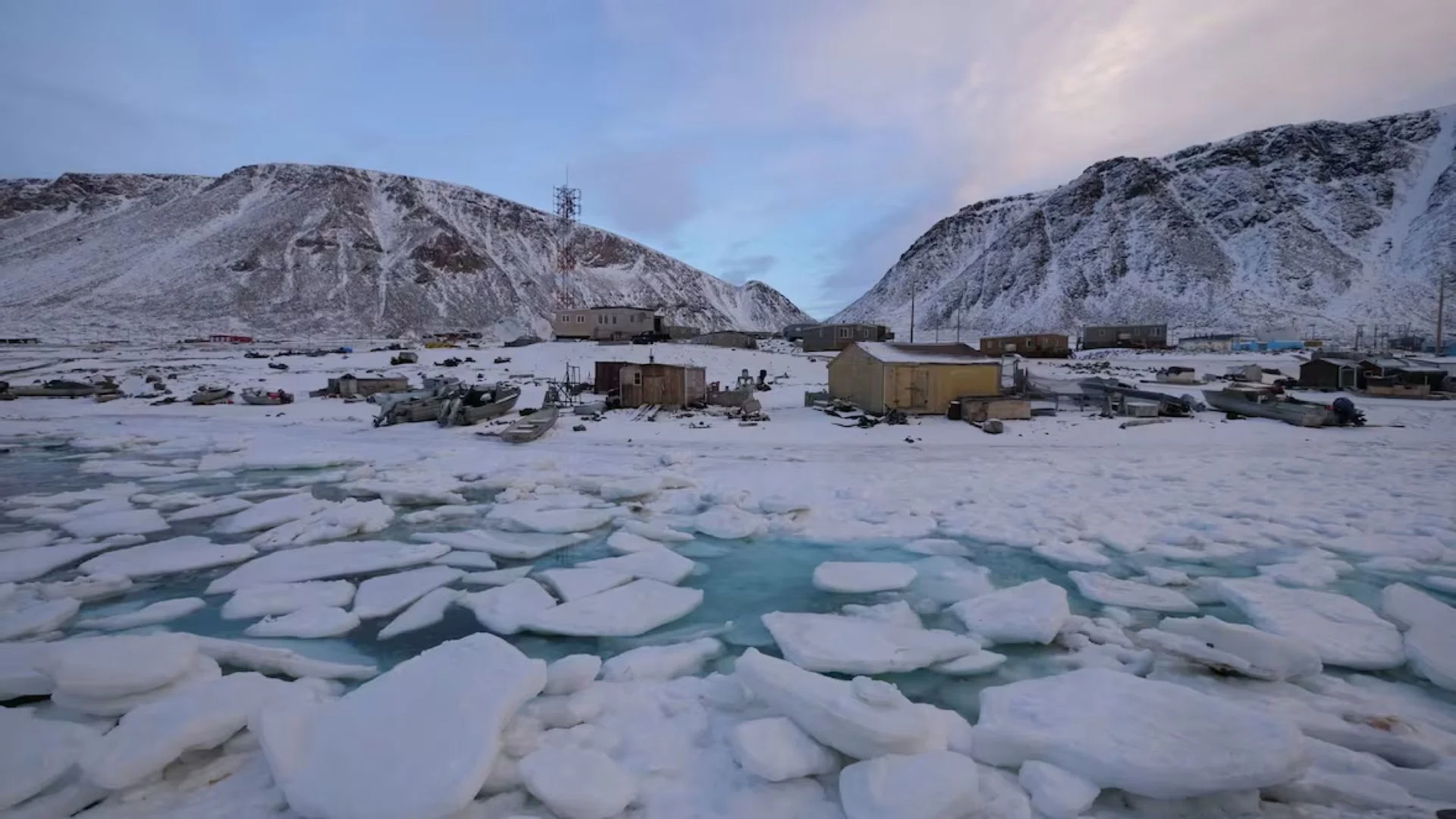
Declining sea ice in Grise Fiord is translating to larger waves and unpredictable seas. Community members say they are no longer able to traverse onto the sea ice as early as they used to. (Matisse Harvey, Radio-Canada)
"What matters is not necessarily that we produce higher waves, but instead we produce more frequent events with waves that we consider now to be extreme for this particular area," Baudry said.
Mitigating future risks
With extreme weather events expected to continue in Grise Fiord over the next century, community members are actively working with researchers to mitigate the risk.
Using modern monitoring technologies, locals are able to get real-time data on changing wave conditions and tides. To ensure boats can still access the water, Kuluguqtuq says the community is working to build a small-craft harbour.
"Nowadays technology is evolving, and we like to be part of it too," Kuluguqtuq said. "Right now with the assistance of these studies and workstations, we are able to give some real-life data to assist ... individuals."
Didier says going forward, researchers are working with community members to create a short-term prediction system for sea conditions in the area.
The study was published in the journal Communications Earth & Environment on Nov. 23.
Thumbnail courtesy of Matisse Harvey, Radio-Canada via CBC.
The article was originally written by Liam Baker and published for CBC News.
