Canada loses its last ecosystem of this kind after an ice-shelf split

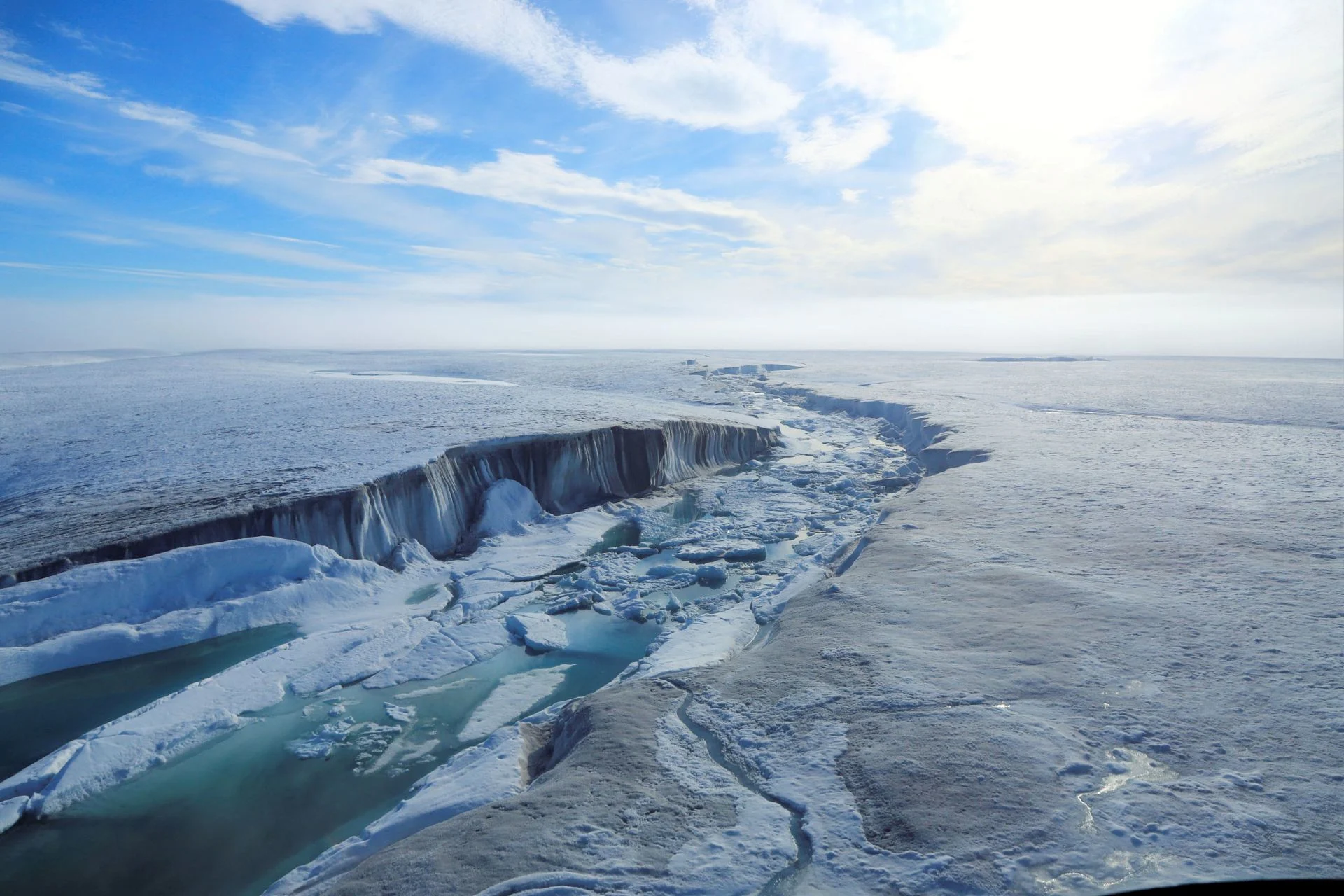
Canada's last epishelf lake has disappeared and drained into the Arctic Ocean following the 2020 collapse of the Milne Ice Shelf. A new study confirms that it will not recover.
Canada is renowned for its beautiful, vast landscapes, but with climate change's damaging impacts, the country has lost the last of a unique ecosystem that has been around for thousands of years.
A new study has verified that the country's last epishelf lake has been depleted, with the fresh water filtering into the Arctic Ocean in the wake of the July 2020 breakup of the Milne Ice Shelf. It lost 45 per cent of its area, resulting in the removal of the barrier that held the fresh water in place.
SEE ALSO: 'They are going to disappear': Western Canada glaciers face bleak future
The lake will not make a recovery, according to a recent analysis involving researchers from the universities of British Columbia (UBC), Alberta, Laval and Carleton.
"We're sad that we won't get to study them for the sake of learning more about these unique environments before they disappear," said Derek Mueller, a professor of geography and environmental studies at Carleton University, in a recent interview with The Weather Network.
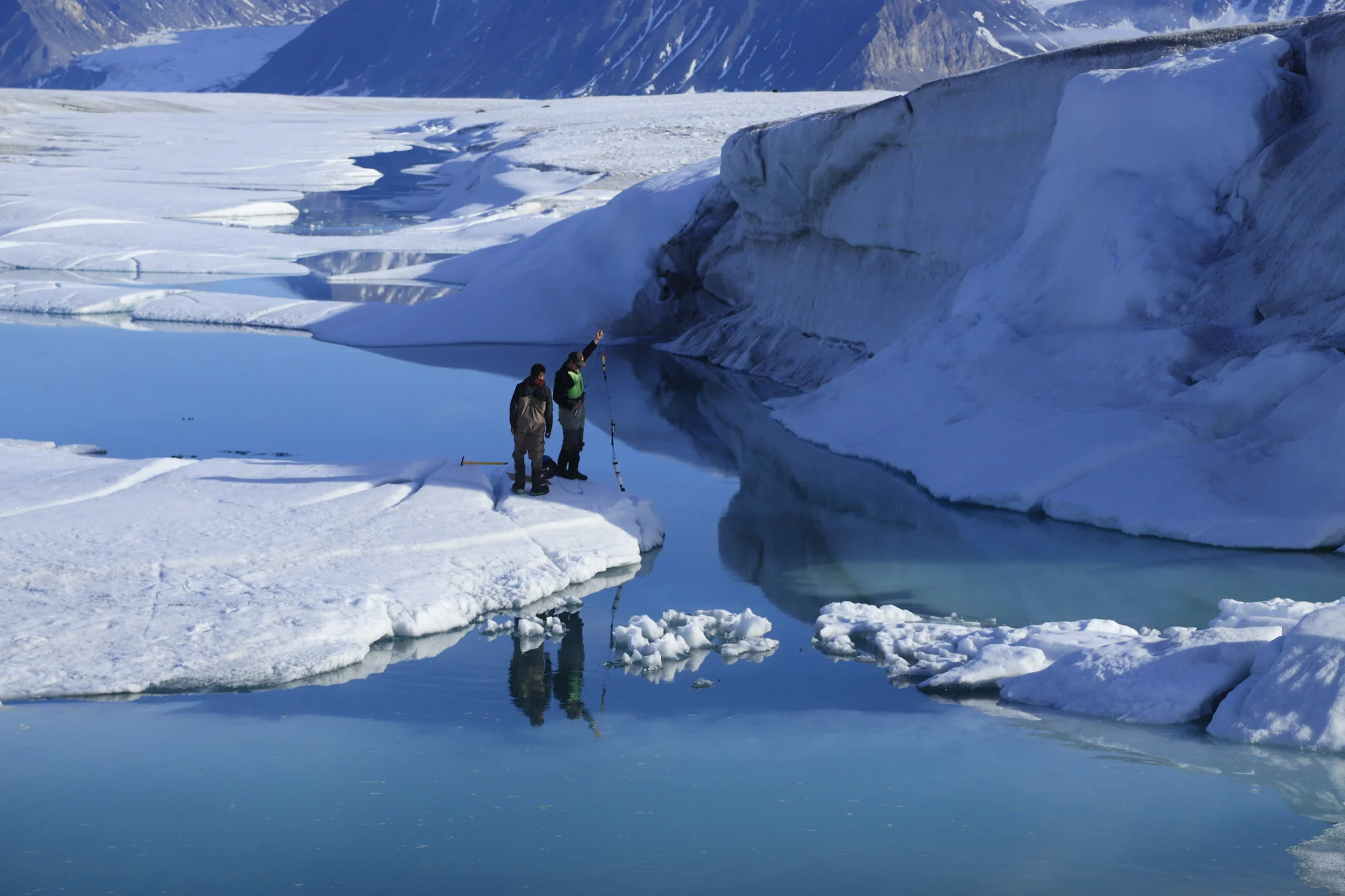
Researchers Joseph Shoapik and Jérémie Bonneau lower instruments through cracks in the ice shelf to measure temperature and salinity at different depths in the water below. (Cameron Fitzpatrick/Submitted to The Weather Network)
Epishelf lakes may have existed for as much as 4,000 years
The study noted that epishelf lakes form when an ice shelf acts as a dam, trapping a layer of fresh water floating above seawater that is connected to the ocean.
Situated on northern Ellesmere Island in Nunavut, the Milne Fiord epishelf lake supported freshwater micro-organisms near the surface and marine species below it.
Andrew Hamilton, study co-author and research scientist at the University of Alberta, noted that the epishelf lakes that were present along the northern coast of Ellesmere Island have been present there for "much of" the past 4,000 years.
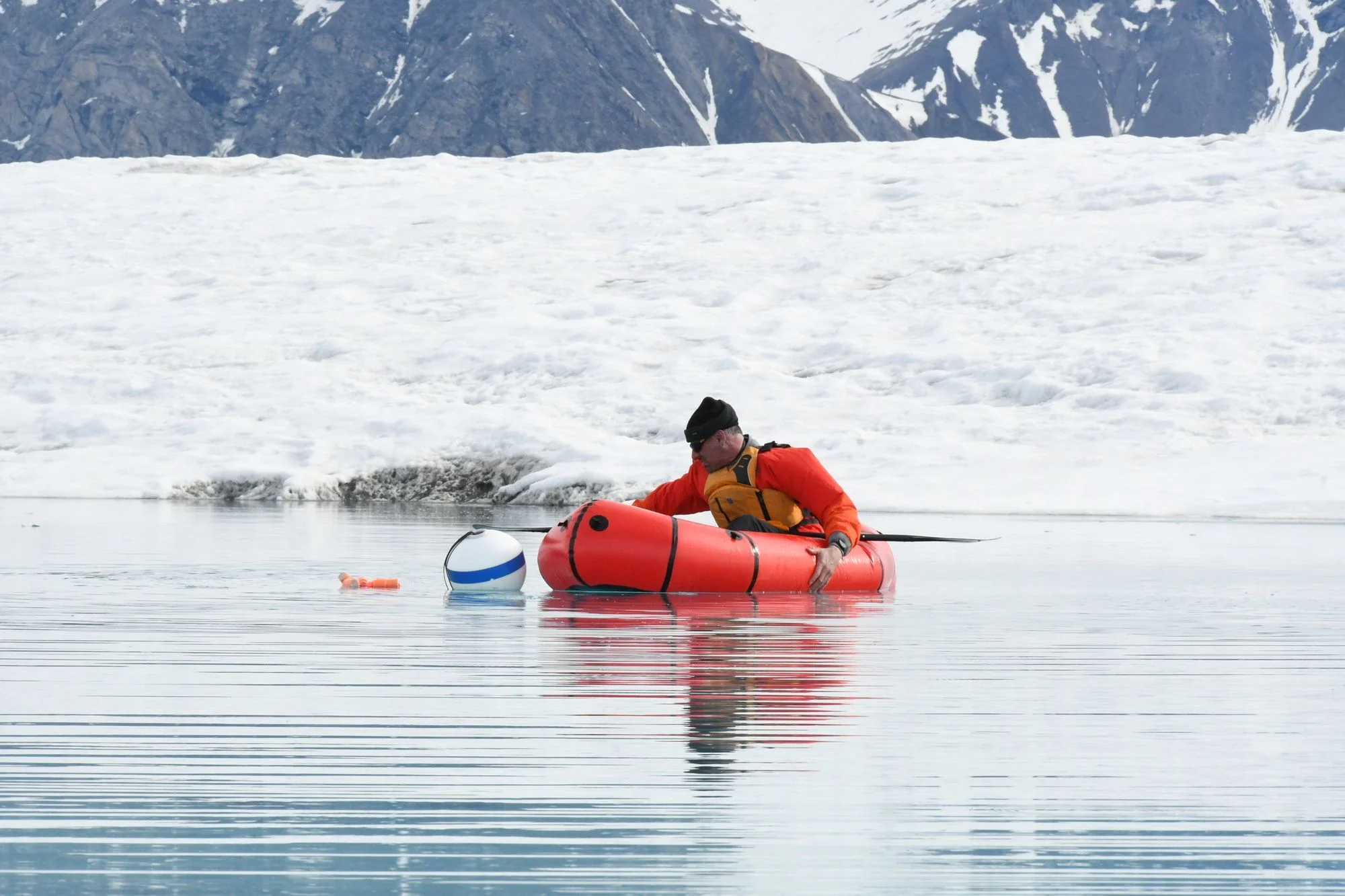
Bernard Laval retrieved a mooring in a Milne Ice Shelf pond. (Bella Mouchet/Submitted to The Weather Network)
"Some of these epishelf lakes have a very long history, and have evolved [into] pretty unique ecosystems where you have a freshwater ecosystem residing directly above a saltwater, marine ecosystem," said Hamilton. "So, now in Canada anyway, those unique ecosystems are gone, most likely."
As for how many of the epishelf lakes Canada had at one time, Mueller can't say with any certainty on the exact number, but he estimated that up to 17 of the fiords on the northern coast of Ellesmere Island may have had them.
"The only way to confirm is to go there and to measure the salinity. Andrew and I have done a bunch of that along the coast, and when we have, we've seen what you would call shallow epishelf lakes that are held in place by thicker sea ice, but nothing really to rival the Milne Fiord epishelf lake," said Mueller.
Ice shelf hasn't fully melted
The study says the fresh water flowing into the Milne Fiord is being flushed directly into the ocean because what's left of the ice shelf can no longer contain it. To re-establish the lake, the ice shelf would need a full recovery, a task that isn't possible with the current climate path.
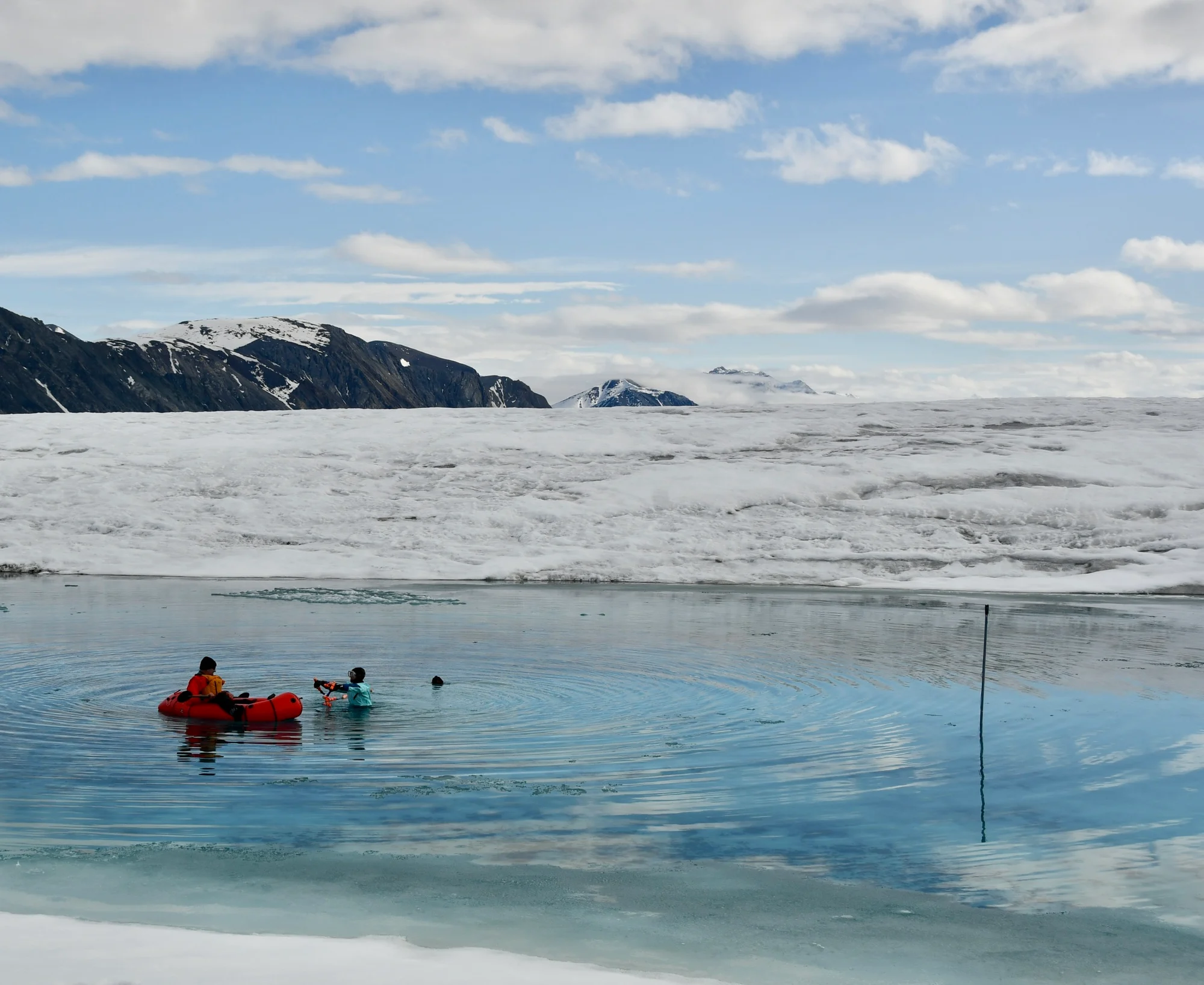
Romane Bouchard and Bernard Laval retrieving a mooring in a Milne Ice Shelf meltpond.(Bella Mouchet/Submitted to The Weather Network)
Despite acknowledgement of the loss of the lake, the ice shelf hasn't completely melted, Hamilton said. He noted there's still a remnant portion of the ice shelf that blocked the epishelf lake at the mouth of Milne Fiord.
"The major loss of the ice shelf, which happened in 2020, was that it calved off its outer half. So, almost half the ice shelf basically broke off from the coast and created a couple of giant, tabular icebergs that then floated off into the Arctic Ocean," said Hamilton.
"But I think the part of the reason that calving happened is multifold. There were a few factors that went into it."
According to the researchers, the Milne Ice Shelf lies within the Last Ice Area, which is expected to keep perennial sea ice longer than anywhere else in the Northern Hemisphere. The shelf is also situated within the Tuvaijuittuq Marine Protected Area, a name that means "the place where the ice never melts" in Inuktitut.
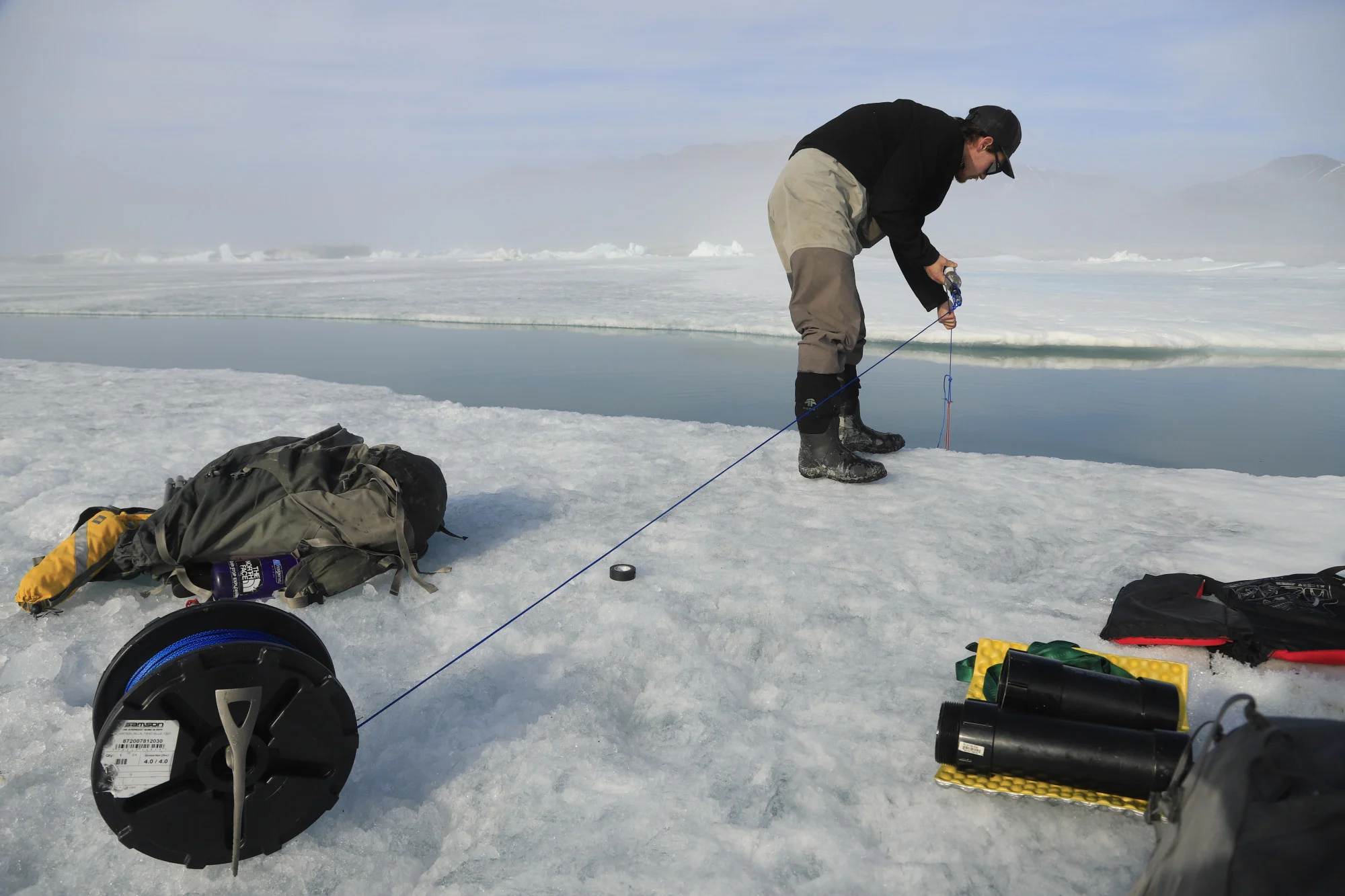
Jérémie Bonneau testing water salinity and temperature at the rift that formed in the Milne Ice Shelf after the 2020 collapse. (Cameron Fitzpatrick/Submitted to The Weather Network)
"There was a substantial amount of melting that's been occurring at Milne Fiord, and across the Arctic, due to warming air temperatures over many decades," said Hamilton.
Hamilton, Mueller and the other researchers involved in the study found evidence that the fresh water in the epishelf lake was "enormously warm in the summer before [and during] the summer of this big, calving event," Hamilton said.
"Because of the surface melting, almost every season there are melt ponds that form on the surface of the ice shelf itself. Because 2019 and 2020 were both very warm years, these melt ponds were quite substantive," said Hamilton.
Loss of epishelf lakes a symptom of global climate change
Hamilton said the vanishing of the epishelf lakes is "representative of the changes that are taking place on a much larger scale to the planet."
"So, it's helpful for scientists like Derek and I that we have [seen] first hand some of these changes that are happening most rapidly in the Arctic. But they are connected to a lot of the changes that more southern populations are seeing, [including] increased storms, flooding events and wildfires," said Hamilton.
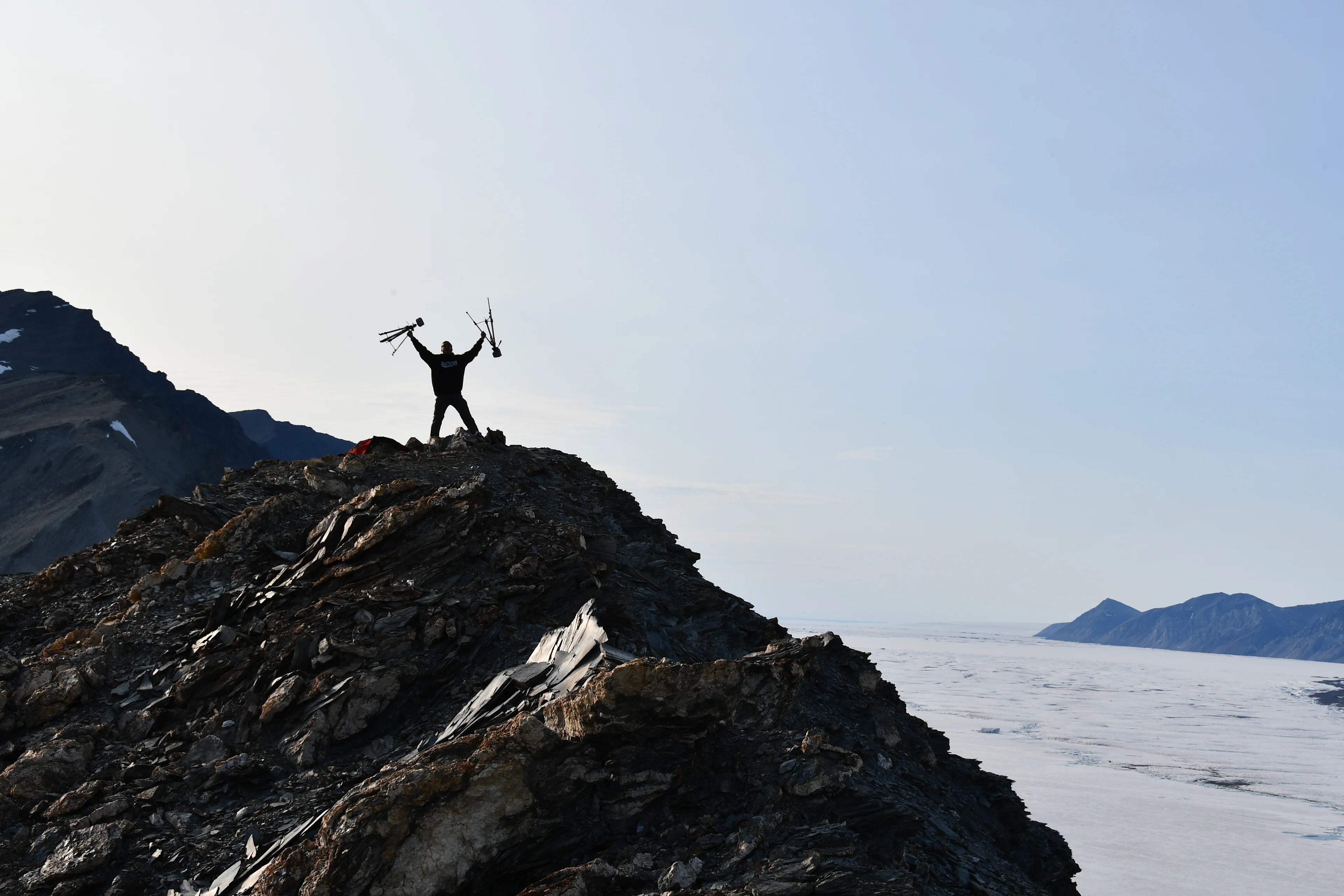
Researcher Drew Friedrichs retrieving camera. (Jérémie Bonneau/Submitted to The Weather Network)
Even if humans were to abruptly end its fossil fuel use, there will still be decades of climate warming the planet will continue to see as a result of the years of greenhouse gas emissions that have been released into the atmosphere, Hamilton noted.
"But, by acting now, we can limit the overall effect that it's going to have on the planet," said Hamilton. "Every small change that we can make, as far as moving towards a more sustainable use of energy, does make a difference in its ultimate impacts on limiting some of these changes."
Thumbnail courtesy of Cameron Fitzpatrick.
