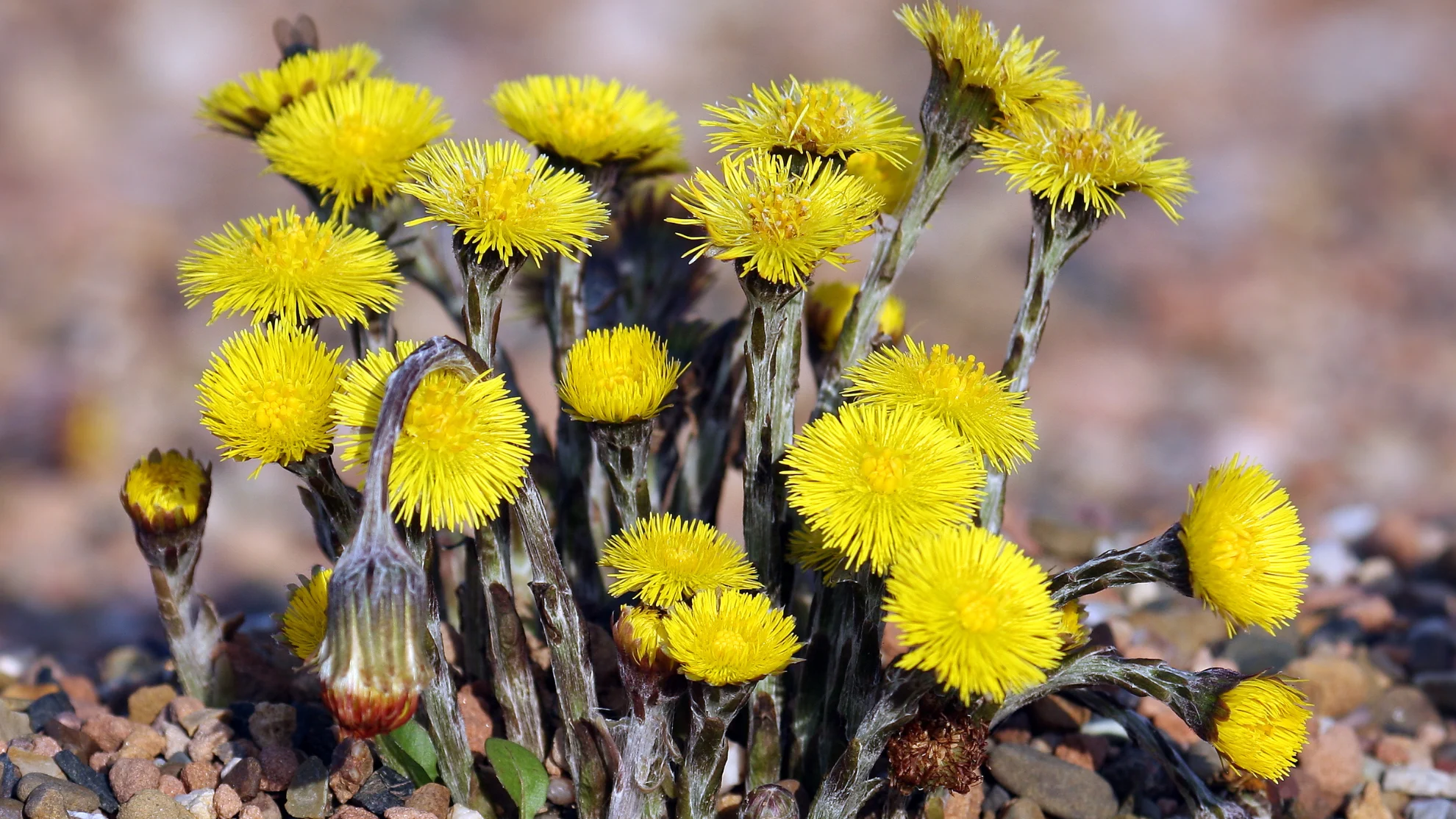
This invasive dandelion lookalike can spread fast in your yard

Coltsfoot can spread quickly and crowd out native plants, causing significant harm.
If you’re noticing bright yellow flowers that look like dandelions popping up in your neighbourhood, you may be seeing coltsfoot, an invasive plant spreading in parts of Canada that can quickly take over gardens and lawns.
We’re already starting to see signs of it this spring, with iNaturalist showing observations in the Maritimes, Quebec, southern Ontario, and B.C.
This aggressive plant resembles a dandelion. While both dandelions and coltsfoot are not native to North America, dandelions aren’t considered a threat to the ecosystem, and often act as an early-season food source for pollinators.
Coltsfoot, on the other hand, is a different story. This plant can spread quickly and crowd out native plants, causing significant harm.
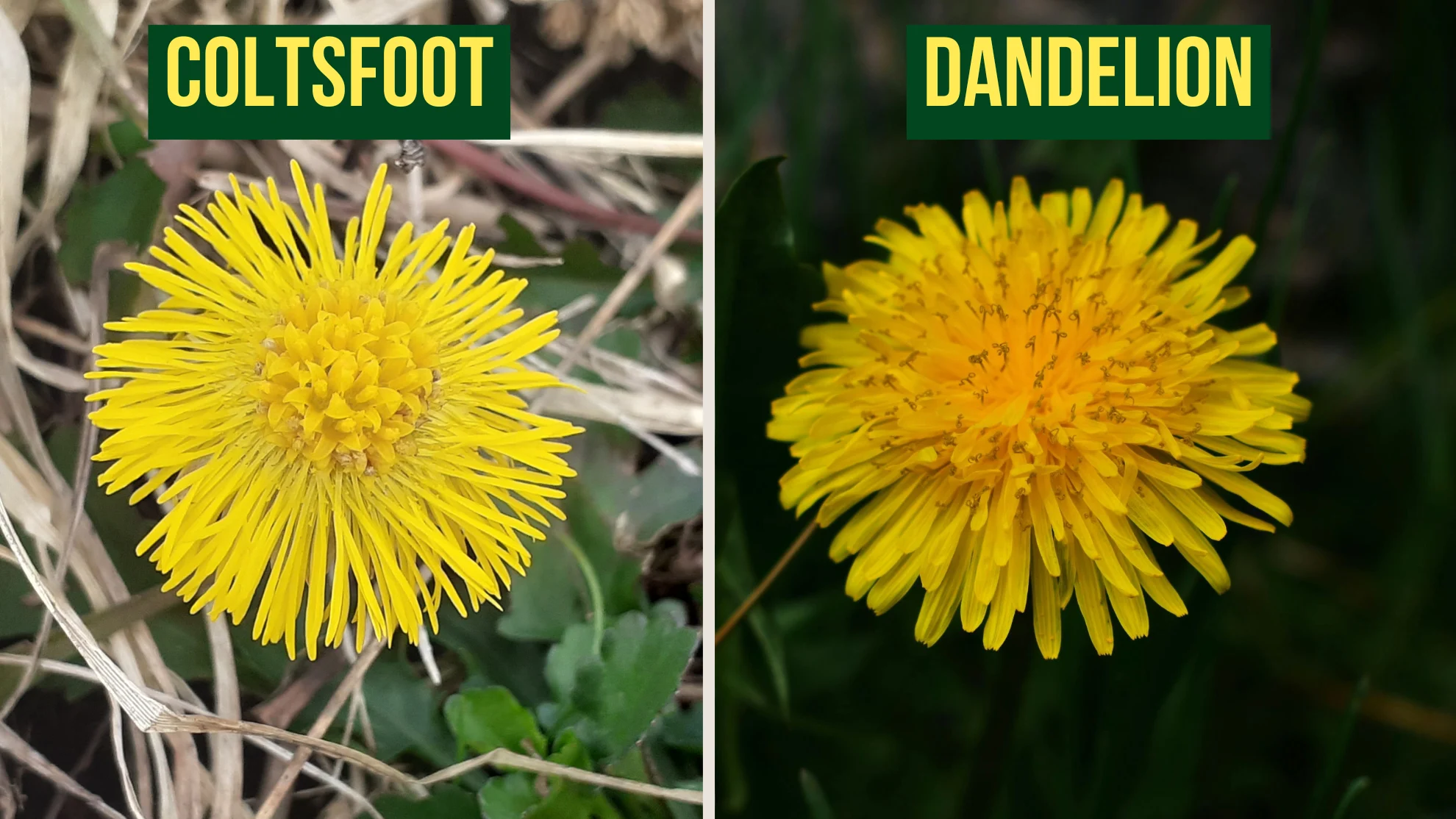
A coltsfoot flower vs. a dandelion. Left: Łukasz Tkaczyk/Wikipedia CC BY-SA 4.0. Dandelion file photo via Canva Pro.
What is coltsfoot?
Native to parts of Asia, Europe, and parts of Africa, Coltsfoot has been present in the U.S. since the 1840s and Canada since the 1920s, likely brought to North America by European settlers for medicinal purposes.
It is a hardy, adaptable plant that escaped cultivation and can also be found growing as an invasive in Maine and other New England states, where it is considered to have minimal benefit to wildlife.
A single plant can produce thousands of seeds, leading to a fast takeover of a patch of land, drowning out the native plants that animals rely on for food and habitat. Coltsfoot spreads rapidly through rhizomes, i.e., an underground network of plant stems, and it can tolerate a variety of weather and soil conditions.
How to identify coltsfoot
A coltsfoot looks like a “shorter” dandelion, with a much rounder centre. Its leaves are hoof-shaped, which is where its name derives from.
Coltsfoot tends to bloom earlier than dandelions, typically in March and April, and leaves do not appear until there are flowers.

Coltsfoot leaves. (Laval University/Wikipedia CC BY-SA 4.0
How to remove coltsfoot
Manual removal of coltsfoot can be a challenge, given its underground network of stems, but persistent hand-pulling is one of the more effective methods.
Continually pulling plants out when the ground is moist can make it easier to get the entire plant system. It is best to do this before the flower has seeded.
Mowing and cutting back flowers continually also starve rhizomes.
Do not compost the flowers. Place all removed plant parts in a sealed bag and let them sit in the sun for a few weeks before disposal.
Chemical deterrents can be a challenge, as the species is resistant to several common herbicides, the Wisconsin Department of Natural Resources notes.
*Header image: File photo of coltsfoot. Andreas Trepte/Wikipedia CC BY-SA 2.5.