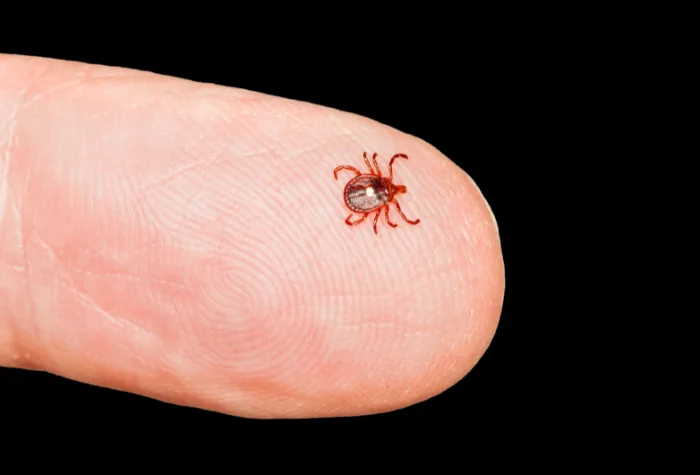
Scientists develop gene-editing tools that may decrease tick-borne disease

The findings could lead to technologies that control the spread of tick-borne illnesses.
In May 2021, scientists released the first batch of genetically-altered mosquitoes in the Florida Keys as part of a project to combat disease-carrying insects.
The mosquitoes, modified versions of the Aedes aegypti species, is associated with several diseases, including Zika and yellow fever. Experts say using modified insects to control populations provides an alternative to insecticides, which some mosquitoes are evolving to develop immunity towards.
Now, new gene-editing methods may make it possible to reduce tick-borne illnesses such as Lyme disease, according to a team of researchers at Penn State, the University of Nevada, Reno, and the University of Maryland.
REDUCING TICK-BORNE INFECTIONS IN THE LAB
In a recently-published paper appearing in the journal iScience, scientists outline two separate ways to alter the part of the tick genome that harbours and transmits diseases.
“In the United States, alone, ticks infect approximately 300,000 people with Lyme disease each year, and if left untreated, the infection can spread to joints, the heart and the nervous system,” Jason Rasgon, professor of entomology and disease epidemiology, Penn State, said in a statement.
“Currently, there is no vaccine, and existing treatments are not always fully effective.”
VIDEO: HOW TO IDENTIFY INSECT BITES
CRISPR TO THE RESCUE
In one method, scientists used Crispr technology to inject eggs with a gene-editing complex.
Injection was once considered impossible because tick eggs are coated in a hard wax that shatters the delicate needles required for the procedure.
But scientists worked around the problem by removing the maternal organs responsible for creating the wax, leading to uncoated, still-viable eggs.
Scientists then successfully injected the eggs, deleting the genes associated with transmitting diseases.
In the second procedure, pregnant female ticks were directly injected with the gene-editing complex.
The two methods had a success rate of 14 per cent and 11.7 per cent, respectively.
In a statement, Rasgon said the findings will help develop new ways to control tick-borne disease while providing a greater understanding of tick biology.
WHAT IS LYME DISEASE?
Lyme disease is contracted through tick bites -- but not all of them. According to the Canadian Lyme Disease Foundation (CanLyme), there are 40 species of ticks in Canada but only two of them carry Lyme disease.
Lyme disease is an inflammatory condition identified by a rash, headache, fever, and chills. It can lead to arthritis, fatigue, as well as neurological and cardiac disorders.
Tick bites are usually painless and can go unnoticed until symptoms set in, one of those symptoms being a red 'bull's eye' developing on the skin around the bite.
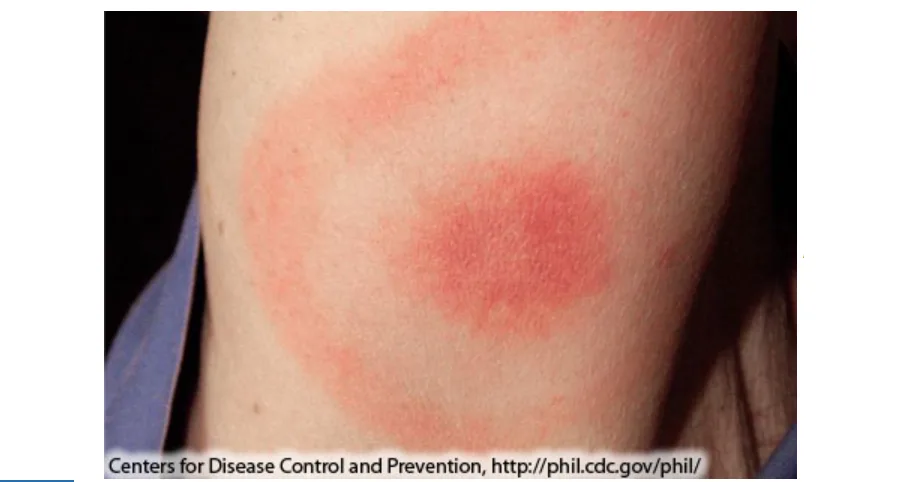
Example of a Lyme disease bull's eye rash. (CDC)
SEE ALSO: Ticks can still be active in winter
Black-legged, or deer, ticks (Ixodes scapularis), found in southeastern and south-central Canada, and the black-legged tick (Ixodes pacificusri), found in British Columbia, can transmit Lyme disease.
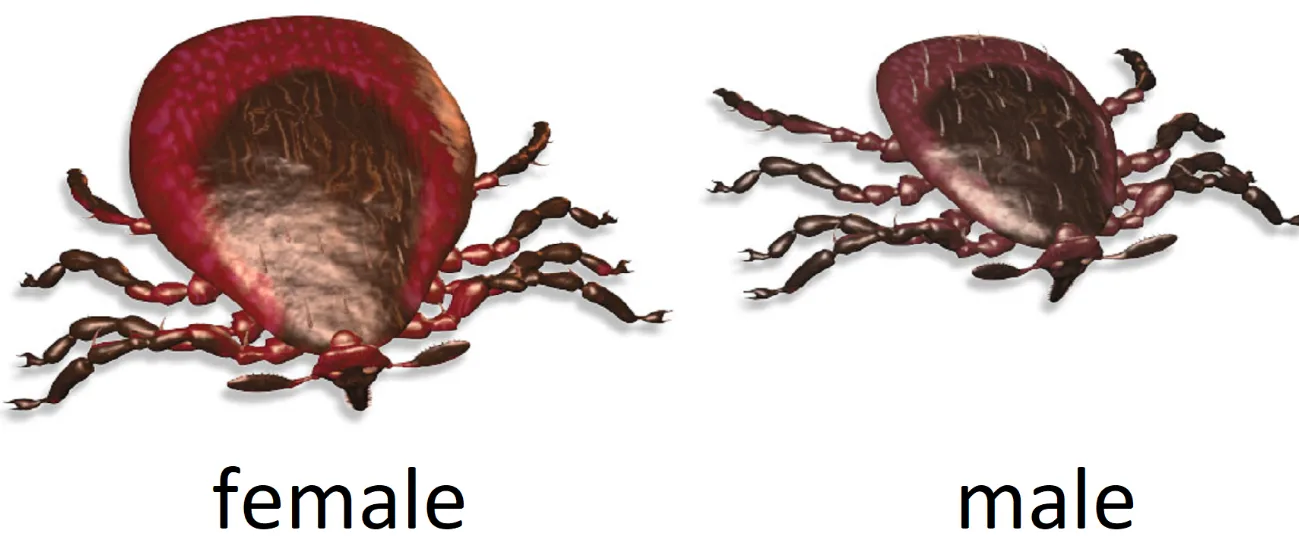
3D rendering of a male and female deer tick (Ixodes scapularis). (Wikipedia. CC BY-SA 4.0)
LESSEN YOUR RISK
When heading outside, experts say you can lessen the risk of contracting Lyme disease by:
Using insect repellent that contains DEET or Icaridin.
Staying on cleared paths and avoiding tramping through long grasses or brushy areas.
Covering up when you’re out for a hike or walking in a wooded or grassy area.
Wearing light-coloured clothing. Also, consider wearing long sleeves and pants and tuck your shirt into your pants and your pants into your socks.
Checking yourself, your children, and your pets after a hike or walk in wooded or grassy areas. Make sure you do a full-body check -- especially in the hair, under the arms, in and around the ears, the belly button, behind the knees, and between the legs.
Showering or bathing within two hours of being outdoors so you can check for ticks and remove ticks that have not attached yet.
IF YOU FIND A TICK
Use tweezers to immediately remove it by grabbing onto its head and pulling it straight out.
Wash the bite area with soap and water or an alcohol-based sanitizer.
If you don’t feel well, contact your health care provider and tell them you have been bitten by a tick.
Keep the tick in a closed container and bring it to your healthcare provider.
Put dry, outdoor clothes in a dryer on high heat for 60 minutes to kill any remaining ticks
Tips courtesy of the Eastern Ontario Health Unit. Thumbnail image courtesy: Canva Pro.