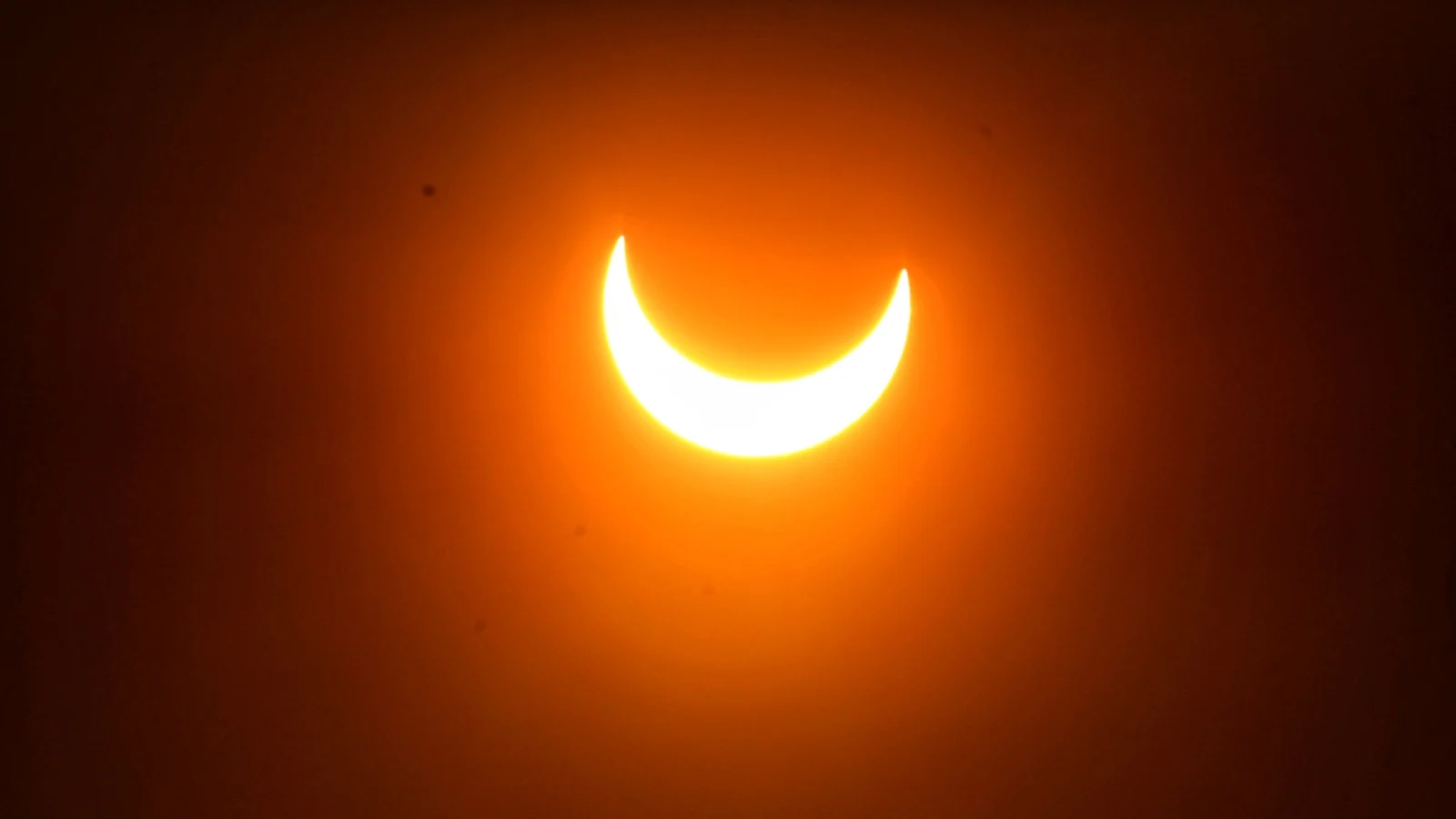
How to watch Tuesday morning's partial solar eclipse from anywhere

It's worth getting up early for this amazing celestial event!
It's happening on the other side of the world from us. However, we can still watch this partial solar eclipse, no matter where we are. Read on to find out what's going on, and how we can watch.
In the early morning hours of Tuesday, October 25 (for North America), the Sun, Moon and Earth will line up almost perfectly, to produce a solar eclipse.
The "almost" is because the alignment will be off just enough that, as the Moon crosses the face of the Sun, it will only cover a maximum of about 86 per cent of the Sun. So, rather than a total or annular eclipse, this will be a partial solar eclipse.
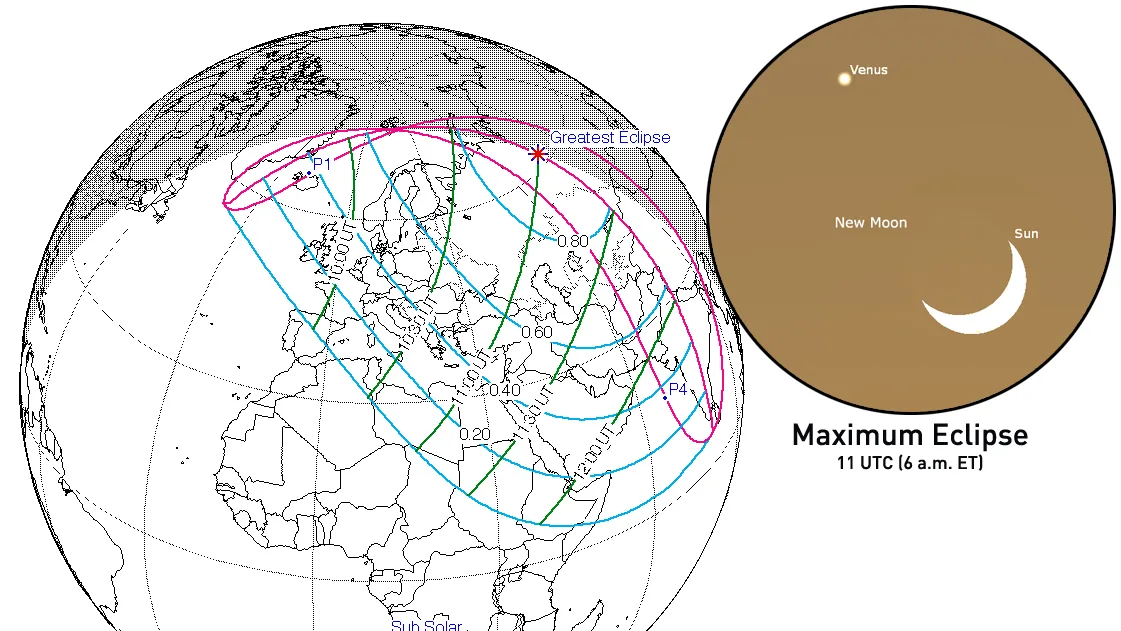
This map shows the regions of the world where the October 25 partial solar eclipse will be visible from, with the inset image showing what the eclipse will look like at maximum (including an appearance from Venus). Credit: NASA/Stellarium/Scott Sutherland
Tuesday morning's eclipse can be seen from most of Europe, northeast Africa, the Middle East, and western Asia. The line of maximum eclipse starts between Greenland and Iceland in the North Atlantic, crosses the Barents Sea, and swings down through central Asia to India. Central Russia will see the greatest eclipse, just as the Sun is setting for them.
For those of us in North America, we won't be able to see the event for ourselves. Well, not unless you live along the east coast of Greenland. Still, thanks to various livestreams of the eclipse, we'll be able to watch via the internet.
The Royal Observatory Greenwich, located in London, UK, will begin streaming the eclipse at 5:05 a.m. EDT, and ending at 6:51 a.m. EDT. The Moon should cover about 25-30 per cent of the Sun from their location at eclipse maximum, at around 5:59 a.m. EDT.
Timeanddate.com will be hosting a livestream starting at 4:58 a.m. EDT, with the maximum eclipse expected at 7 a.m. EDT, and ending at 9:02 a.m. EDT. Their livestream is embedded above.
During their coverage, they plan to present views from several different locations across Europe. This includes Naples, Sicily, Lithuania, the United Kingdom, and Norway. They will also feature views from Karachi, Pakistan. This should provide a variety of perspectives on the eclipse, with the Moon covering anywhere from about 20 per cent up to 75 per cent of the Sun at maximum.
A preview for 2023 and 2024
While we will have to rely on the internet to see this particular solar eclipse, there are two more coming up in the next two years that hold a lot more promise for Canadians.
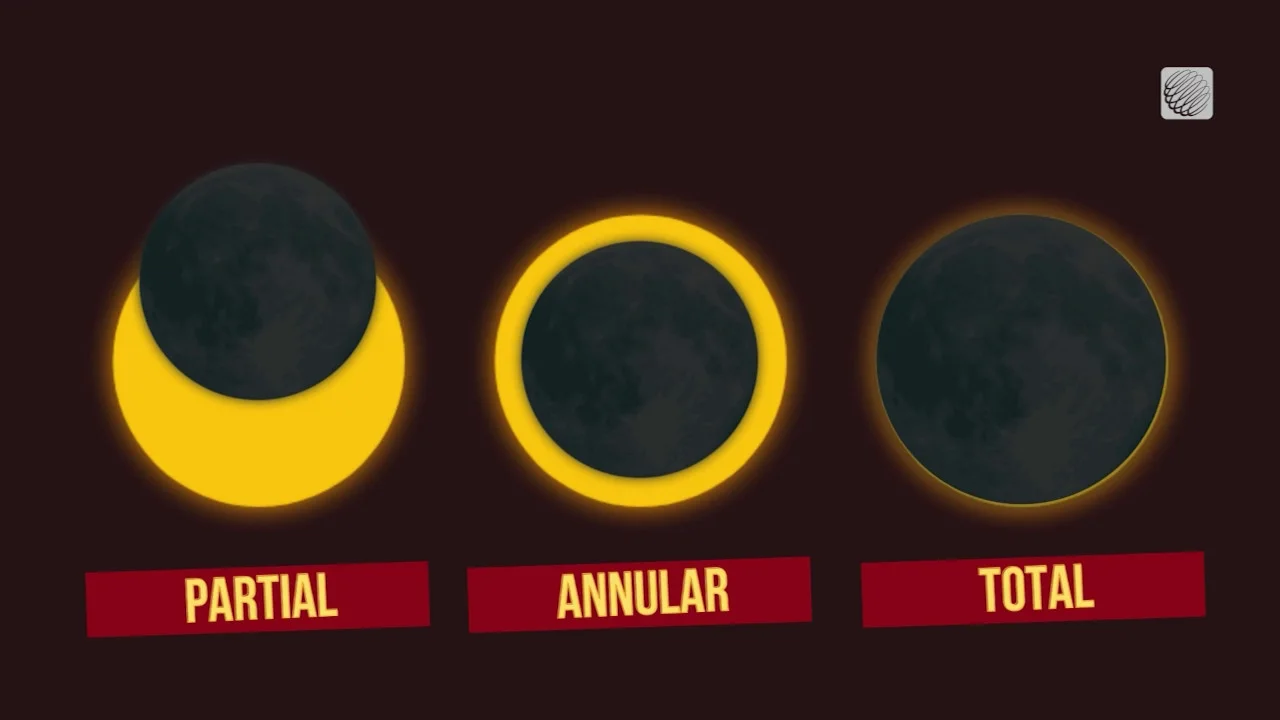
First, on October 14, 2023, an annular 'ring of fire' solar eclipse will pass over the southwestern United States. It will only appear as a partial eclipse for anyone watching from Canada. However, it is a relatively short journey to the line of maximum eclipse.
Watch below: A 'ring of fire' eclipse is coming, so make your plans now
After that, a total solar eclipse will pass directly over the eastern half of Canada on April 8, 2024.
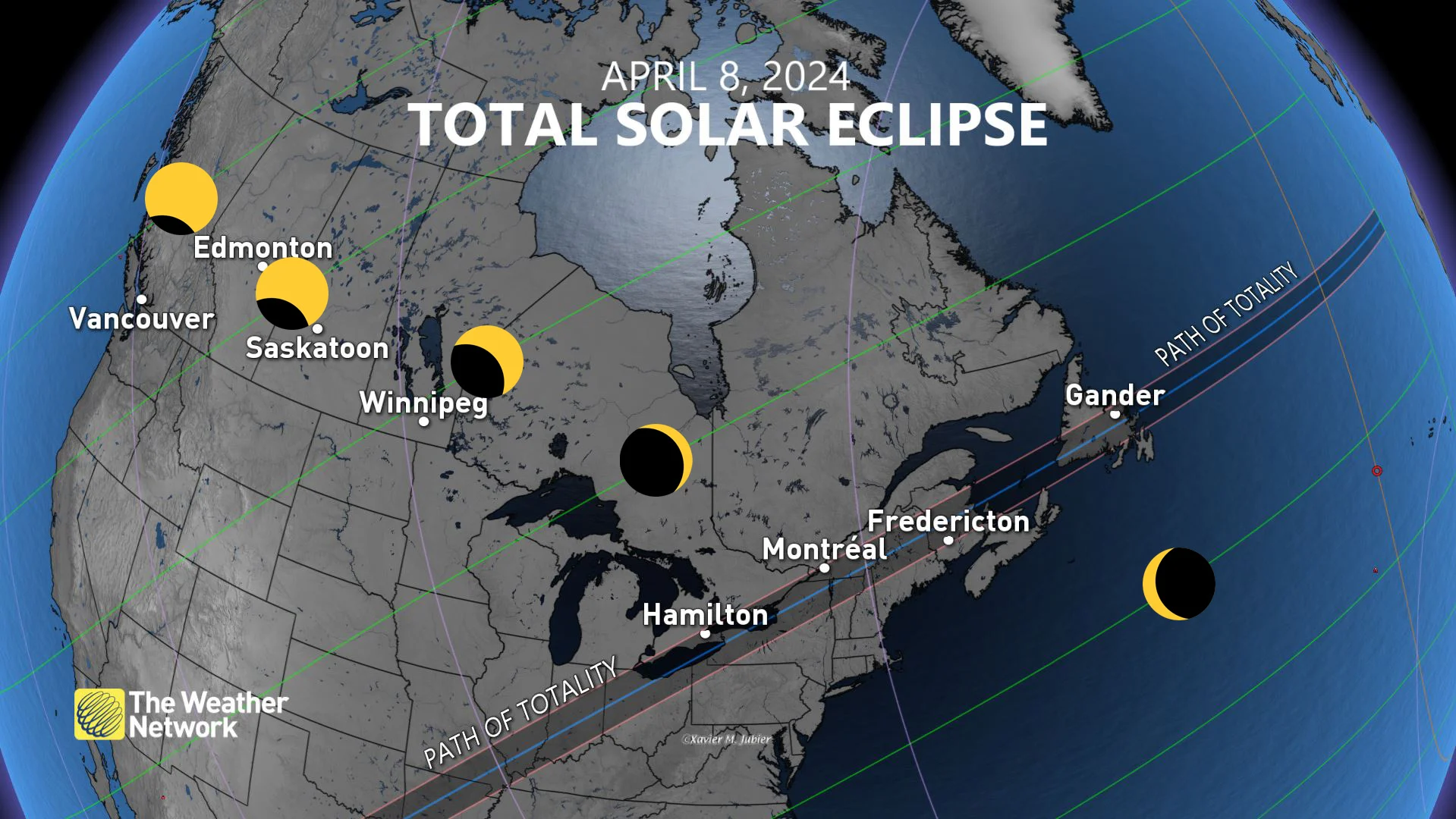
Although the path of totality of the eclipse will miss the city of Toronto by just a few kilometres, millions of Canadians are still within easy distance to watch this spectacular event for themselves.
(Thumbnail image was uploaded to our UGC gallery by Trevor Gertridge, who captured the view of the June 10, 2021, partial solar eclipse from Moncton, NB.)