Genetically-engineered 'glowing' fish escape farms, wind up in local streams

Import of the fish is banned in Canada.
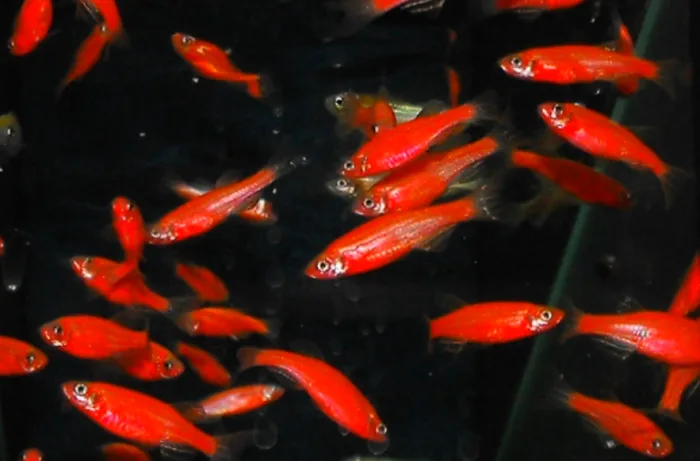
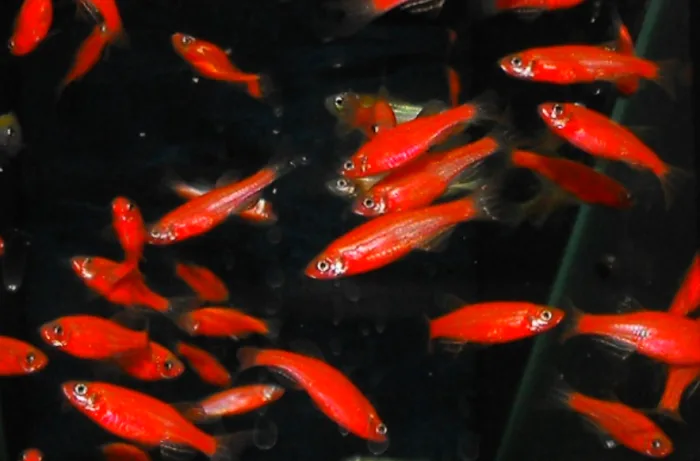
File photo of red GloFish. (Wikipedia/Karol007) CC BY-SA 3.0.
'GloFish,' a trademarked name for genetically-engineered aquarium fish that glow under blacklight, have escaped fish farms in southeastern Brazil and are beginning to multiply in nature, according to a recent study appearing in the journal Studies on Neotropical Fauna and Environment.
Red and green glowing transgenic zebrafish (danio rerio), which are more vibrant than standard fish even in normal light, have been spotted in creeks in the Atlantic Forest, which is considered one of the most biodiverse areas on Earth.
Speaking with Science, ecologist Jean Vitule at the Federal University of Paraná, Curitiba, who was not involved in the study, called the problem "serious," especially if the fluorescent fish pass their glowing genes onto native species, making them more visible to predators.
GloFish first came to be in the late 1990s, genetically engineered to carry genes from fluorescent jellyfish for blue and green varieties and coral for red.
Scientists have worried about GloFish escaping into nature for some time, prompting officials to ban their sale in several countries, including Brazil - but local farms have kept breeding them, Science says.
GloFish were permitted for sale in Canada briefly, but officials have since banned their import.
In 2014, environmentalists documented a single GloFish in Tampa Bay, Florida waters, but it did not multiply. Experts say a predator likely caught the fish.
The Brazilian fish appear to be the first escapees to reproduce and thrive in nature, a feat that may be aided by the fact that zebrafish have no natural predators in the area.
Biologists first spotted groups of GloFish in Brazilian creeks in 2015. Regular surveys in the years that followed show the fish are reproducing year-round, peaking during the rainy season. The modified zebrafish appear to reach maturity faster than non-modified fish, allowing for a speedier reproduction cycle.
In 2020, the fish were spotted in ponds and streams in southern and northeastern Brazil, suggesting they may spread to other parts of the country.
VIDEO: THINK TWICE ABOUT DUMPING THAT GOLDFISH INTO A LAKE
THE PROBLEM WITH RELEASING AQUARIUM PETS INTO LOCAL WATERWAYS
GloFish aren't the only creatures that find their way into open waters. For years, officials in Canada and the U.S. have warned people not to release goldfish into streams.
The fish, which have few predators, can quickly overwhelm an ecosystem.
Discarded goldfish can grow to the size of a football in the right conditions.
According to Ontario's Invading Species Awareness Program, the fish stir up mud and debris when they feed, resulting in cloudiness that negatively impacts aquatic plants.
Goldfish are established in every Canadian province and every U.S. state, except for Alaska.