Drought persists on the Prairies, but there are signs of a change

The Prairie provinces have been drier than average as we progress through spring, with multiple atmospheric factors to blame.
It’s fair to say the Prairies suffered a brutally cold and dry February, but that’s very thoroughly in the rear-view mirror, with the region basking in the sunshine and warmth that has marked the month of March so far.
However, there’s a downside: Prairie farmers need the winter snows as much as spring showers to help replenish the soil ahead of the growing season. But where has that needed precipitation been?
Over the past three months, the majority of the Prairie region has received less than half of its average precipitation, which is some very unwelcome news for the farming community.
One culprit has been persistent high pressure over the region, preventing Pacific moisture from crossing the northern Rockies to fuel clipper systems that might spread snow over the region. Coastal moisture from the U.S. northwest has also been redirected well southward from its normal path, detouring as far away as Arizona and New Mexico.
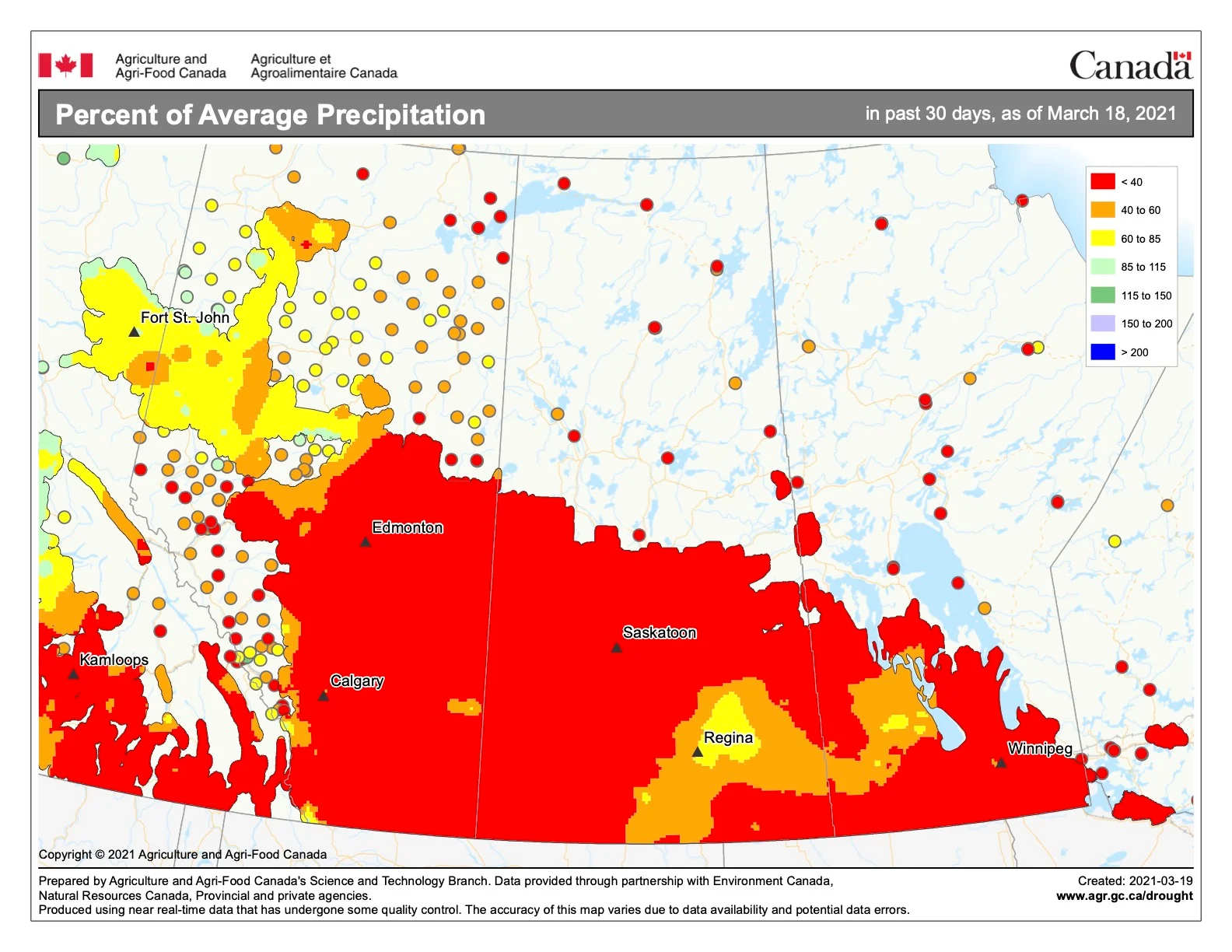
Image: Agriculture and Agri-Food Canada.
This storm track leads to Texas and Colorado lows, which are less likely to drive moisture into the Canadian Prairies. Last week, high pressure helped deliver temperatures in the upper teens to the Alberta foothills, while, 1,500 km to the south, the Colorado foothills were all but buried in 50 cm of snow.
As we gradually move through the early days of spring over the next month, with Arctic air putting up its final fight against the warm southerly flow, there will finally be the chance for some moisture-laden systems in Manitoba. The western Prairies, however, will just have to hope for the weakening of the high pressure to continue, allowing some Pacific moisture into Alberta.
The first signs of the weakening made their appearance on Monday, with a weak clipper system pushing Arctic air southward across Alberta resulting in some upsloping snow for the southern Rockies, triggering some snowfall warnings. This will be welcomed moisture for the headwaters of the Bow and Saskatchewan rivers.
Snow will ease Tuesday morning, and beyond some significant wet snow and rain looks to spread across central and northern Saskatchewan into Manitoba Thursday and Friday – but for southern areas, the dry conditions look set to continue.
Stay tuned to The Weather Network for the latest forecast updates.