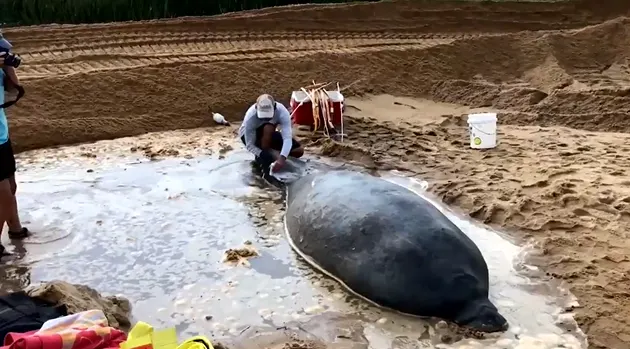
Bulldozer needed to help rescue massive manatee stuck in the sand

This incident has raised some concerns about the wellbeing of this species
Georgia wildlife officials required the assistance of a bulldozer to help rescue a large manatee that got stuck in the sand near Savannah during low tide.
Monica Ross, Senior Research Scientist at Clearwater Marine Aquarium, and her team assisted with the rescue after being alerted that a manatee had become stranded on October 1.
Ross says that this manatee likely became stranded after an extremely high tide came in quickly to an area where restoration work was being done.
The next morning workers at the restoration area contacted Ross and her team to alert them that “something oddly shaped” was stuck in the sand and realized that machinery would be required to help move the massive animal. The crews had to remove sand in the restoration area to allow water to flow in and gear was placed around the manatee to help move her towards the water.
Ross and her team tag and track manatees to study how they use waterways outside of Florida and confirmed that this manatee is doing well after the rescue and was back to swimming in the Savannah River as of October 30.
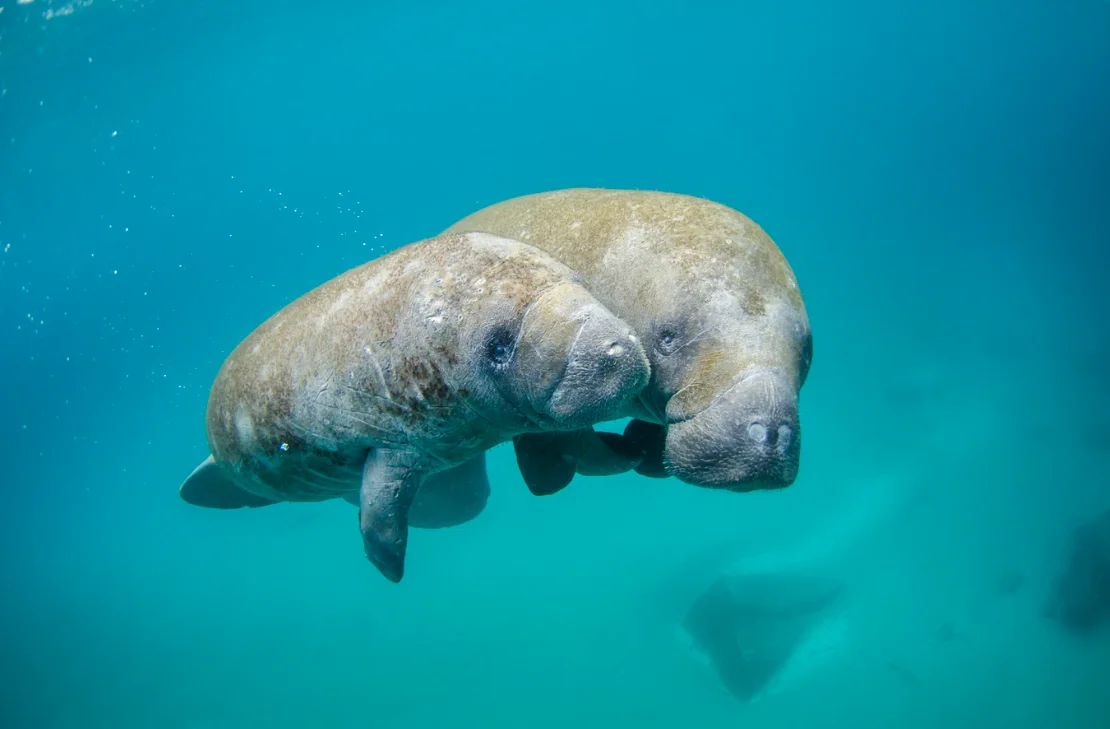
Mother manatee and her calf swimming. Credit: NOAA
Manatees are protected under the Endangered Species Act and the Marine Mammal Protection Act and this video has generated concern about the health of this species.
Warming sea surface temperatures and increasingly intense storms will come with the changing climate and Dr. Katie Tripp, Director of Science and Conservation at Save the Manatee Club, says that climate change could potentially impact food resources and availability for manatees, the water quality of their habitats and their migration patterns.
Manatees are a migratory species and are highly driven by ocean temperatures. Tripp explains that as climate change causes sea surface temperatures to warm and fluctuate, manatees could begin swimming into territories that they had not previously visited.
Manatees cannot survive in waters cooler than 15°C, and the changing climate means that they could swim into temporarily warm waters that begin to cool after being briefly warmed up. Prolonged exposure to waters that are too cold for manatees puts them at risk of cold stress syndrome and pneumonia, which threatens the resilience of this species.
Tripp also says that increasingly frequent and intense storms could bring more rain and runoff that can muddy the water, impact the growth of seagrass and cause algal blooms. Manatees eat over 80 types of plant species and the changing climate will not only impact large aquatic animals, but entire food chains, and will have cascading effects on many ecosystems.
With files from Andrew Osmond.