
Arctic air elevates the risk for major snowfall for B.C.'s South Coast

An Arctic front is set to reach the B.C. South Coast on Friday with bursts of snowfall. Signs are pointing to a significant snowfall risk building for low elevations as we track towards the weekend.
Cold Arctic continues to funnel down through southern B.C. and will feature the coldest air of the season by a significant margin.
The Fraser River outflow, strong winds that channel down the Fraser River gap, will make a bold appearance by late Wednesday, which means that northeast winds could create some of the coldest conditions that parts of the South Coast have seen this winter.
We’re watching the prominent valleys across the North and Central Coast, as well for the potential for damaging winds accompanied by wind chills near -20, which is quite rare for the coastal region. Even normally balmy Victoria is set to feel wind chills as low as -15.
New seasonal low temperatures have been set throughout southern B.C.:
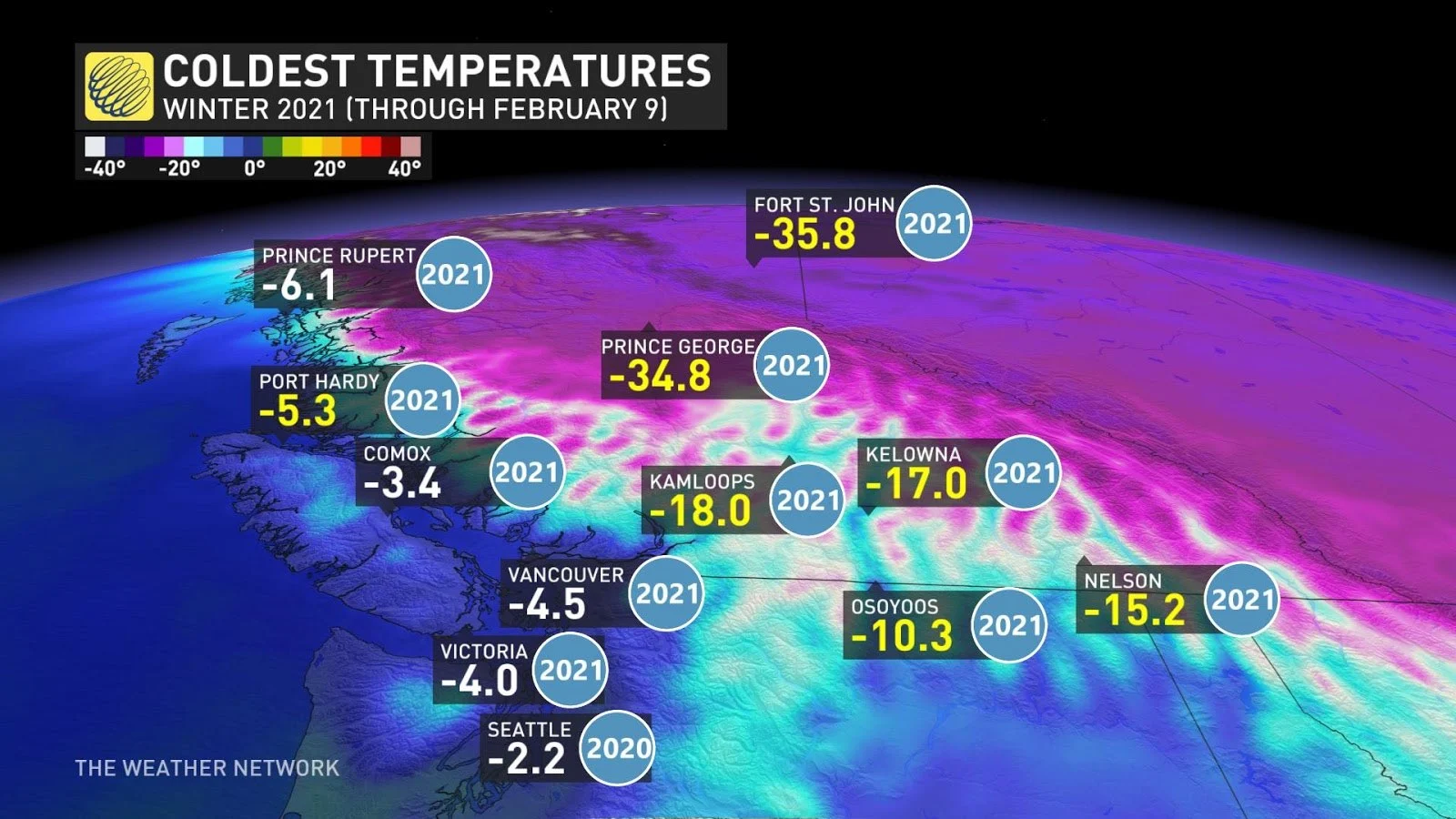
By Thursday morning, it’s possible that Kamloops will have had its coldest February temperature in recorded history. The benchmark to beat is -24.5°C back on February 1, 1989.
Environment Canada has issued special weather statements across most of the province, warning that the unusually cold conditions will persist throughout the week. Northern regions of B.C. have been issued extreme cold warnings that say wind chill values of near -40 to -45 are possible.
“Extreme cold puts everyone at risk. Cover up. Frostbite can develop within minutes on exposed skin, especially with the wind chill,” Environment Canada warns.
VANCOUVER SNOW DROUGHT ON ITS LAST LEGS
Some regions around the South Coast will be greeted by snowflakes into Wednesday, compliments of the Arctic front lifting whatever moisture is lingering along a weak trough. Outflow winds reaching eastern Vancouver Island are set to bring occasionally heavy, but localized straight-effect snowfall through early Thursday.
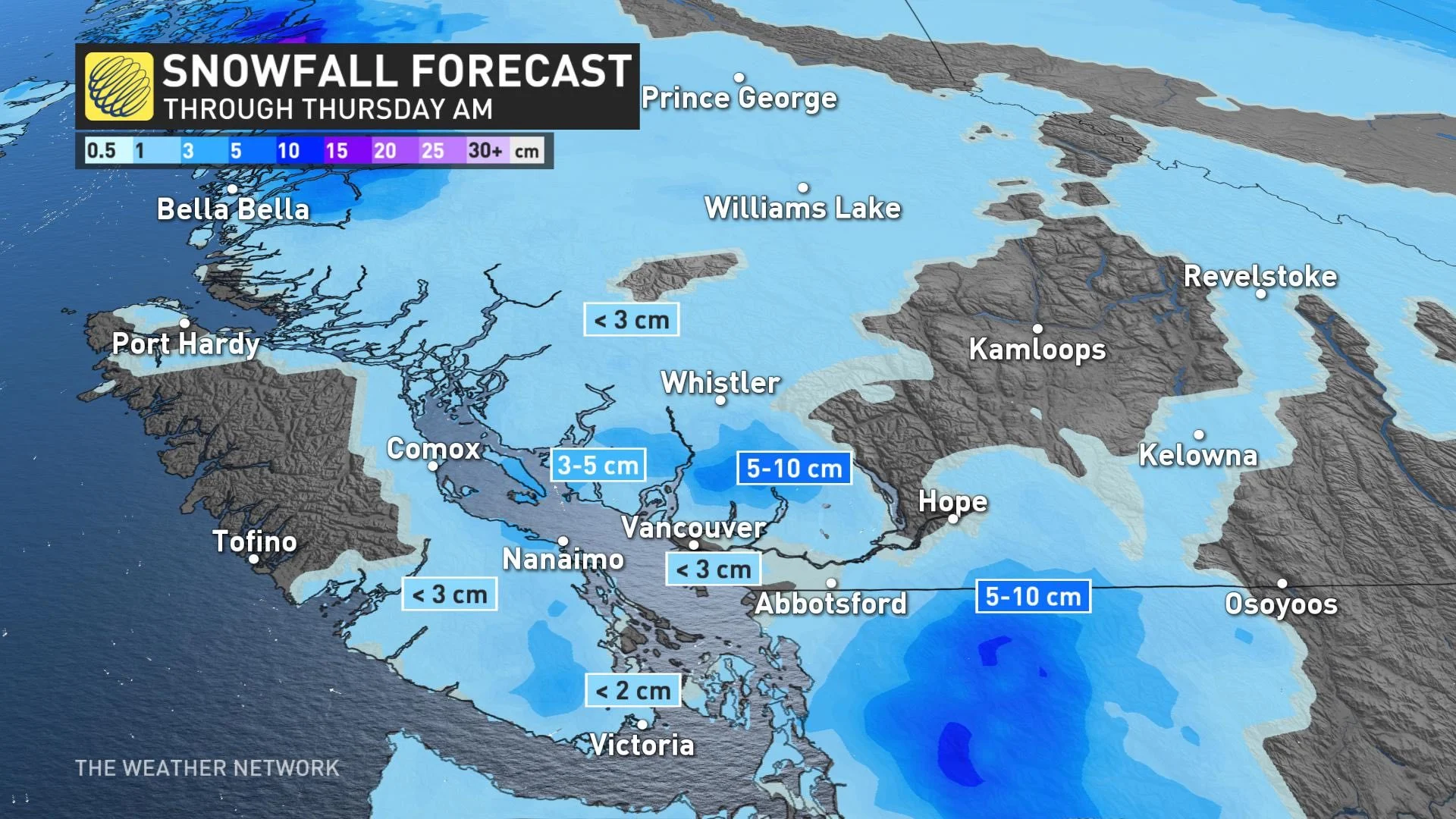
It’s also possible to achieve some bursts of localized accumulating snowfall across sections of the Lower Mainland earlier on Wednesday – before the Arctic outflow overwhelmingly makes the atmosphere too dry to precipitate snow.
Forecast models are beginning to converge on a probable solution. Most of the moisture is expected to initially move into Washington late Thursday. Some snowfall can be expected for extreme southern Vancouver Island with this first round, before more widespread snowfall moves in late Friday.
Beyond the weekend, there is another storm threat for Monday with the potential for heavy snow, but the Arctic air will have moderated somewhat by then, so there is a higher potential for a changeover to rain for locations at sea level.
Thumbnail courtesy of David Moss.