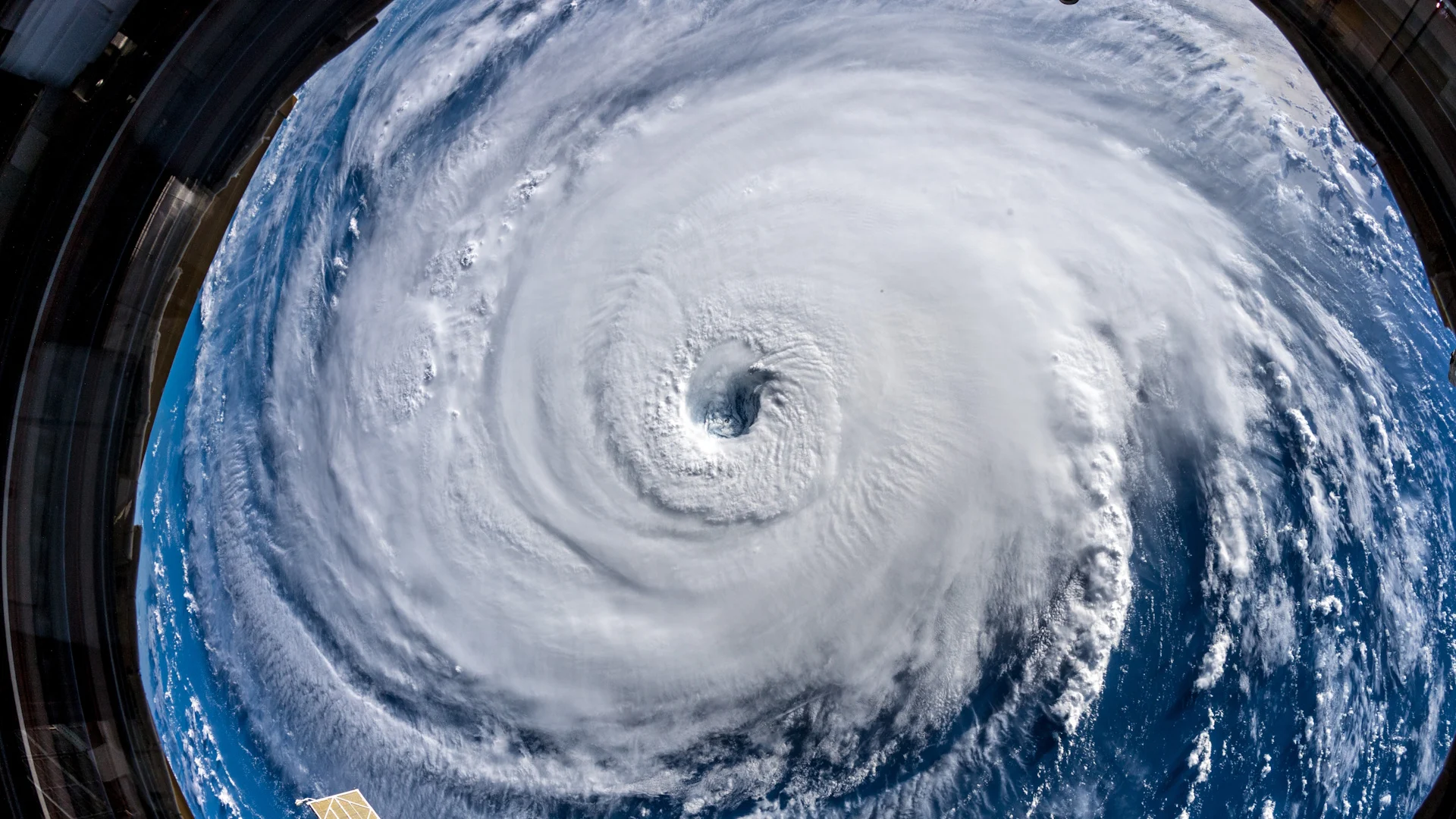
345 km/h: Meet the world’s largest, strongest tropical cyclones

Only a tiny fraction of the world’s tropical cyclones achieve their full potential
Tropical cyclones top the list of nature’s most powerful storms.
Larger than tornadoes and more intense than any single thunderstorm, these systems can change the landscape when they swirl ashore.
A handful of tropical cyclones take full advantage of their surroundings to achieve the apex of their potential, the strongest storms nature can produce.
DON’T MISS: What’s the difference between hurricanes, typhoons, and cyclones?
Tiny fraction of storms achieve upper limits
Only about 4 per cent of all the world’s recorded tropical cyclones have reached the equivalent of Category 5 strength.
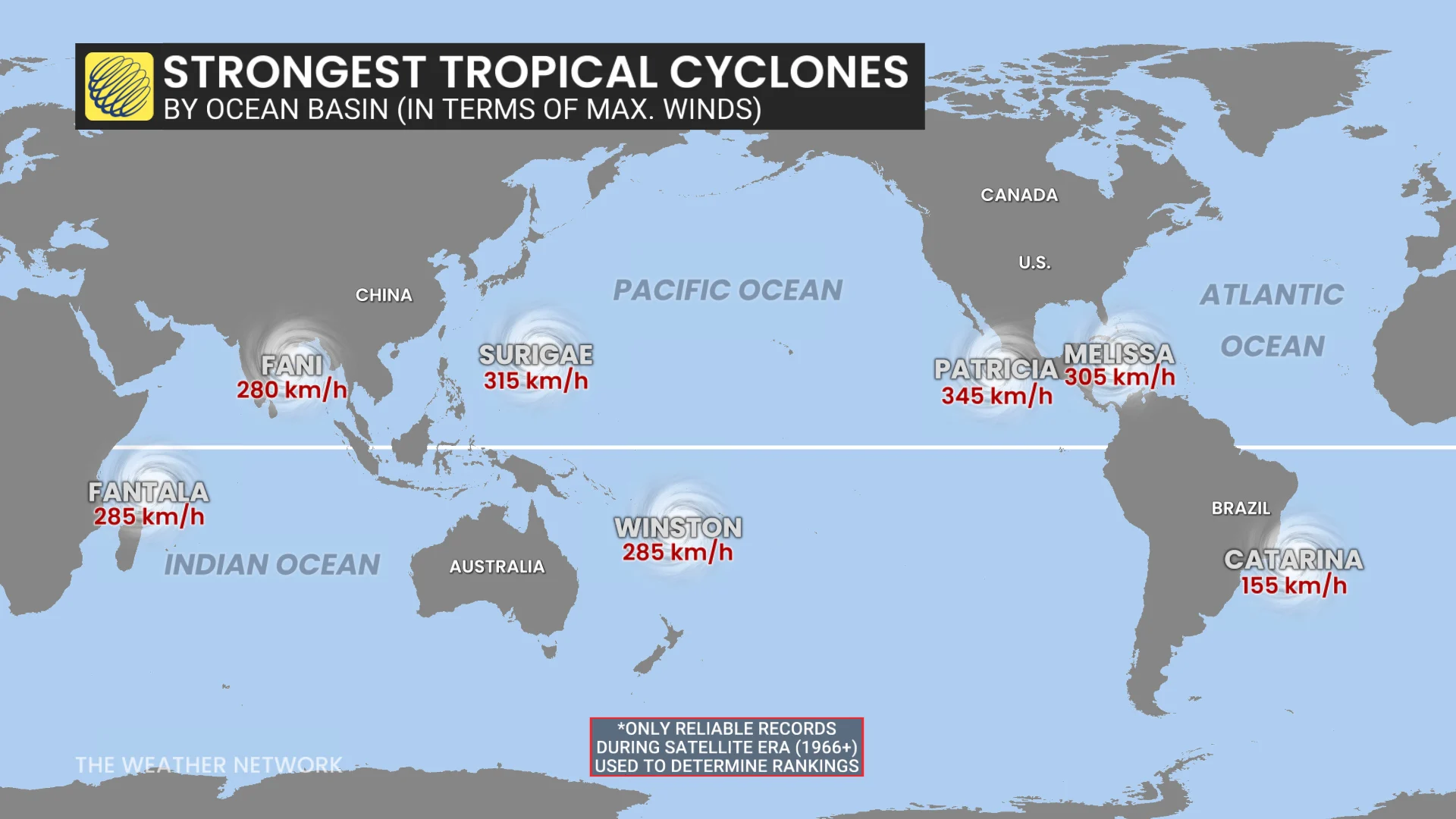
Most tropical cyclones are relatively weak and short lived because it’s tough for all the necessary ingredients to align just right. But explosive development can result when all those factors come together in perfect harmony.
Strongest Winds: Hurricane Patricia
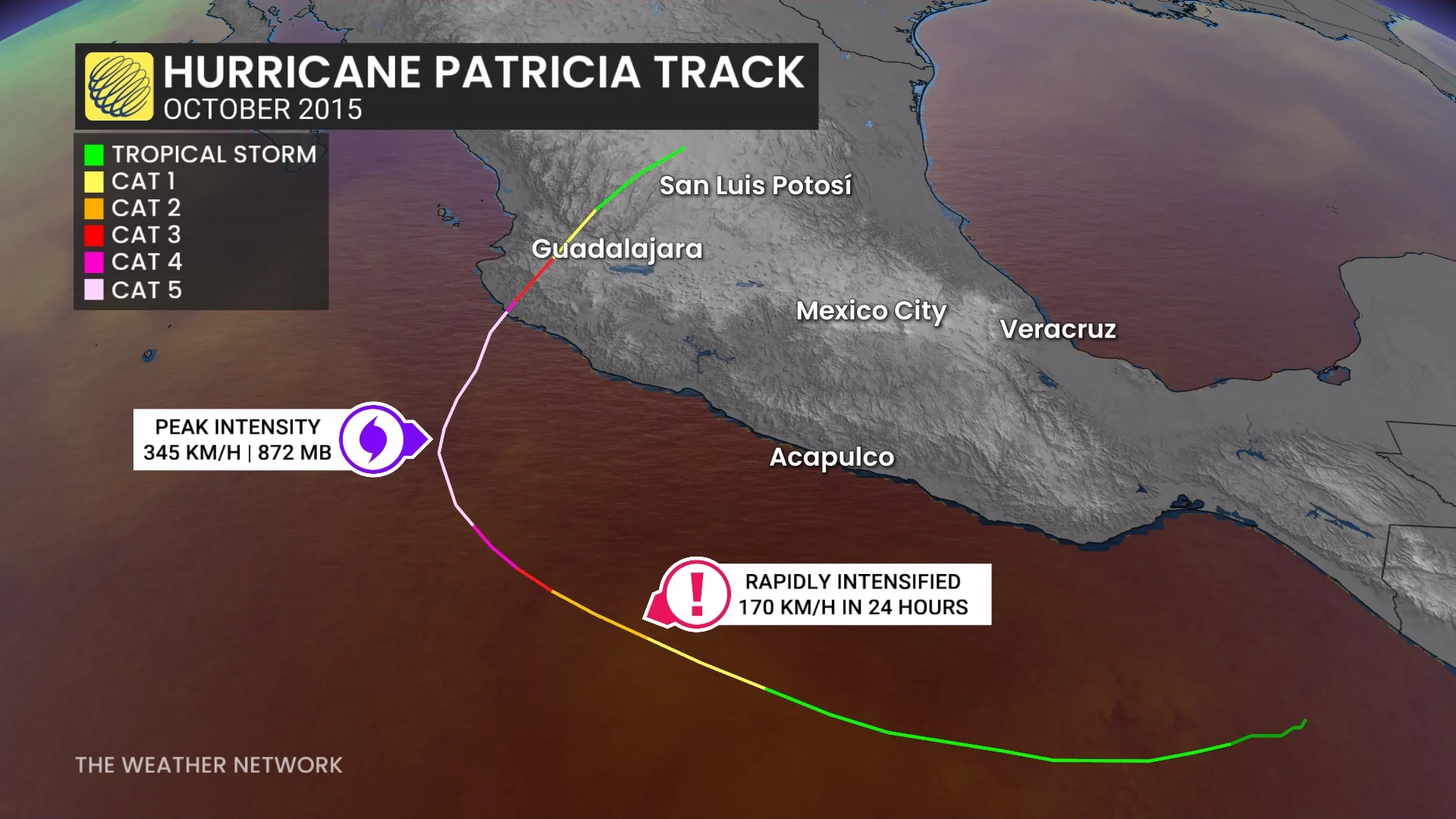
An exceptionally favourable setup off the western shores of Mexico in late-Oct. 2015 allowed Hurricane Patricia to grow into the world’s strongest hurricane since reliable observations began in 1966.
Patricia’s winds increased by 170 km/h within a span of just 24 hours, eventually peaking at 345 km/h with a minimum central pressure of 872 mb.
Despite the wealth of data to back up this storm’s claim to the top of the list, this all-time record will long stand in dispute.
Several typhoons in the western Pacific Ocean, such as Typhoon Nancy in 1961, live in the records with winds as strong or stronger than those measured in Patricia. However, these winds speeds are likely unreliable as each of those storms occurred long before satellite measurements and modern aircraft reconnaissance.
Worthy of Mention: Super Typhoon Haiyan
It’s also possible that Super Typhoon Haiyan was more powerful than previously thought when it struck The Philippines with 315 km/h winds in Nov. 2013.
Satellites may have underestimated its true strength, and no reconnaissance flights directly observed the storm.
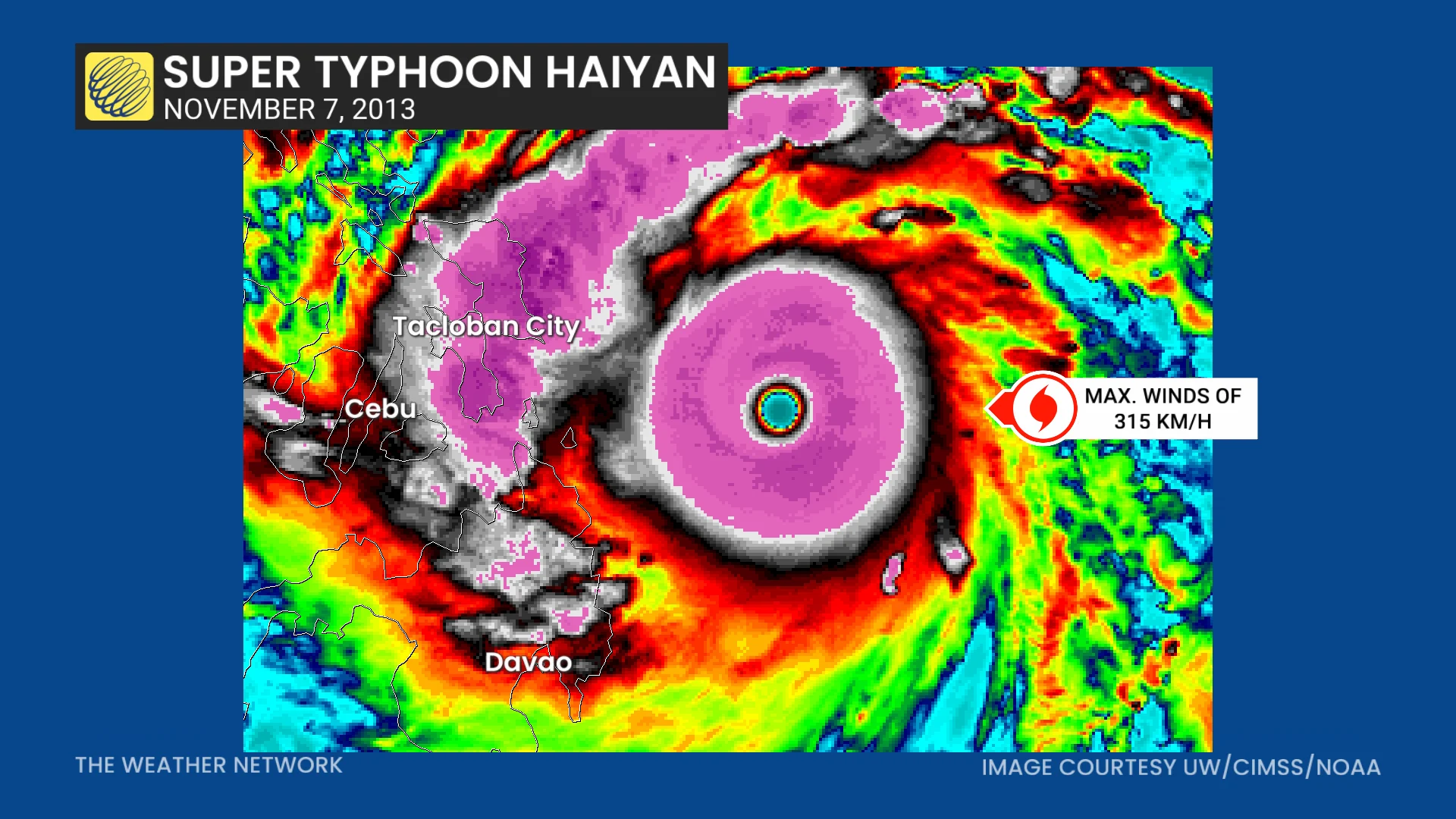
Regardless, Haiyan may have been the most remarkable tropical cyclone ever observed on satellite. Infrared satellite imagery helps meteorologists judge the coldness of cloud tops. The tops of intense thunderstorms are tall and very cold, indicative of a powerful and healthy tropical cyclone.
The widespread coverage of cloud tops registering -80°C to -90°C around Super Typhoon Haiyan’s inner core was almost unparalleled in modern history.
Most Powerful Atlantic Storm: Hurricane Melissa
Late autumn has a long history of producing intense Atlantic hurricanes close to land. Hurricane Melissa joined those ranks as it rapidly intensified on approach to Jamaica in late Oct. 2025.

The storm’s maximum sustained winds peaked at 305 km/h, tying with 1980’s Hurricane Allen for the strongest Atlantic hurricane on record in terms of maximum sustained winds. Jamaica suffered severe damage when the storm made landfall near peak intensity.
Melissa’s minimum central pressure dipped to 892 mb, beating out Allen’s minimum pressure of 899 mb. Only three other known Atlantic hurricanes have met or exceeded that remarkably low air pressure reading: Wilma 2005 (882 mb), Gilbert 1988 (888 mb), and the Labor Day Hurricane of 1935, which matched Melissa’s 892 mb.
Largest Tropical Cyclone: Typhoon Tip
The western Pacific basin alone is responsible for more than half of all the Category 5 storms on record. Persistently warm water temperatures, favourable atmospheric conditions, and the basic geography of the region work to enhance tropical cyclone activity in this part of the world.
All of those conditions played a role in creating the largest tropical cyclone ever observed. Typhoon Tip churned through the western Pacific basin in Oct. 1979 with a wind field that measured more than 2,200 km across at its largest extent.
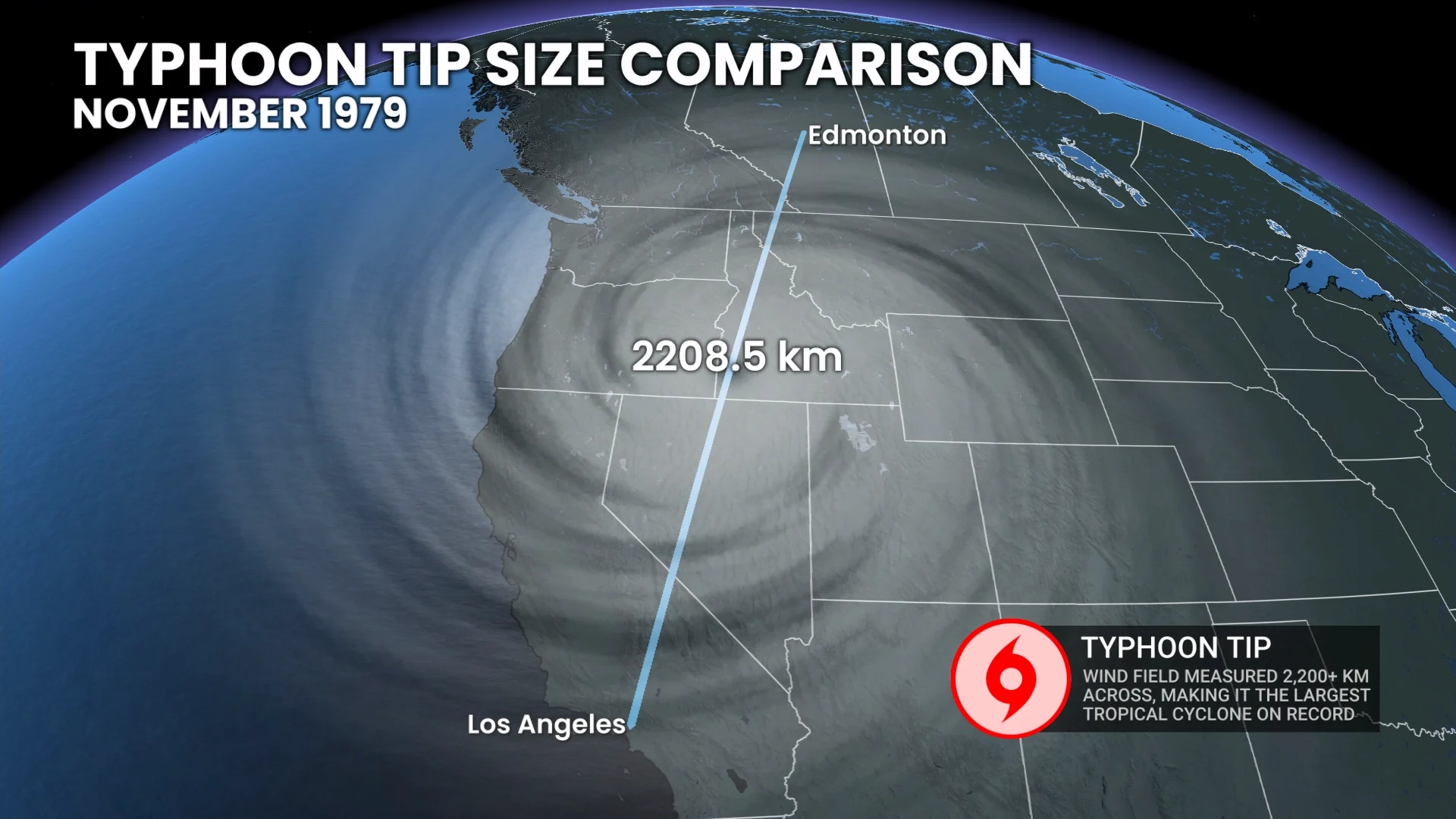
Putting that into perspective, the typhoon’s footprint would have covered the distance between Toronto and Saskatoon, or Edmonton to Los Angeles.
By comparison, the smallest tropical cyclone on record was 2008’s Tropical Storm Marco in the southern Gulf of Mexico.
The extent of tiny Marco’s winds measured less than 20 km from the centre of the storm. If the storm had been centred over downtown Toronto, for instance, its tropical storm force winds would barely have reached Pearson Airport.
Header image courtesy of ESA/NASA–A. Gerst.